

Steam Deck Prices Just Jumped 44%. Gaming's Pricing Bubble Is About to Pop.
When a hobby costs too much, people find other hobbies. The industry hasn't figured that out yet.
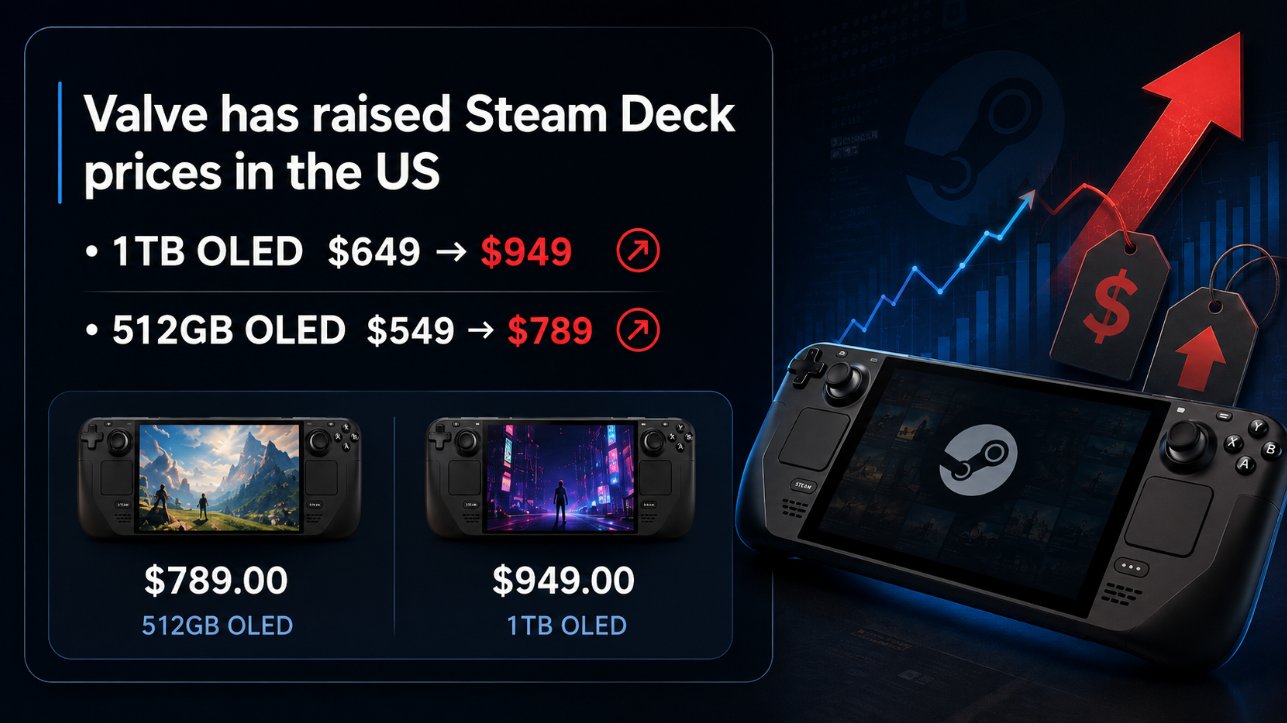
Valve raised Steam Deck prices yesterday. Not by $20. Not by $50. The 512GB OLED went from $549 to $789. The 1TB went from $649 to $949. Thats a 44% increase on the lower end and 46% on the higher end. Even refurbished units got hit. The 512GB refurb is now $629. The 1TB refurb is $759.
Valve's explanation was short. "Steam Deck itself hasn't changed. These new prices reflect the current state of component costs and other global logistical challenges across the industry as a whole."
A Steam Deck, a handheld, now costs more than a PlayStation 5. More than an Xbox Series X. A portable device that you play on your couch or on a plane is now priced higher than the full consoles sitting under your television. And the Steam Machine, which is supposed to be more powerful than the Deck, hasn't even been priced yet. If the Deck is pushing $950, the Machine is going to be well over a thousand dollars.
This is a rare L for Valve. And it's a big one.
We Wrote About This. It's Here Now.
We've been sounding the alarm on this for months. The RAM Crisis piece laid out how AI data centers are consuming the global memory supply, driving up DRAM and NAND costs for every piece of consumer hardware on the planet. The Sony piece showed how two price hikes in one year cratered PS5 sales by 46%. We've covered how Xbox is sitting at $649. How the Switch 2 already got bumped. How PC components have been climbing for months with no relief in sight.
And now it's Valve. The company that we praised for competitive pricing. The company that gave us $2 refunds, banned in game ads, forced developers to be honest about their DLC road maps. The one platform holder that players actually trusted to stay on their side. Even they can't escape this.
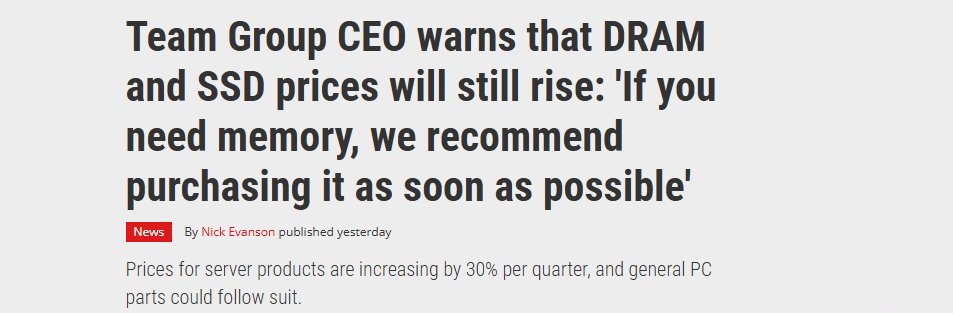
Team Group's CEO said it last week. "If you need memory, we recommend purchasing it as soon as possible." Corsair just released RAM that costs $600 for 32GB. Nvidia is cutting GPU production by 30 to 40%. IDC slashed PC shipment forecasts by over 11%. The entry level PC market could disappear by 2028 according to some analysts. This is not a temporary disruption. This is structural. And it's hitting everything.
Gaming Is a Hobby. People Keep Forgetting That.
Here's the part that I don't think a lot of these companies have come to terms with. Gaming is a hobby. That's what this is for most people at the end of the day. It's not utilities. It's not groceries. It's not rent. When a hobby gets too expensive, people don't protest. They don't organize boycotts. They just quietly stop showing up.
A PS5 is $650. An Xbox Series X is $649. A Steam Deck is now $789. A Switch 2 launched above expectations. A gaming PC that can run modern titles without melting is north of $1,500 and climbing. And that's before you even buy a single game.
Then the games themselves. $70 is the new baseline for AAA. $80 is being normalized by Nintendo and Xbox. There's active discussion about GTA 6 setting the $100 standard edition price point. And it's not just the sticker price anymore. Battle passes are getting more expensive. Fortnite raised V-Buck prices. Activision has been stealth hiking Call of Duty by reducing how many COD Points you earn back from the battle pass, meaning you're paying the same but getting less. Even the monetization inside the games is inflating.
So I'm sitting here asking the same question I keep asking. Who are we marketing to here? Who is the customer that can afford a $650 console, a $70 game, a $15 monthly subscription, a $10 battle pass, and $20 in cosmetics every season? Because that person is either shrinking in number or doesn't exist in the volume these companies need them to.
The Bubble
We are in a massive pricing bubble. I don't know how else to describe it at this point.
Hardware is going up because AI is eating the supply chain. Games are going up because development costs are bloated and publishers need to offset their own bad decisions. Monetization is going up because live service models demand infinite growth. And none of it is being matched by an increase in quality, value, or consumer enthusiasm. If anything, all of those are going in the opposite direction.
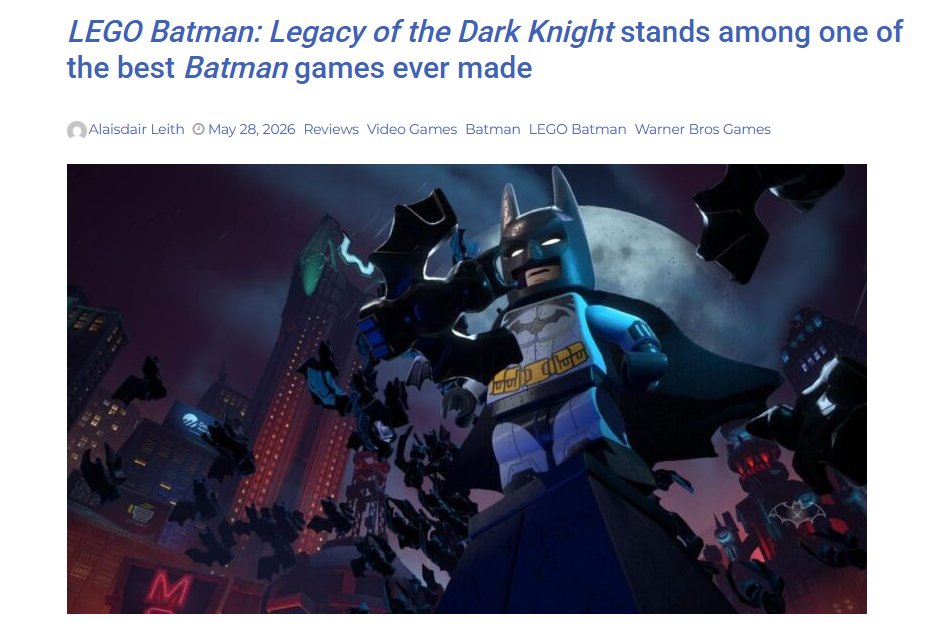
The data is right there. There are reports showing that new game adoption is at historic lows. Gen Z spending on games dropped 25% in the first quarter of 2026. Older generations are spending less too. 60% of playtime is going to games that are more than six years old. The best selling games of the year are all priced between $20 and $50. Expedition 33 sold millions at $50. Mina the Hollower is one of the highest rated games of the year at $20. LEGO Batman is sitting at 97% positive. Windrose hit a million copies at $30.
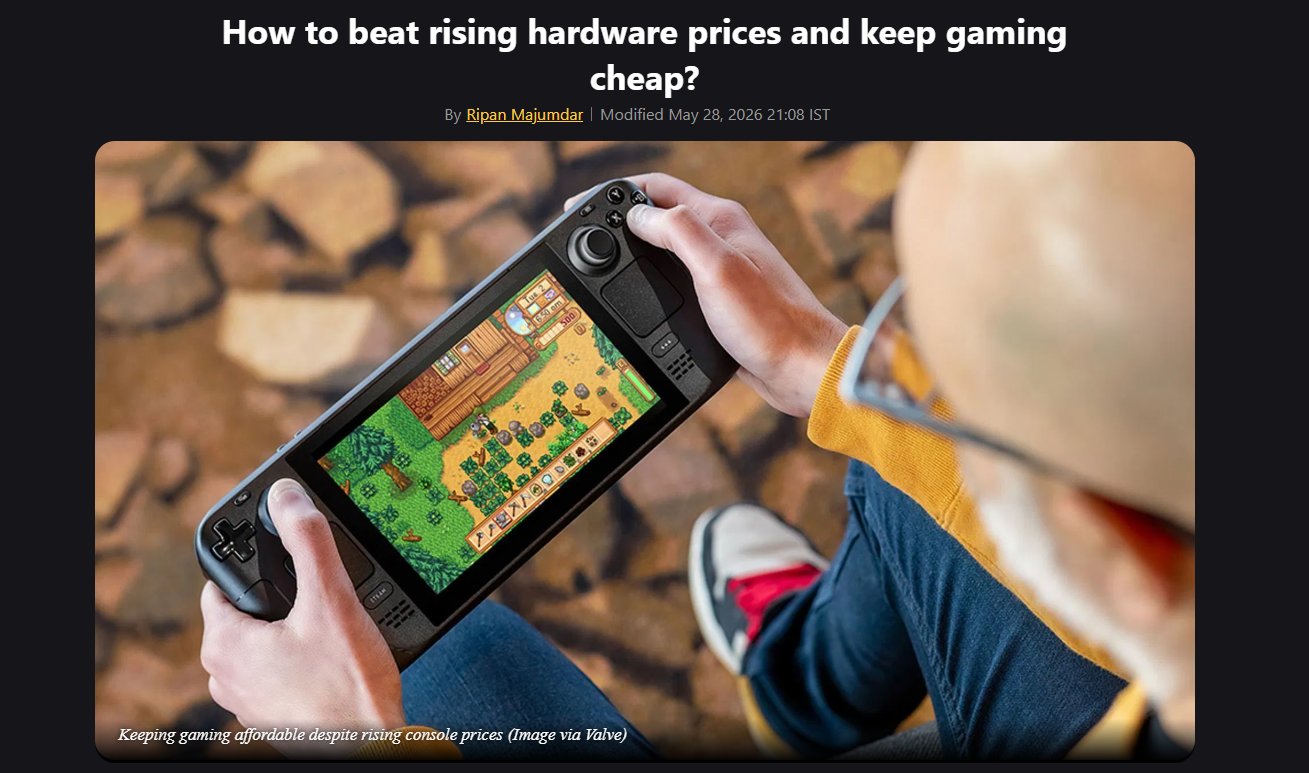
The games that are actually succeeding right now are the ones that don't need $650 hardware to justify themselves. The games that are winning are cheap and focused. Made by people who actually love what they're building. And they're running just fine on hardware that costs a fraction of what these companies are charging.
So where does that leave the hardware? Who is going to keep these machines afloat?
Consoles Cost What a PC Does Now. But They Do a Tenth of What a PC Can.
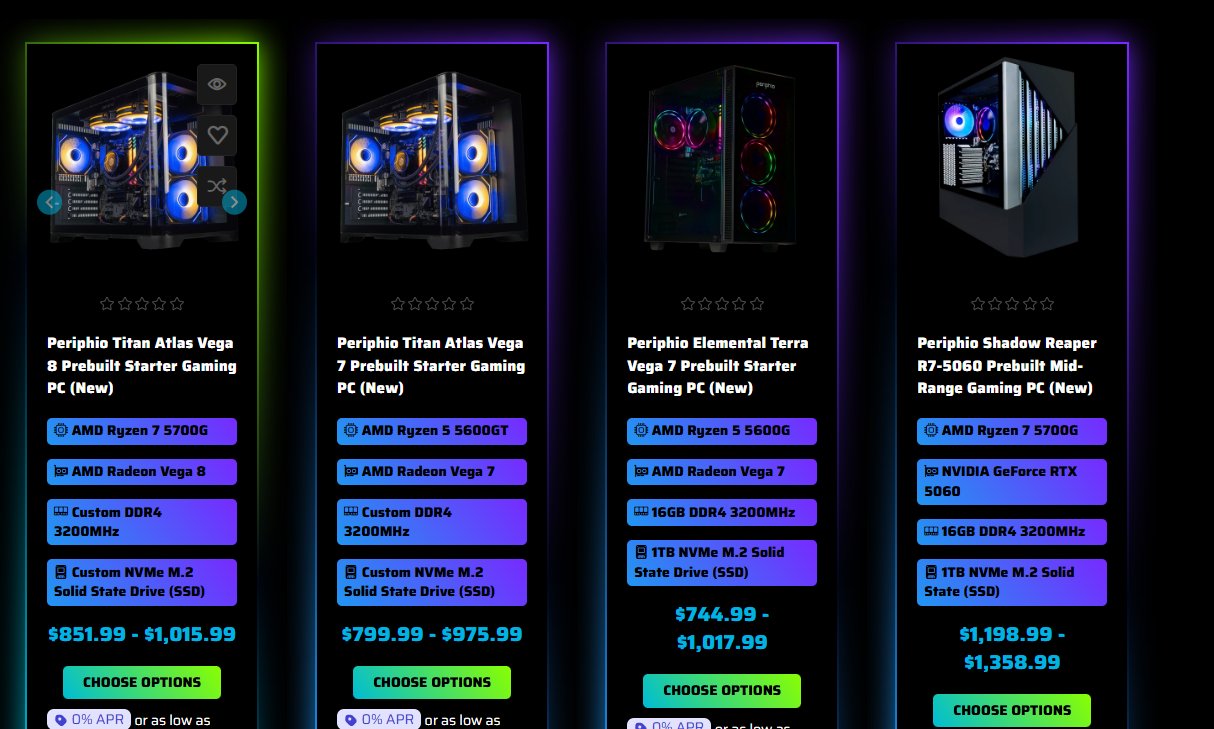
For roughly the same money, you could build or buy a budget PC that plays games, runs productivity software, edits video, browses the web, handles school or work tasks, and does basically everything else a computer is supposed to do.
The value proposition for dedicated gaming hardware has never been worse. And these companies are pushing prices higher while the gap between what a console does and what a PC does continues to widen. Now don't get me wrong.. The price increase is hitting PC too and that "budget" language is being stretched i admit.
I get that consoles offer simplicity. Plug it in and play. But that simplicity is worth less every year when the price keeps climbing. At some point, and I think we're approaching that point very quickly, the convenience premium stops making sense for a lot of people. Especially younger players who are already priced out of the hobby entirely.
Something Has to Break
I don't know exactly what the correction looks like. I'm not that guy. I don't have a perfect solution sitting in my back pocket. But I do know that history has shown us what happens when stuff like this goes too far. It breaks.
The dot com bubble broke. The housing market broke. The music industry broke when they tried to charge $20 for a CD that had two good songs on it. Every time an industry outpaces its customers, every time the people at the top get too comfortable extracting value without delivering it, the floor gives out.
Gaming isn't immune to that. The industry loves to act like it's different, like the demand for games is so insatiable that players will pay whatever is asked. But that's not what the data shows. Players are voting with their wallets right now. They're playing older games. They're buying cheaper games. They're skipping AAA launches. They're waiting for sales. And the companies that are thriving are the ones that priced their products for the world people actually live in, not the world these executives wish they lived in.
This will auto correct. Whether it's consumer sales plummeting to the point where these companies have to slash prices just to move inventory, or publishers walking away from hardware entirely because the margins aren't there anymore, or a new business model emerging that we haven't even thought of yet. Something will give. It always does.
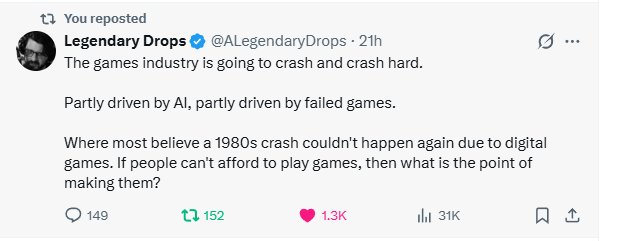
Legendary Drops just had a take on this and I agree with him wholesale, but I don't think it collapses completely. Mainly because some of the best games to release AREN'T requiring taking a mortgage out on your house to play or play on. However, a full restructure will be needed for this industry to survive.
The Indie Lifeboat
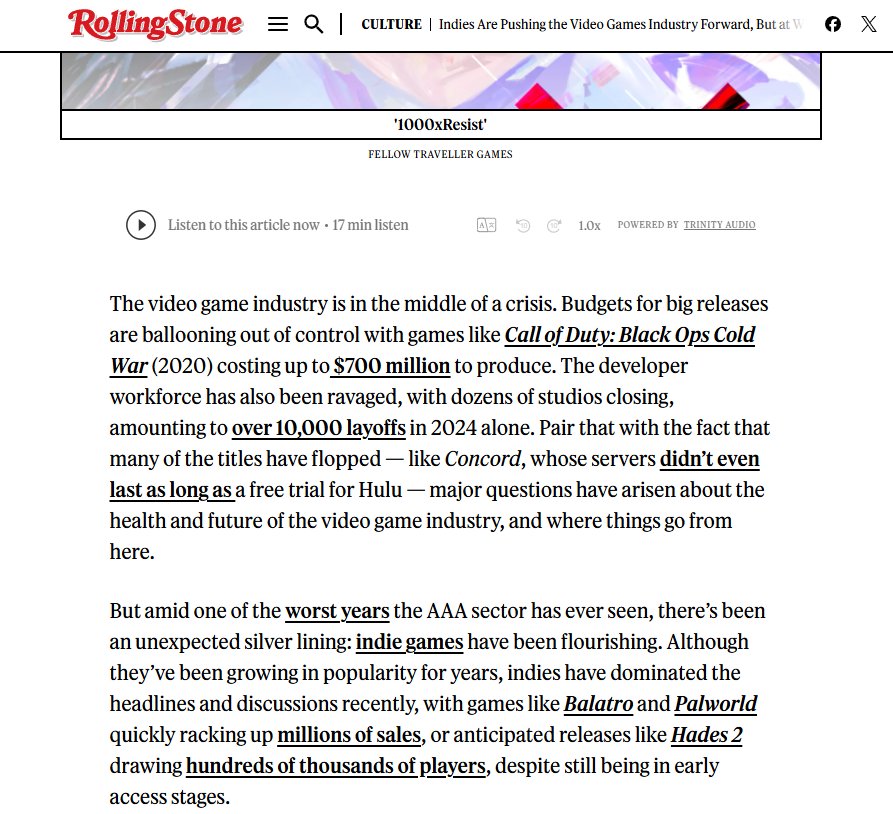
While the Titanic is busy rearranging deck chairs, indie developers are out here building lifeboats.
Mina the Hollower. $20. Highest rated game of 2026. Expedition 33. $50. A million copies in three days from a 30 person team. Windrose. $30. A million copies in two weeks. LEGO Batman sitting at 97% positive. Schedule One pulled in nearly $100 million. Repo sold 15 million copies at $10.
These games don't need $950 handhelds to run. They don't need $650 consoles. Most of them run on hardware that's already sitting on your desk or in your bag. And they're delivering experiences that the AAA industry, with all its money and all its scale, just can't seem to match right now.
That's the irony of this whole situation. The hardware is getting more expensive to support games that are getting worse, while the games that are actually good barely need the hardware at all. The entire pricing structure of the industry is built around an assumption that doesn't hold anymore. That bigger means better. That more power means more fun. That the path forward is up and to the right on every graph forever.
It's not. The path forward is probably smaller. Leaner. Cheaper. More focused. And every month that goes by, the evidence for that gets harder to ignore.
What Now
Valve is still one of the best companies in gaming. I want to make that clear. This price hike doesn't erase the refund system, the review system, the anti ad policy, the DLC accountability measures, or the decade of consumer first decisions that built their reputation. They got caught in the same supply chain crisis that's hitting everybody. And unlike a lot of these companies, they were honest about why.
But it does change the conversation. The Steam Deck was the affordable entry point. The device that made PC gaming accessible to people who couldn't afford a full rig. At $789 that story is a lot harder to tell. And the Steam Machine, whenever it launches, is going to have to justify a price tag that might make PS5 Pro look reasonable by comparison.
I don't like any of this. I don't like watching an industry I've spent my entire life caring about price itself out of the hands of the people who actually keep it alive. I don't like seeing every single hardware manufacturer move in the same direction at the same time with no pressure to undercut each other. And I definitely don't like the feeling that the only people who are going to be able to afford gaming as a hobby in five years are the ones who were already wealthy enough not to care.
Something's going to break. I just hope when it does, the pieces land somewhere better than where we're standing right now.
Share this article
Comments

James Brooke
Founder & Editor
Gaming industry analyst and video editor covering gaming trends, indie games, and industry analysis.
About the author →Related Articles
Steam Machine Costs $1,049 and Can Barely Keep Up With a PS5. We Called It.
We said the Steam Machine would be over $1,000. It's $1,049. It performs at PS5 levels. For the same money you can build something 60% faster. This is dead on arrival.

Steam Controller Sold Out in 30 Minutes: Scalpers, Crashes, and What It Means
Sold out in 30 minutes. Store crashed. Scalpers at $300. Valve built a great product and fumbled the launch.

Steam Controller 2026: Valve Just Solved Stick Drift for $99
TMR sticks that won't drift. 35+ hours of battery. $99. Valve just solved a problem the big three won't touch.
You May Also Like
Latest Patch Notes in Gaming — Week of July 6–12, 2026
Marvel Rivals pushed three patches in one week. TF2 got six new maps. Diablo IV fixed a Steam Deck crash. Guild Wars 1 got a major skill rebalance in 2026. Ten games patched this week — here's every update.
Xbox Just Cut 3,200 Jobs. Three Days Later the CEO Is Advising the Federal Reserve.
3,200 jobs cut. The internal memo published on Twitter. 64 cents lost on every dollar invested. 14 layers of management. And three days later the CEO who did it all is advising the Federal Reserve on jobs. You cannot make this up.

Moonlight Peaks Is a Vampire Farming Sim That Just Launched to 87% Positive on Steam. For $35.
You play as Dracula's kid who ran away from home to start a farm. You sleep in a coffin. You water crops with magic spells. 87% positive on Steam in two days. $34.99 and no nonsense.