

The RAM Crisis: How AI Companies Are Making Your Gaming Hardware More Expensive
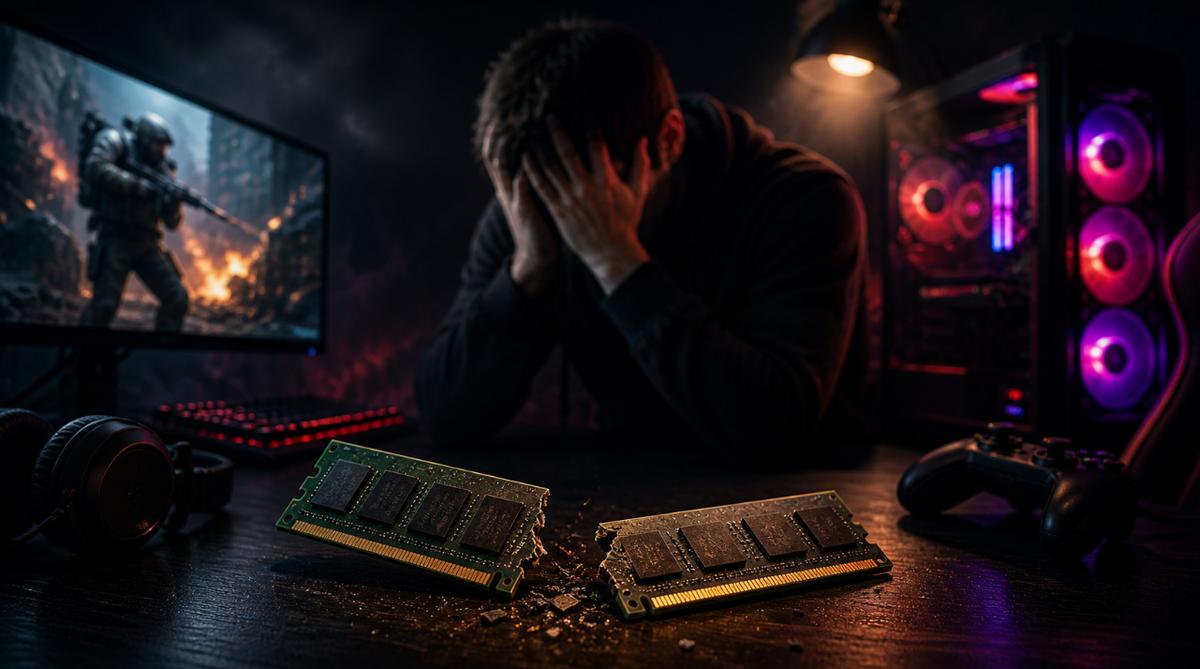
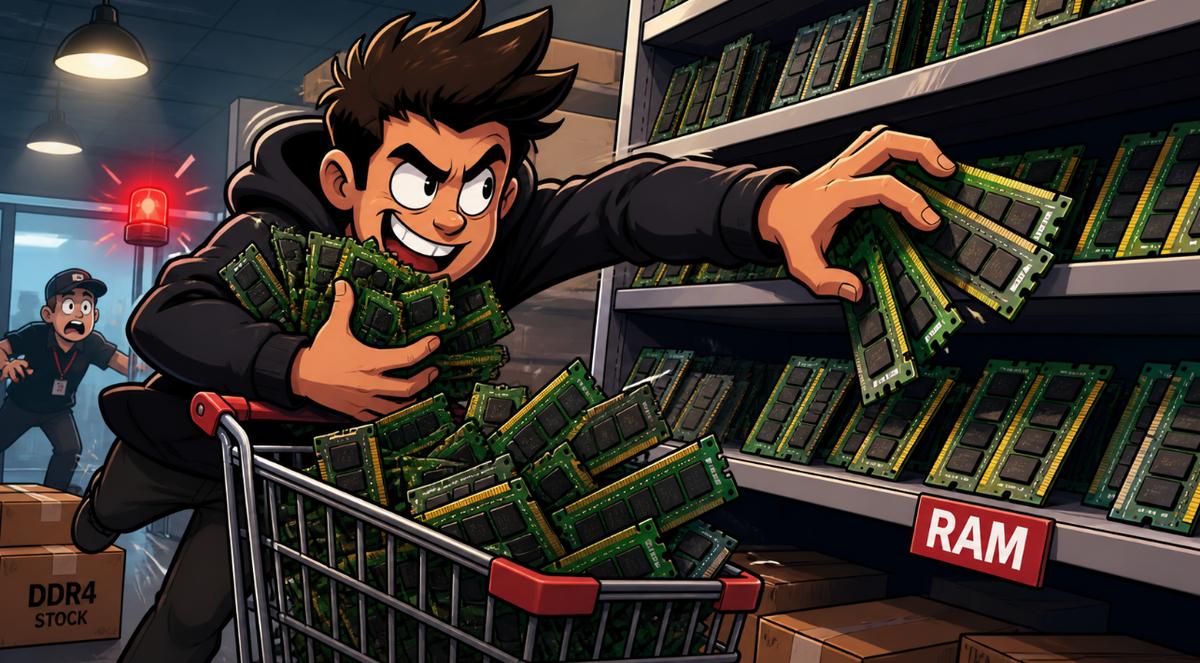
Your next gaming PC is going to cost more. Your next console is going to cost more. Your next GPU, your next SSD, your next laptop. All of it. More expensive. Not because of tariffs. Not because of inflation. Not because the components got better.
Because AI companies are eating the world's memory supply and there's not enough left for the rest of us.
This is the biggest story in gaming hardware right now and almost nobody in the gaming space is talking about it in a way that makes sense to the average player. Tech outlets cover it as a semiconductor story. Financial analysts cover it as a market story. But nobody is telling gamers the simple version.
Here's the simple version. The same RAM that goes into your PC also goes into AI data centers. AI companies are buying so much of it that there isn't enough for everyone else. And the shortage is going to last for years.
The Numbers Are Insane
Let me walk you through what's actually happening. Because every time I think the numbers can't get worse, they do.
OpenAI reserved roughly 40% of the entire world's RAM supply by 2025. Forty percent. One company. For ChatGPT and its associated infrastructure.

70% of all memory chips produced globally in 2026 will be consumed by data centers. That's not a projection from a pessimistic analyst. That's the industry consensus reported by the Wall Street Journal.
Samsung and SK Hynix together supply about 90% of global dynamic RAM. Both companies have publicly warned that they will likely not meet supply demands through 2027. The two companies that make almost all the world's memory are telling you they can't make enough.
AI is projected to consume 20% of total DRAM production in 2026 alone, and that figure is climbing. New fabs being built in places like Idaho won't have meaningful impact until 2028 at the earliest. The infrastructure to make more RAM physically does not exist yet, and it takes years to build.
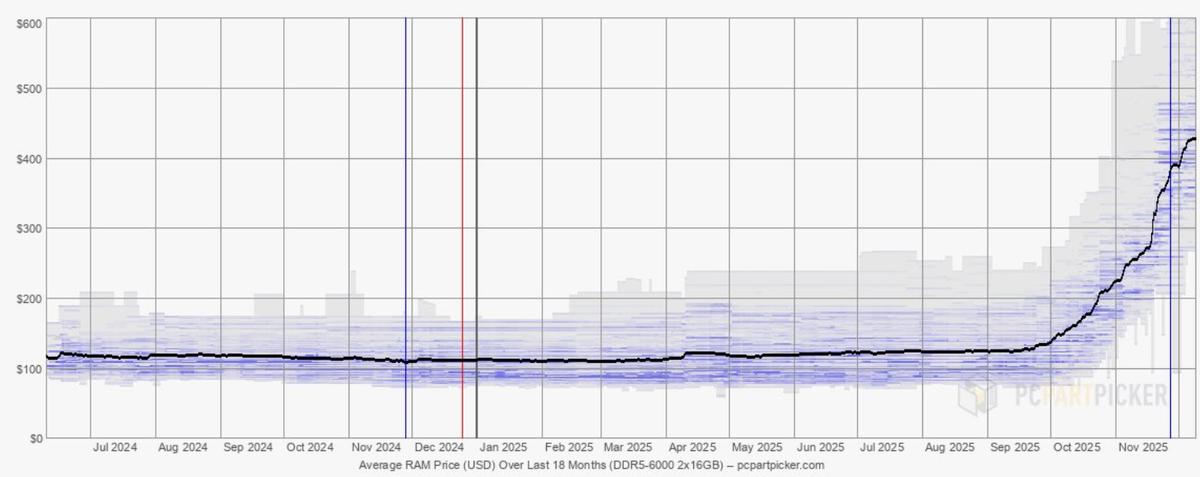
A 32GB DDR5-6000 kit from Crucial that cost $80 to $100 through most of 2024 and 2025 is now sitting at $364 on Amazon. That's a 250% increase. And that's not a specialty component. That's the standard RAM kit in a mid-range gaming PC.
PC Gamer has been calling it the "RAMpocalypse." Tom's Hardware reported that the entry-level PC market could "disappear" by 2028. A TrendForce analyst who has tracked the memory sector for almost 20 years said, "This time really is different. It really is the craziest time ever."
What This Means for Gamers Right Now
Let me translate all of that into what it actually means for someone who wants to play games.
Building a PC just got significantly more expensive. RAM that cost $80 a year ago costs $360 now. SSDs are climbing too because NAND flash memory is caught in the same shortage. A gaming PC build that cost $1,000 in 2024 could cost $1,300 to $1,500 for the same specs today. And the prices aren't done climbing.
GPU prices are going up. Graphics cards use memory too. AMD has already raised prices for industry customers due to the shortage. Memory makers are diverting production lines toward AI-grade memory because it's more profitable, which means less supply for GPU memory. Higher GPU memory costs mean higher GPU prices across the board.
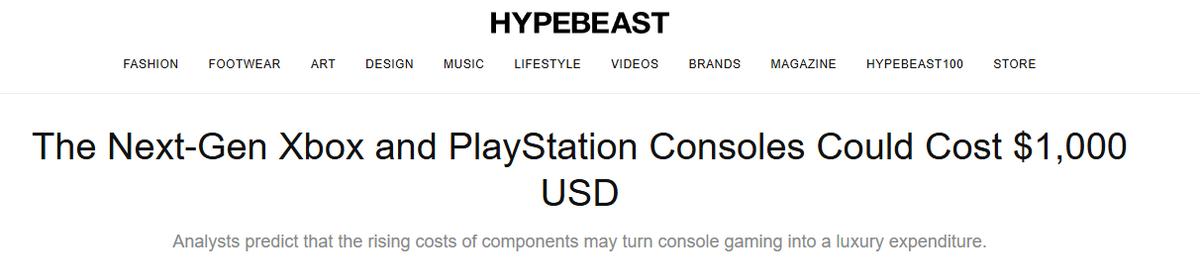
Next-gen consoles could cost $1,000 or more. We covered this in the console crisis piece. Xbox CEO Asha Sharma confirmed that memory costs will impact Project Helix pricing and availability. Industry estimates put the next Xbox between $900 and $1,500. The PS6 is expected to push toward $1,000. Memory is the single biggest factor driving those numbers.
The Steam Deck 2 got pushed to 2028. Valve has been transparent about it. The memory shortage made it impossible to produce the next Steam Deck at a price point that makes sense. The Steam Machine is delayed for the same reason. Valve admitted the Steam Controller only shipped on time because it doesn't use RAM or storage.
Laptops are getting worse, not better. Dell, Lenovo, HP, Acer, and ASUS have all confirmed 15 to 20% price increases on PCs for 2026. But here's the part that should make you angry. Some manufacturers aren't raising prices. They're doing something sneakier. They're shipping the same laptop at the same price but with less RAM, dimmer screens, and worse components. Shrinkflation. You pay the same money and get a worse product. And most people won't notice until it's too late.
DIY gaming is getting squeezed hardest. IDC specifically called out that white box builders and DIY systems, often built by gamers, will bear the greatest burden of the shortage. The big OEMs have leverage with suppliers. Individual gamers buying parts on Amazon don't.
How We Got Here
The frustrating thing about this crisis is that it wasn't caused by anything going wrong. It was caused by something going right. For somebody else.
AI turned out to be massively profitable. Or at least massively funded. AI companies raised $258.7 billion in venture capital last year, absorbing 61% of all global venture funding. That money went into building data centers. Data centers need memory. Lots of it. And the memory market wasn't built to handle that kind of sudden demand.

The DRAM industry has always been cyclical. Boom and bust. Too much supply, then too little. Prices drop, then they spike. But this cycle is different because the demand isn't coming from consumers who will eventually stop buying. It's coming from AI companies with functionally unlimited capital burning through memory at a pace the supply chain was never designed to support.
And here's where it gets worse. The memory going into AI data centers isn't the same type that goes into your gaming PC. AI uses High Bandwidth Memory. Your PC uses standard DDR5. They're different products. But they're made on the same production lines. And when a company like Samsung has to choose between making HBM for a data center contract worth billions or making DDR5 for consumers, they choose the billions.
Every production line that gets converted to AI memory is a production line that stops making your RAM. The supply doesn't just get tight. It gets structurally redirected. And the companies making the decision are making the rational choice from a profit standpoint. AI memory is more profitable per unit than consumer memory. So consumer memory gets deprioritized.
That's how you end up with a 250% price increase on a standard RAM kit in less than a year. Not because of a natural disaster. Not because of a pandemic. Because the companies that make memory decided AI was more important than you.
The Timeline Is Not Encouraging
If you're reading this hoping for a "but it gets better soon" section, I'm sorry. It doesn't.
New fabrication plants take years to build. Micron's new facility in Idaho won't have meaningful impact until 2028 at the earliest. Samsung and SK Hynix have expansions planned but none of them are online yet. The physical capacity to make more memory simply does not exist right now.
SK Group's chairman said the memory chip shortage could last until 2030. That's not a worst-case scenario. That's the assessment of the man running one of the two companies that makes 90% of the world's RAM.
Meanwhile, AI demand isn't slowing. McKinsey projects that data center demand could increase by 27% by 2030, requiring nearly five times the power they use today. Every new AI model, every new chatbot, every new enterprise AI deployment needs more memory. The demand curve is going up. The supply curve is going nowhere for years.
The best-case scenario is that AI investment slows because returns don't materialize. If investors get bearish on AI, the spending slows, and some of that memory supply gets freed up. But even in that scenario, prices don't normalize overnight. The damage to the supply chain takes years to unwind.
What You Can Do
I hate writing advice sections because the honest answer is usually "not much." But here's what actually helps.
If you need to upgrade, don't wait. Prices are going up, not down. What you can buy today for $360 might cost $500 in six months. That's the consensus from multiple industry sources including MAINGEAR's CEO who specifically said consumers shouldn't wait.
Buy used when possible. The secondary market for RAM, GPUs, and SSDs is going to become more important as new component prices climb. A used DDR5 kit from someone upgrading to 64GB is still the same DDR5 kit.
Consider what you actually need. 32GB has become the standard recommendation for gaming PCs, but 16GB still runs most games fine. If the price difference between 16GB and 32GB is $200, that's worth thinking about.
Watch the used console market. If next-gen consoles really do hit $1,000+, current-gen PS5 and Series X hardware is going to hold value longer than usual. The upgrade cycle is going to slow dramatically because the price barrier just got three times higher.
And honestly? Be angry about this. Because the gaming community is absorbing the collateral damage of an AI gold rush it didn't ask for and doesn't benefit from. The companies making these decisions are making them because AI is more profitable per chip than your gaming PC. You're not the priority. And that should bother you.
The Bigger Picture
I've spent the last month writing about an industry that makes $195.6 billion a year while laying off 44,000 people. About consoles that want your face scan for voice chat and $1,200 for the next box. About indie developers shipping $5 games that deliver 12 hours of fun while AAA charges $70 for something broken.
And now this. The physical materials required to play games on any platform are being siphoned away by an adjacent industry, and nobody in gaming leadership is talking about it in a way that prepares you for what's coming.
Your next PC build will cost more. Your next console will cost more. Your next GPU will cost more. Not because gaming got more expensive to produce. Because AI got more expensive to build and the gaming industry is paying the bill.
That's where we're at right now. And it's not getting better anytime soon.
Share this article
Comments

James Brooke
Founder & Editor
Gaming industry analyst and video editor covering gaming trends, indie games, and industry analysis.
About the author →Related Articles

Best Games August 2026: 5 Headliners and 5 Under the Radar
Game Freak outside of Pokemon. MGS4 finally on modern hardware. Hell Let Loose Vietnam. A Marvel fighting game from Arc System Works. August is the warm up lap before September destroys everything.

Conquest of Azeroth: The Best New WoW Isn't From Blizzard
21 classes. 70 specs. 30K players per server. 10 hour queues on opening day. The best new WoW experience in years and Blizzard had nothing to do with it. Play it while you can.
Sony Is Killing Physical Games. Their Own Studio Just Trolled Them About It.
170,000 signatures. Six days of silence. Dominoes making memes. And Insomniac publicly confirming Wolverine gets a real disc while the parent company kills the format. Sony's silence is the statement.
You May Also Like
Latest Patch Notes in Gaming — Week of July 20–26, 2026
Battlefield 6 put boats in the game. Heroes of the Storm reworked Ragnaros. 2XKO overhauled its Fuse systems. Phasmophobia rebuilt 13 Willow Street. Ten games patched this week — here's every update.
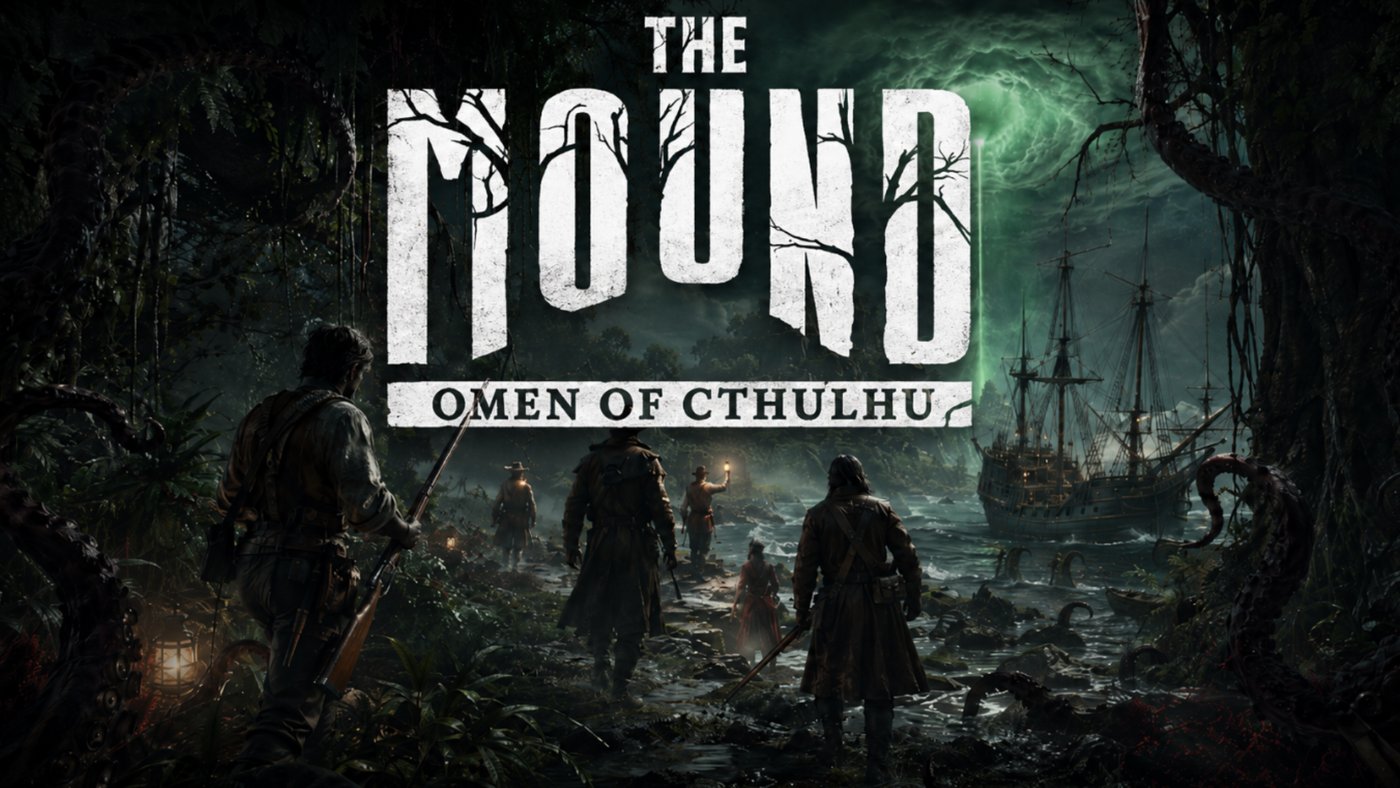
The Mound: Brilliant Co-Op Mechanic, Rough Execution
The insanity system is unlike anything in co-op horror right now. You can't trust your own screen. But the game around that mechanic needs work. If ACE Team keeps building, something special is underneath.
Dinoblade: A Viral Animation Clip Became Steam's #1 Game
A 30 second animation clip went viral in 2022. Four years later it's a real game sitting at #1 on Steam with 89% positive reviews. One developer. $20. A dinosaur with a greatsword. And the boss fights are genuinely incredible.