
Steam Machine Costs $1,049 and Can Barely Keep Up With a PS5. We Called It.
Valve didn't make a console. They made an entry level PC that costs like one but performs worse than what you could build yourself for the same money.
We wrote about this. When the Steam Deck hit $949 for the 1TB model last month, we said the Steam Machine was going to be well over a thousand dollars. And now here we are. The base model with a 512 gig SSD and no controller is $1,049. The 2TB model jumps to $1,349. Available June 30.
And now that we have the price and we have the benchmarks from outlets like Gamers Nexus, the picture is clear. This thing is dead on arrival.
The Performance Problem
I'm not a hardware analyst. I'm not going to sit here and break down clock speeds and architecture generations. But I don't need to be a hardware expert to read the benchmarks and understand what they mean for the average person thinking about buying this.
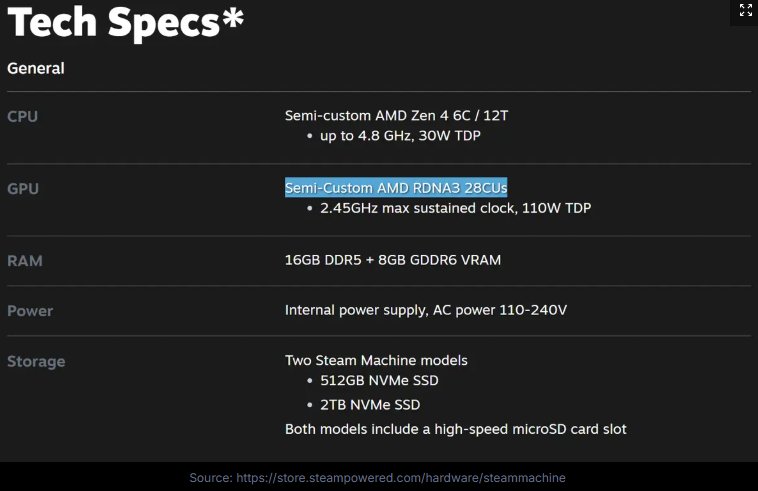
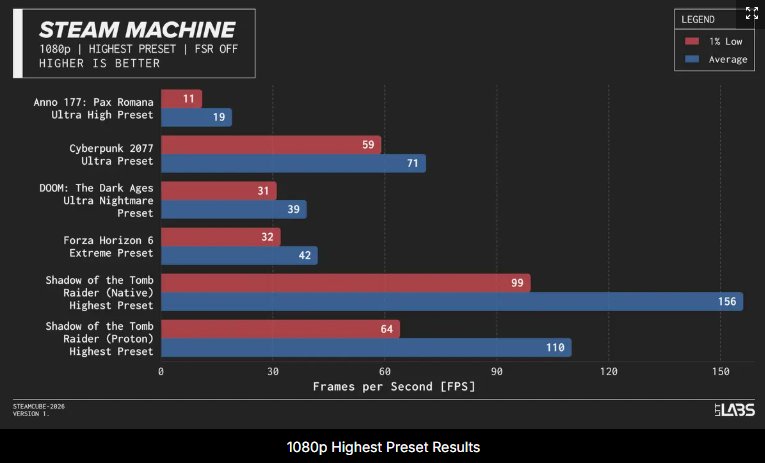
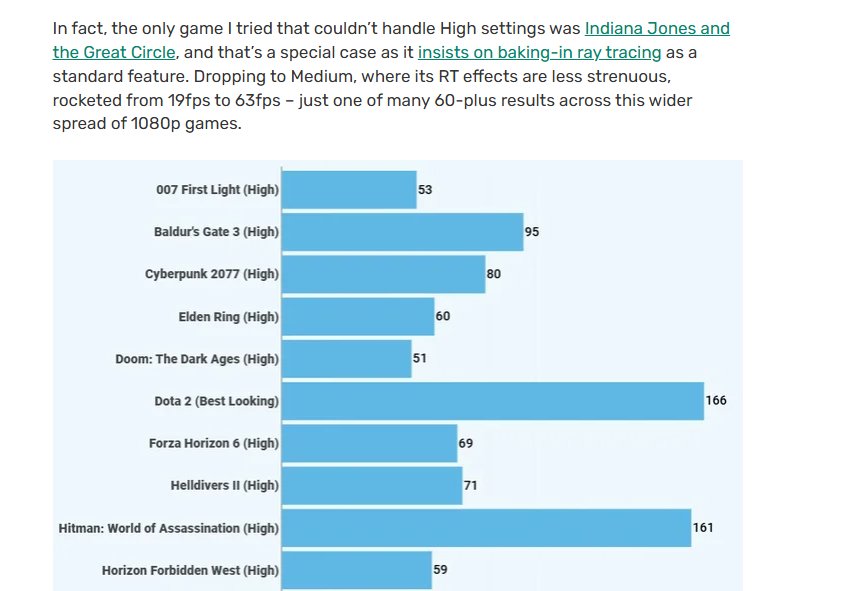
The Steam Machine's GPU performs at roughly the level of a discrete RX 7600. That is not a high end graphics card. It's an entry level part from a generation ago. And because of how it's integrated into the system, it actually performs about 15% worse than a standalone 7600 in most games.
When you compare it to current entry level GPUs that you can actually buy right now, the gap gets ugly. An RTX 5060 is roughly 50% faster on average. A 960 XT is about 62% faster. These aren't enthusiast cards. These are the budget options that regular people are putting in their PCs today. And they're crushing the Steam Machine.
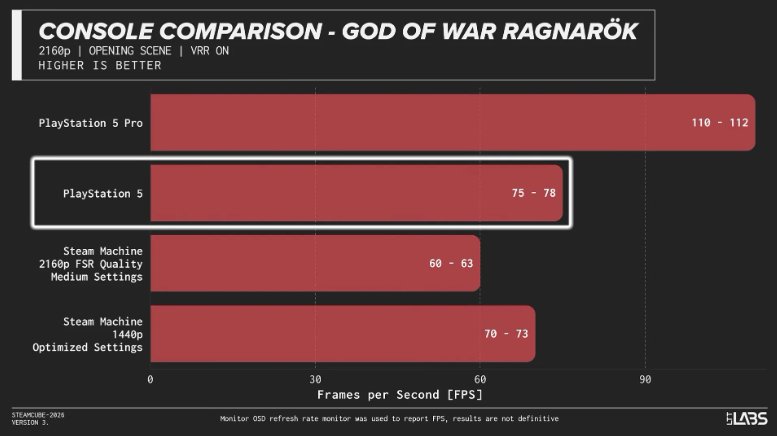
The console comparison is where it really stings though. Digital Foundry ran tests showing the Steam Machine trading blows with the base PS5. Not the Pro. The base model. In GPU limited games, the PS5 is sometimes faster. In CPU limited games, the Machine edges ahead. But the general picture is that these two devices perform at roughly the same level.
The PS5 costs $600. The Steam Machine costs $1,049. For nearly identical gaming performance.
The Value Doesn't Exist
This is really where the whole thing falls apart. Valve isn't calling this a console. And based on the price you can see why. It's basically an entry level PC. The problem is that for entry level PC money, you can do significantly better.
For $1,049 on Best Buy or any major retailer right now, you can find prebuilt systems with 16 gigs of memory and 1TB SSDs running GPUs in the RTX 5060 or 960 XT range. That's 50 to 62% more performance. Double the RAM. Double the storage. And those systems are upgradeable. You can swap the GPU in two years when something better comes along. Throw in more RAM. The whole platform grows with you.
The Steam Machine? You can upgrade the RAM sticks and the SSD. That's it. The GPU and CPU are soldered to the board. When this thing becomes outdated, and based on the hardware it already kind of is, your only option is to sell the whole unit and start over.
Hardware Unboxed put it well. Systems that aren't upgradeable need to be cheaper than the equivalent PC that is. Upgradability is a feature. It adds value. The Steam Machine strips that feature out and charges you the same or more. Thats backwards.
The Memory Crisis Is Not an Excuse
I've seen the cope online. "Well, the RAM crisis made everything more expensive, so the pricing isn't really Valve's fault." And look, we've been writing about the RAM crisis all year. We know the DRAM and NAND costs have gone up. We know AI data centers are eating the supply chain. That part is real.
But here's the thing that people keep missing. The RAM crisis affects everything equally. The prebuilt PCs that outperform the Steam Machine for the same price? They use the same memory. They use the same storage. They face the same inflated component costs. And they still manage to offer a better product at the same price point.
You can't use the memory crisis as an excuse for the Steam Machine's pricing when every competing product faces the exact same cost pressure and still comes out ahead. It's relative. If prices come down tomorrow, they come down for everything. The Steam Machine doesn't get special treatment from the supply chain.
Looking at the actual component costs, the inflated pricing on memory and storage probably adds about $250 to the bill of materials compared to normal times. So strip that away and Valve would have been pricing this at around $800 in a normal market. And even at $800 this thing would have been a hard sell because the performance is entry level at best and the hardware isn't upgradeable.
The SteamOS Argument Just Died
One of the selling points of the Steam Machine was SteamOS. A clean, console like operating system built for gaming. No Windows bloat. No driver headaches. Just boot up and play.
That argument collapsed the same week the Machine launched. Valve announced that SteamOS can now be installed on any PC with an AMD GPU. So that experience, the smooth OS, the console like interface, the Steam integration, you can get all of that on the $750 prebuilt PC that outperforms the Machine by 62%.
And here's the other side of that coin. SteamOS doesn't run some of the most popular games in the world. Fortnite, certain multiplayer titles with anti cheat that doesn't support Linux, they don't work. A Windows PC at the same price point runs everything. Every game. Every storefront. Every application. The Steam Machine's operating system is simultaneously its biggest selling point and one of its biggest limitations.
So Who Is This For?
I genuinely don't know. And I've been thinking about it since the price dropped.
It's not for PC gamers. They can build something better for the same money or less. It's not for console gamers either. A PS5 at $600 or an Xbox Series S at $380 gives you a simpler, cheaper entry point with none of the compatibility issues. And if you want a small form factor PC, you can build a mini ITX system with a 960 XT 16 gig, a better CPU, and 2TB of storage for the same price as the 2TB Steam Machine. That system would be over 60% faster. So who's left?
The only audience I can see is people who specifically want a Valve branded box under their TV and are willing to pay a premium for that. And I guess those people exist. But that's a niche audience, not a market.
This Was Always the Problem
We've been writing about the pricing bubble across gaming all year. PS5 at $650. Xbox at $649. Steam Deck at $789 to $949. And now the Steam Machine at $1,049 to $1,349. Every single piece of gaming hardware is more expensive than it's ever been. And the performance you're getting at these prices would have been considered mid range or entry level just two years ago.
The Steam Machine is the most extreme example of this disconnect. A thousand dollar device that performs at the level of a $600 console and can't match a PC you'd build for the same budget. In any other market, a product like this wouldn't survive a quarter. The only reason it's getting a conversation at all is because Valve's name is on the box.
And I like Valve. I've praised them all year for their consumer protection moves, their refund system, their anti ad policy, their DLC accountability measures. Valve has earned a lot of goodwill. But goodwill doesn't change what this product is. A thousand dollar entry level experience in a market where entry level needs to be half that price to make sense.
The gaming hardware market needed Valve to come in and undercut the competition. To prove that you could make a capable gaming device that didn't cost as much as a mortgage payment. Instead, they matched the inflated pricing and delivered less performance than the alternatives.
Share this article
Comments

James Brooke
Founder & Editor
Gaming industry analyst and video editor covering gaming trends, indie games, and industry analysis.
About the author →Related Articles

Steam Deck Prices Just Jumped 44%. Gaming's Pricing Bubble Is About to Pop.
A Steam Deck now costs more than a PS5. More than an Xbox. The 1TB model is $949. When a hobby costs too much, people find other hobbies. The industry hasn't figured that out yet.

Steam Controller Sold Out in 30 Minutes: Scalpers, Crashes, and What It Means
Sold out in 30 minutes. Store crashed. Scalpers at $300. Valve built a great product and fumbled the launch.

Steam Controller 2026: Valve Just Solved Stick Drift for $99
TMR sticks that won't drift. 35+ hours of battery. $99. Valve just solved a problem the big three won't touch.
You May Also Like

Best Games August 2026: 5 Headliners and 5 Under the Radar
Game Freak outside of Pokemon. MGS4 finally on modern hardware. Hell Let Loose Vietnam. A Marvel fighting game from Arc System Works. August is the warm up lap before September destroys everything.
Latest Patch Notes in Gaming — Week of July 20–26, 2026
Battlefield 6 put boats in the game. Heroes of the Storm reworked Ragnaros. 2XKO overhauled its Fuse systems. Phasmophobia rebuilt 13 Willow Street. Ten games patched this week — here's every update.
The Mound: Brilliant Co-Op Mechanic, Rough Execution
The insanity system is unlike anything in co-op horror right now. You can't trust your own screen. But the game around that mechanic needs work. If ACE Team keeps building, something special is underneath.