
Eidos Montreal Spent Hundreds of Millions on a Game Nobody Will Ever Play. Then They Fired 124 People.
How do you spend seven years and hundreds of millions of dollars building a game, get it to the finish line, and then cancel it? How do you do that and then lay off 124 people in the same breath? How do you let a project eat your entire studio alive, kill a Deus Ex sequel along the way, and then just... walk away from it?
I just don't get it, man.
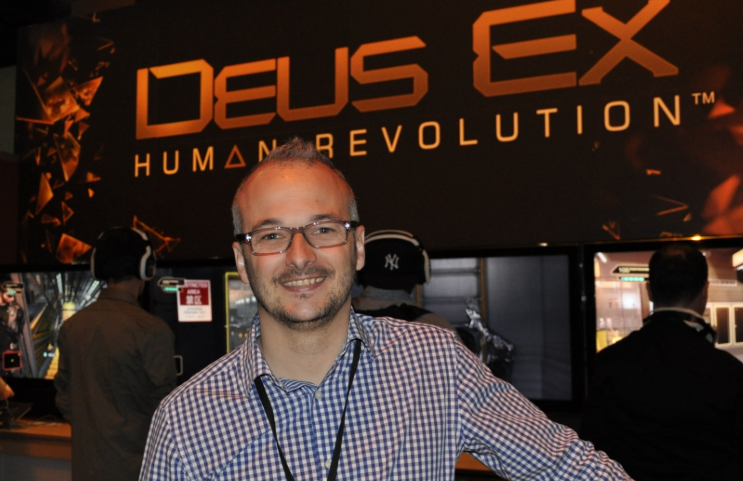
Eidos Montreal. The studio that gave us Deus Ex: Human Revolution. The studio behind Marvel's Guardians of the Galaxy, one of the most underrated games of the last decade. These guys used to be one of the most respected names in the industry. And now they're a skeleton crew doing support work on other people's games because management couldn't pick a direction for the better part of a decade.
Let me walk you through how this happened. Because the details are worse than the headline.
Seven Years, Four Engines, Zero Direction
The game was called Wildlands. Internally, it was known as P11, because it was the 11th project in development at the studio. It started in early 2019. An open-world, third-person action-adventure game where you played a character named River, part of a group of teenagers called Spiritbounds who could fight magical spirits and ride mythical creatures. Your companion was a giant moose-looking animal called Redheart.
That description alone is going to raise some eyebrows. But here's where it gets ugly.
Over the course of seven years, the development team went through four different game engines. Four. Let me make that clear. Every time you switch engines on a project of this scale, you are essentially rebuilding massive chunks of the game from scratch. That's not iteration. That's indecision at the leadership level being paid for with developer time and company money.
On top of the engine chaos, there were ongoing conflicts over the game's narrative direction. Nobody could agree on what the story was supposed to be. So the budget kept climbing. And climbing. And climbing. Reports indicate the total cost ballooned well beyond nine figures. We're talking hundreds of millions of dollars.
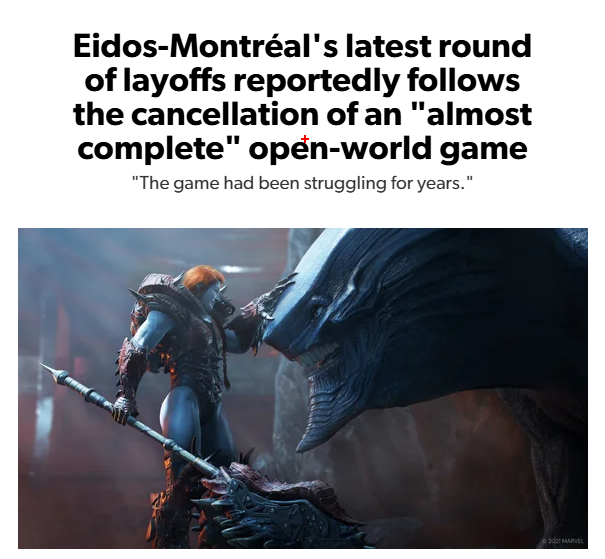
And here's the thing. This wasn't some side project. This was the big bet. This was the game that was supposed to define the studio's future. It was so expensive and so all-consuming that it directly caused the cancellation of other projects at the studio. Including a new Deus Ex game that got killed in January 2024.
Let that sink in. We lost a new Deus Ex because this project ate all the money.
Almost Finished. Canceled Anyway.
This is the part that breaks my brain.
According to multiple sources, Wildlands was almost complete. It had passed key development milestones. It was in the debugging phase. It had a tentative release date planned for later this year.
And they canceled it anyway.
Embracer Group, the parent company that acquired Eidos Montreal from Square Enix back in 2022, reportedly went cold on the project. The calculation was simple. They looked at how much more money it would take to ship, looked at how much they thought they could make back, and decided it wasn't worth it.
After seven years. After hundreds of millions. After killing a Deus Ex sequel. After multiple rounds of layoffs. After all of that, they pulled the plug when the game was sitting right there, practically ready to go.
That's WILD.
I'm not going to sit here and tell you Wildlands would have been a masterpiece. Maybe it would have been mediocre. Maybe it would have flopped. Nobody can know that now because nobody will ever play it. But the idea that you can spend that much time, that much money, burn through that many people's careers, and then just throw the whole thing in the trash when it's 90% done? That tells you everything you need to know about how these companies operate.
The Embracer Effect
None of this happens in a vacuum. You can't talk about what happened to Eidos Montreal without talking about Embracer Group.
Embracer went on one of the most aggressive acquisition sprees the gaming industry has ever seen. They bought everything they could get their hands on. Studios, IPs, publishers. They were building an empire. And then in 2023, a $2 billion investment deal with Saudi Arabia's Savvy Games Group fell through. The money they were counting on to fund all of this expansion vanished overnight.
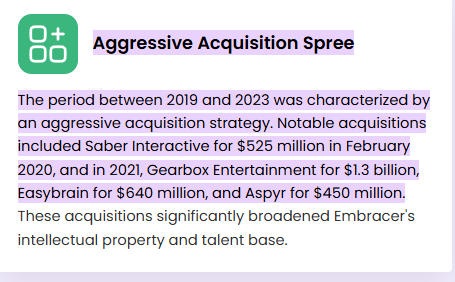
What followed was a bloodbath. Thousands of layoffs across Embracer's portfolio. Studio closures. Project cancellations. They sold Gearbox to Take-Two for less than half of what they paid for it. The whole thing was an "unsustainable house of cards," as PC Gamer put it, and it collapsed on the people who had nothing to do with building it.
Eidos Montreal has been getting carved up ever since.
January 2024. 97 employees laid off. Deus Ex canceled.
March 2025. 75 more employees laid off.
December 2025. Another round of cuts. Most projects reportedly canceled.
March 2026. 124 employees laid off. Studio head David Anfossi out the door after 19 years.
That's roughly 300 people gone in two years. From a studio that had over 400 employees when Embracer bought them. These aren't nameless corporate casualties. These are artists, engineers, designers, producers. People who built Deus Ex. People who built Guardians of the Galaxy. People whose careers got fed into a machine that couldn't decide what it wanted to be.
David Anfossi's Departure Says It All
David Anfossi joined Eidos Montreal in 2007. He was a producer on Deus Ex: Human Revolution. He became head of studio in 2013. He oversaw Deus Ex: Mankind Divided, Shadow of the Tomb Raider, and Guardians of the Galaxy. The guy was a 19-year veteran of the studio.
And he's gone now. Not because he failed. Because the ground got pulled out from under him by a parent company that treated his studio like a line item on a spreadsheet.
In his departure, Anfossi said the industry is going through a "reset." That's the polite way of putting it. The honest way is that Embracer bought a studio with a proven track record, starved it of direction, let a single project consume everything, and then gutted what was left when the numbers didn't work.
That's not a reset. That's a demolition.
What's Left of Eidos Montreal?
This is the question nobody has a good answer for.
The studio's last shipped game was Guardians of the Galaxy. That was October 2021. Nearly five years ago. Since then, they've been doing support work on Fable and Grounded 2 for Xbox. That's it. No lead projects. No creative vision of their own. Just hired hands helping other studios finish their games.
And look. There's nothing wrong with co-development. That's how a lot of the industry works. But this is a studio that built Deus Ex: Human Revolution from scratch. A studio with the talent and the pedigree to lead its own projects. Reducing them to support work isn't "concentrating efforts where the studio can be most effective." It's what happens when you have no plan and no projects left to rally around.
The official statement from Eidos Montreal said the layoffs were "not a reflection of their talent, dedication, or performance." I believe that. I believe it completely. The problem was never the people making the games. The problem was the people making the decisions.
We've Seen This Story Before
Here's what drives me crazy about this whole thing. We keep watching this same pattern play out and nothing changes.
A big company acquires a talented studio. The studio gets folded into a larger corporate structure. Creative priorities shift. Budgets balloon on projects with unclear direction. When the money gets tight, the studio gets gutted. The talent scatters. The IP sits dormant. And the corporate parent moves on to the next acquisition.
We watched it happen with Visceral Games at EA. We watched it happen with Volition under Embracer. We watched it happen with studios across Microsoft's gaming division. And now we're watching it happen to Eidos Montreal.
The pattern isn't a coincidence. It's a strategy. Buy, extract, discard.
And the people who make these decisions never seem to face consequences. The executives who approved a seven-year project with four engine changes and no clear direction. The corporate leadership that let hundreds of millions evaporate before pulling the plug at the last possible moment. How do these guys have jobs?
Meanwhile, 124 people are updating their LinkedIn profiles today, entering a job market that has seen a third of US game developers laid off in the last two years. That's not an exaggeration. That's straight from the GDC 2026 State of the Industry report.
The Deus Ex of It All
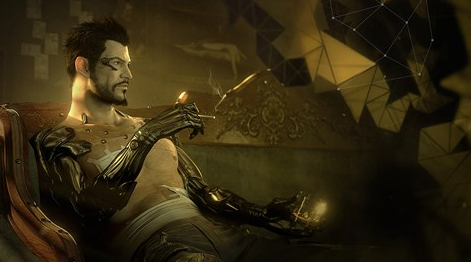
I'm going to say this as clearly as possible. We lost a new Deus Ex game because of Wildlands. That is a fact based on the reporting. Wildlands' spiraling budget directly caused the cancellation of the Deus Ex project in January 2024.
Deus Ex: Human Revolution was a masterpiece. Mankind Divided was flawed but ambitious. The franchise has a passionate fanbase that has been waiting years for a new entry. And that wait is now indefinite because management bet everything on a new IP that they couldn't figure out how to make, and then killed it anyway.
That's bad. That's really bad.
You had one of the most beloved immersive sim franchises in gaming history sitting right there. A built-in audience. A proven formula. And you sacrificed it for a game about teenagers riding magical moose that you ended up throwing in the garbage.
I can't lie. Reading through the details of this story made my blood boil. Not because Wildlands sounded bad. Maybe it was great. We'll never know. But because the chain of decisions that led here is so obviously, painfully, avoidably wrong that it's hard to process how it was allowed to happen.
What This Means Going Forward
Eidos Montreal still exists. They reportedly still have around 200 employees. But without a lead project, without a studio head, and without any announced games of their own, the future is uncertain at best.
The optimistic read is that whoever takes over finds a way to rebuild. Maybe Embracer gives them a real project with a real budget and a clear direction. Maybe the talent that remains gets to prove what they can do.
The realistic read is that Eidos Montreal continues to shrink. More support work. More "mandates ending." More quiet layoffs that don't make headlines. Until one day the studio that built Deus Ex is just... gone.
I don't like any of this. I don't like that we're watching another legendary studio get hollowed out by corporate mismanagement. I don't like that hundreds of people lost their jobs because leadership couldn't make a decision for seven years. And I really don't like that nobody in a position of power seems to learn from this.
The talent at Eidos Montreal deserved better. The people who lost their jobs deserved better. And the players who have been waiting for a new Deus Ex? They deserved better too.
This didn't have to happen. And that's what makes it worse.
Share this article
Comments
Related Articles
Epic Games Laid Off 1,000 People Five Days After Charging Fortnite Players More Money
The 14-day timeline that tells you everything about what is happening at Epic Games. V-Bucks shrinkflation, mass layoffs, and three game modes killed. All in two weeks.

One-Third of US Game Developers Were Laid Off in Two Years. The Industry Did This to Itself.
The GDC 2026 report surveyed 2,300 professionals and the numbers are devastating. 33% of US devs laid off, 74% of students afraid to enter the industry, and 82% want unions. Here's the full breakdown.
Crimson Desert Sold 2 Million Copies in 24 Hours. Wall Street Says It's a Failure.
You May Also Like
REPLACED: Eight Years, a War, and Zero Compromises
The game was finished. The reviews were positive. They delayed it anyway.
One Guy. No Publisher. No Multiplayer. $15. Road to Vostok Just Launched and It's Already Winning.
A solo Finnish developer turned down every publisher, ported his game from Unity to Godot in 615 hours, released four free demos, and just launched a $15 hardcore survival game to 5,000+ day-one players and Very Positive Steam reviews. Full breakdown at EarlyMeta.
Take-Two Told Investors It Was "All In" on AI. Then It Fired the Entire AI Team.
In February, Take-Two's CEO called AI central to the company's strategy. In April, the entire AI team was laid off. Eight months before GTA 6. After an "outstanding" $1.76 billion quarter. The receipts don't lie.