
Crimson Desert Sold 2 Million Copies in 24 Hours. Wall Street Says It's a Failure.
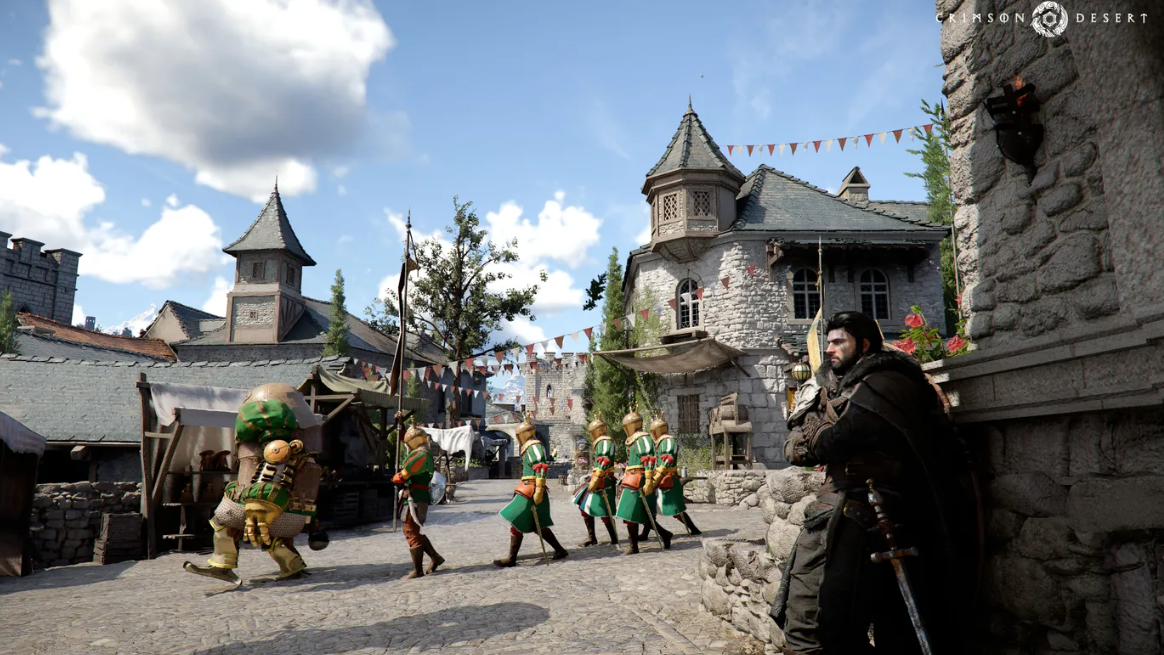
Two million copies. In one day. And Pearl Abyss's stock dropped 40%.
I need you to read that again because it sounds like a typo. Crimson Desert, one of the most anticipated games of 2026, launched on March 19 to 239,000 concurrent players on Steam, hit #1 on the Steam global charts, landed at #4 on the US PlayStation Store, and sold 2 million copies worldwide before most players even finished the tutorial.
And Wall Street's response? Panic. Sell everything. Run for the exits.
That tells you everything you need to know about who the gaming industry is actually built for right now. And spoiler. It's not you.
The Numbers Don't Lie. But Somebody's Not Listening.
Let me walk you through this timeline because it is genuinely unbelievable.
Pearl Abyss, the South Korean studio behind Crimson Desert and Black Desert Online, has been building this game for seven years. It started life as an MMO prequel, evolved into a standalone single-player RPG, and became one of the most hyped releases of 2026. Development cost was reportedly around $133 million.
As the hype built, so did the stock price. From December 30, 2025 to January 30, 2026, Pearl Abyss stock jumped 53%, from 37,400 KRW to 57,200 KRW. Why? Because the game went gold. That's it. The confirmation that it would actually ship on time was enough to send investors flooding in.
From there, the stock just kept climbing. Every gameplay reveal, every Digital Foundry showcase, every pre-order milestone pushed it higher and higher. By March 16, three days before launch, Pearl Abyss hit an all-time high of 68,500 KRW. That's a 125% increase from where the stock sat one year earlier.
Four hundred thousand pre-orders on Steam alone. Over $20 million in pre-launch revenue on just one platform. These guys were outpacing Kingdom Come: Deliverance 2 and Clair Obscur: Expedition 33 at the same point in their release cycles. By every measurable standard, Crimson Desert was a commercial rocket.
Then the reviews came in.
A 78 on Metacritic Wiped Out 40% of a Company's Value
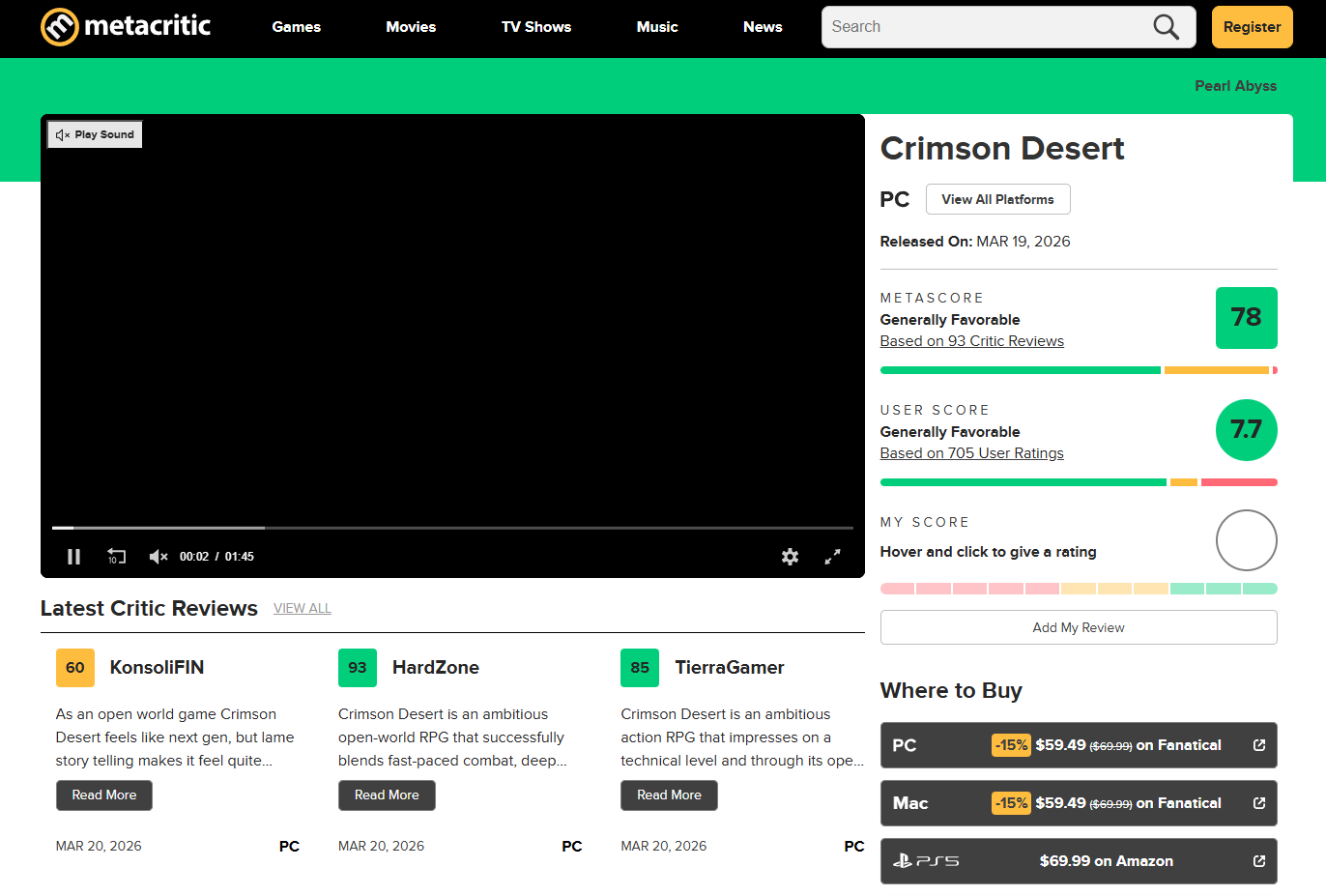
Crimson Desert landed at 78 on Metacritic. An 80 on OpenCritic. Generally favorable. Solid scores. Not perfect, not a disaster. The kind of scores that, for any normal human being who plays video games, means "this is a good game with some rough edges."
For Wall Street? Catastrophe.
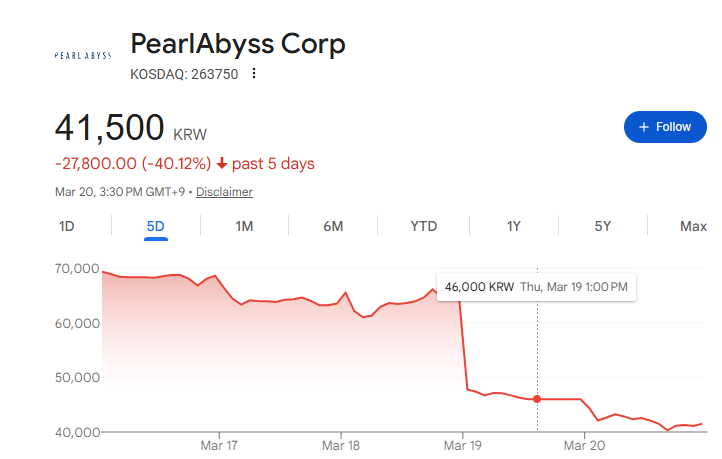
The review embargo lifted Wednesday night. By the time the South Korean stock market opened Thursday morning, Pearl Abyss shares had already cratered to 47,800 KRW. By the close of trading, the stock sat at 46,000 KRW. A 30% single-day collapse.
And it didn't stop there. As of March 20, the stock has fallen to 41,500 KRW. That's a 40% drop from the all-time high set just four days earlier. Four days. Nearly half the company's peak market value evaporated because a video game scored a B+ instead of an A.
That's crazy to me.
Let me make that clear. Investors had priced in a Metacritic score of 85 to 90. They were betting on a masterpiece. Anything less than that, and the investment thesis collapsed. Not because the game wasn't selling. Not because players weren't showing up. Because a number on a review aggregation website didn't hit an arbitrary threshold that finance people decided was the benchmark for success.
Meanwhile, Players Are Buying This Game as Fast as They Can
While investors were dumping shares like the studio was going bankrupt, actual human beings were doing the thing that actually matters. They were buying the game. And playing it.
Two million copies sold in under 24 hours. Let me put that in context. Clair Obscure: Expedition 33, which won Game of the Year in 2025, hit 1 million sales in its first three days. Crimson Desert doubled that in a single day.
The game peaked at 239,000 concurrent players on Steam. It dominated Twitch with nearly 500,000 peak viewers. It hit #1 on Steam's top sellers globally and ranked in the top 5 on the PlayStation Store in the US.
And here's the thing. The Steam user reviews are sitting at "Mixed" right now, which honestly tracks. Players are finding the controls clunky, the UI confusing, and some of the puzzle design frustrating. Korean players in particular are tearing into it, with only 33% positive reviews from South Korean users. There are real issues with this game. Nobody's pretending otherwise.
But here's what's interesting. The complaints aren't "this game is bad." The complaints are "this game is dense, it doesn't explain itself well, and it needs quality-of-life improvements." Those are fixable problems. Those are patch-it-in-a-month problems. The core game, the combat, the world design, the sheer scale of the thing, that's the stuff players are praising.
Pearl Abyss has already acknowledged the feedback and promised rapid improvements. That's what you want to see. That's how you respond to a launch.
But none of that matters to the stock market. Because the stock market isn't playing the game.
This Is the Disconnect That's Rotting the Industry
And this is where I need to zoom out, because this story isn't really about Pearl Abyss or Crimson Desert. This is about what happens when the people who fund video games and the people who play video games are operating on completely different definitions of success.
To a player, success is simple. Is it fun? Is it worth my money? Am I having a good time? Can it get better with updates?
To an investor, success is a number on Metacritic.
I just don't get it, man. You have a game that sold 2 million copies in a day, that has hundreds of thousands of people actively playing it, that's dominating sales charts across every platform. And because a review aggregator landed at 78 instead of 85, the company loses 40% of its market value?
That's not analysis. That's gambling. These guys bought in on hype, rode the wave, and bailed the second they didn't see a perfect score. They never cared about the game. They never cared about whether Crimson Desert was good, or fun, or had long-term potential. They cared about a number that would justify their position, and when the number was two points lower than their spreadsheet predicted, they panicked.
And I want to be fair here. Credit where credit's due, some of this is just how speculative investment works. The stock ran up 125% in a year on pure anticipation. That kind of run-up was always going to correct itself unless the game was a universal 95-on-Metacritic masterpiece. The investors who bought in at 60,000 or 65,000 KRW were essentially betting on perfection, and perfection is not a realistic investment thesis for a video game. Or anything, really.
But here's what bothers me. This kind of dynamic doesn't just stay on the stock ticker. It trickles down. When a studio's value is tied to review scores, and review scores are tied to investor confidence, and investor confidence is tied to whether the studio survives or gets gutted, then suddenly every game has to be a 90 or it's a failure. Every game has to be a masterpiece or the people who made it are at risk.
We've seen this story before. We've seen studios hit with layoffs right after releasing a game that sold well but didn't score high enough. We've seen entire teams dismantled because the financial returns didn't match the projections that were built on hype, not reality. The Battlefield 6 team at EA just went through this exact scenario. Best-selling game in America, record franchise sales, and they still got laid off because the live service transition needed a "realignment."
When the financial class decides that good isn't good enough, the people who make the games are the ones who pay the price. Not the investors who cashed out. Not the executives who overpromised. The developers.
Pearl Abyss Did Almost Everything Right
And to be honest with you, that's what makes this whole thing even more frustrating. Pearl Abyss played the game exactly how you're supposed to play it.
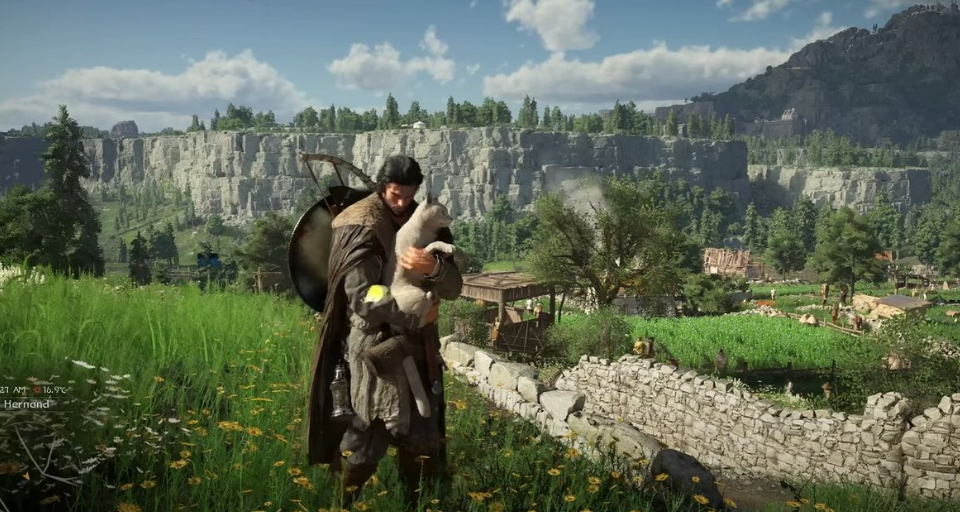
They took their time. Seven years of development. They pivoted from an MMO concept to a single-player game because that's what the market was telling them players wanted. They built their own proprietary engine. They were transparent with gameplay showcases and gave Digital Foundry early access for performance analysis. They priced it at a standard $70 with no microtransactions at launch. No live service. No battle pass. No "premium currency."
They literally did everything that players have been asking the industry to do for years. Build a complete game. Charge a fair price. Show us what we're buying before we buy it. No tricks.
And the reward for all of that? A 40% stock crash because the Metacritic gods didn't smile wide enough.
Look, the game isn't perfect. The controls need work. The UI is rough. The Steam reviews reflect genuine frustrations. But a game selling 2 million copies in 24 hours while its developer's stock is in freefall is not a sign that the game failed. It's a sign that the system measuring success is completely broken.
Who Gets to Decide If a Game Succeeds?
That's the question sitting at the center of all of this. Because right now, you have two completely different verdicts on Crimson Desert happening simultaneously.
The player verdict: This is a massive, ambitious, flawed but fascinating game that sold 2 million copies in a day, and the developers are already working on fixes.
The investor verdict: This is a financial disappointment that wiped out billions of won in market value because it scored 78 instead of 85 on a website.
Both of those things cannot be true at the same time. And yet here we are.
If you're Pearl Abyss, you're probably looking at this and wondering what the point of the last seven years was. You built something that hundreds of thousands of people are actively playing. You sold more copies in a day than most studios sell in a month. And the market is telling you it wasn't good enough.
I don't want to repeat myself, but this is the same industry dynamic that's driving the layoff crisis, the live-service graveyard, and the growing disconnect between what players want and what gets funded. When the definition of success is set by people who don't play games, who don't understand what makes a game resonate with an audience, who reduce an entire creative endeavor to a Metacritic threshold on a spreadsheet, then the games themselves become secondary to the financial performance.
And that's where we're at right now.
What Happens Next
Crimson Desert isn't going anywhere. Two million copies sold. A committed playerbase. A developer that's already responding to feedback. If Pearl Abyss handles the post-launch correctly, patches the rough edges, and listens to what players are telling them, this game has serious legs.
The stock will probably recover once the panic sellers are done and the actual sales data starts speaking louder than the Metacritic score. That's typically how these things go. The hype investors leave, the fundamentals take over, and the conversation shifts from "what did it score" to "how much did it make."
But the bigger takeaway isn't about one game or one studio. It's about an industry where a game can sell 2 million copies in a day and still be treated like a catastrophe because the people who control the money have a completely different definition of success than the people who actually play the games.
Players showed up. Players spent their money. Players are in Pywel right now, fighting bosses and exploring a world that a team of 600 people spent seven years building. And somewhere, on a trading floor in Seoul, somebody looked at a number on a screen and decided all of that wasn't enough.
That's the industry in 2026. And that's the thing that has to change.
Steam Link - https://store.steampowered.com/app/3321460/Crimson_Desert/
Share this article
Comments

James Brooke
Founder & Editor
Gaming industry analyst and video editor covering gaming trends, indie games, and industry analysis.
About the author →Related Articles
Bungie Just Cut Half Its Studio. 400 People Gone. What's Even Left?
Over 400 people on a single layoff call. Half the studio. Marathon can't hold an audience. Destiny is over. The studio that made Halo is heading toward extinction and nobody can explain what comes next.

Bungie Just Killed Destiny for a Game Nobody Wanted
Sony paid $3.6 billion. Destiny is dead. Destiny 3 doesn't exist. More layoffs are coming. And the developers who built the franchise are being funneled into a game that 10,000 people play.

Slay the Spire 2 Review Bomb: Stop Telling Consumers What Counts
Three review bombs in two months. 80,000 negative reviews. And the only debate anyone wants to have is whether or not it's fair. We're asking the wrong question.
You May Also Like
Xbox Just Cut 3,200 Jobs. Three Days Later the CEO Is Advising the Federal Reserve.
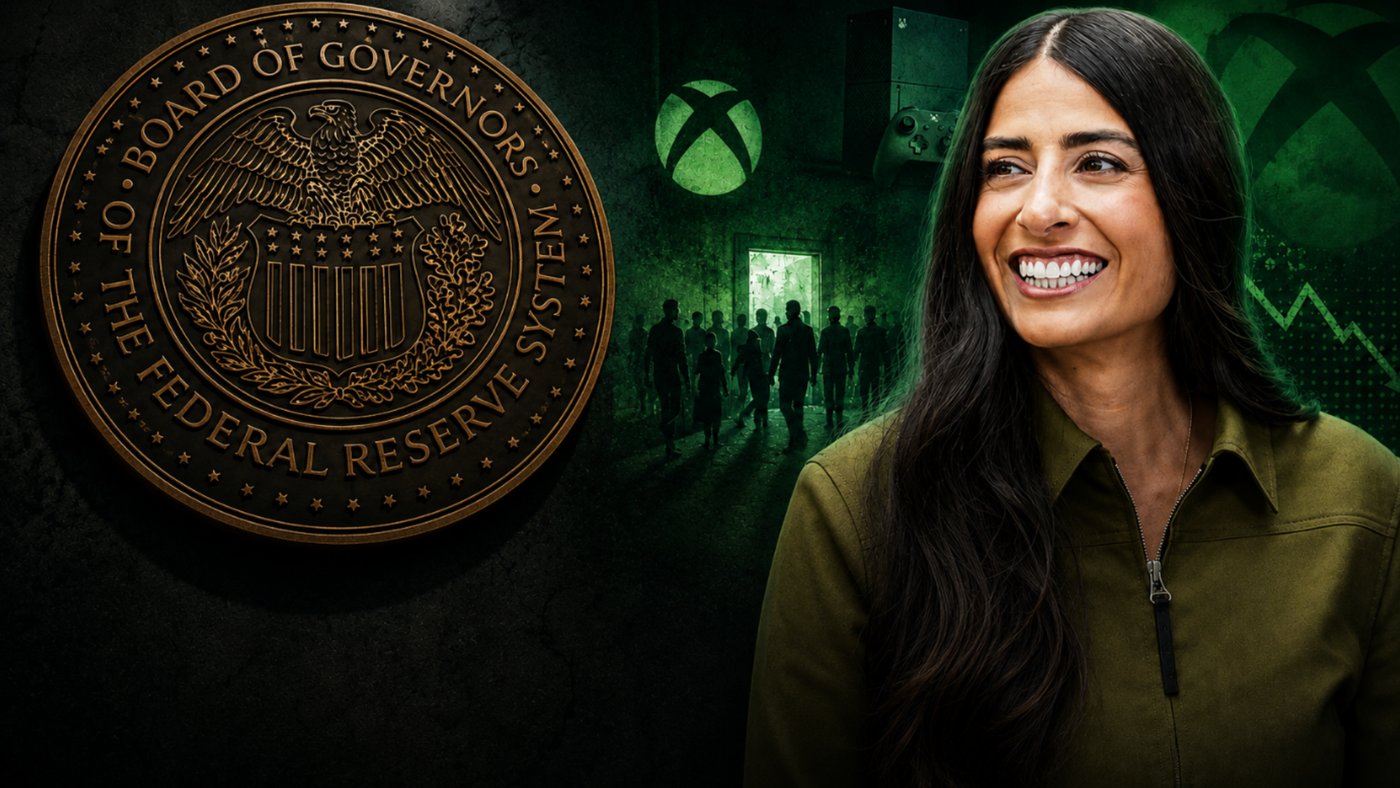
3,200 jobs cut. The internal memo published on Twitter. 64 cents lost on every dollar invested. 14 layers of management. And three days later the CEO who did it all is advising the Federal Reserve on jobs. You cannot make this up.
Moonlight Peaks Is a Vampire Farming Sim That Just Launched to 87% Positive on Steam. For $35.
You play as Dracula's kid who ran away from home to start a farm. You sleep in a coffin. You water crops with magic spells. 87% positive on Steam in two days. $34.99 and no nonsense.
Sony Is Killing Physical Games. Their Own Studio Just Trolled Them About It.
170,000 signatures. Six days of silence. Dominoes making memes. And Insomniac publicly confirming Wolverine gets a real disc while the parent company kills the format. Sony's silence is the statement.