
Sony Is Killing PC Ports. This Isn't Strategy. It's Desperation.
When your console isn't selling, you don't make it more appealing. You make the alternatives disappear. Bold move, Sony.
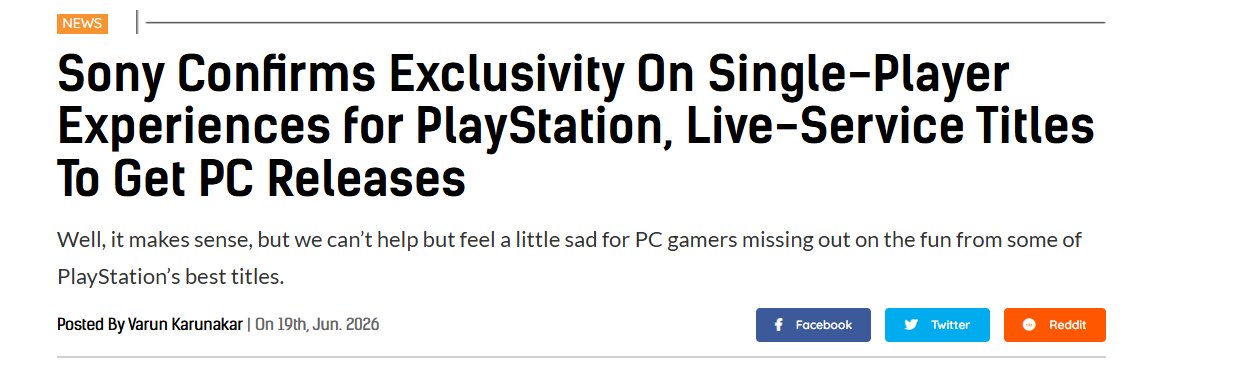
PlayStation CEO Hideaki Nishino confirmed it publicly today in an interview with Famitsu. Sony is done porting first party single player games to PC. Ghost of Yotei won't be coming to PC. Saros won't be coming to PC. The door that Sony spent five years opening is now closing.
This didn't come out of nowhere. Bloomberg reported the pivot back in March. Hermen Hulst, the head of PlayStation Studios, informed staff internally weeks later. But today is the day Sony said it out loud to the public. And the reasoning tells you everything you need to know about where PlayStation is right now.
Five Years of Courtship, Gone
Between 2020 and 2025, Sony ported over 20 first party games to PC. God of War. Horizon Zero Dawn. Spider-Man. The Last of Us Part 1. Returnal. Uncharted. Ghost of Tsushima. Ratchet and Clank. Until Dawn. Helldivers 2. The list goes on.
They didn't just casually toss these ports out either. Sony acquired Nixxes Software, a studio that specialized in PC porting, specifically to handle this pipeline. They invested real money and real infrastructure into building a PC audience. For five years, the message was clear. You don't need a PlayStation to play PlayStation games. Just wait a year or two and they'll come to your platform.
PC gamers heard that message. Some of them built their purchasing decisions around it. Why buy a $500 console when the games would eventually come to the hardware you already own? Sony trained an audience to wait. And now they're punishing that audience for doing exactly what Sony told them to do.
What Actually Happened
Sales dwindled. Thats the short version.
The longer version is more damaging. The PC ports started strong. Horizon Zero Dawn and God of War did well. Spider-Man was a hit. But over time, the returns got smaller. Part of this was the delay problem. PC players were getting games a year or more after console launch. By the time a port arrived, the cultural moment had passed. The conversations had happened. The spoilers were everywhere. The excitement was gone.
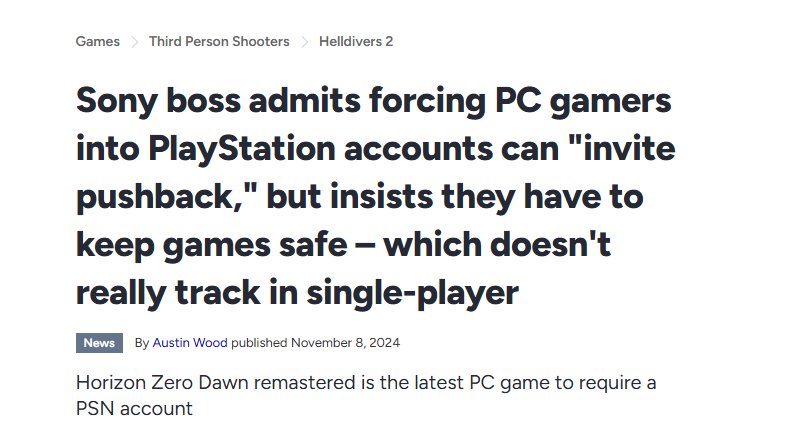
Then the PSN account disaster made it worse. Sony tried to force PC players to create PlayStation Network accounts to play games they bought on Steam. The backlash was immediate and severe. Helldivers 2 got review bombed. Countries where PSN wasn't even available were being locked out of games they already owned. Sony backed down, but the trust damage was done.
So now, instead of fixing the delay problem or rebuilding that burned trust, Sony is just pulling the games entirely. The solution to "PC players aren't buying our ports fast enough" isn't to release them sooner or price them better. It's to take your ball and go home.
This Is About Consoles, Not Games
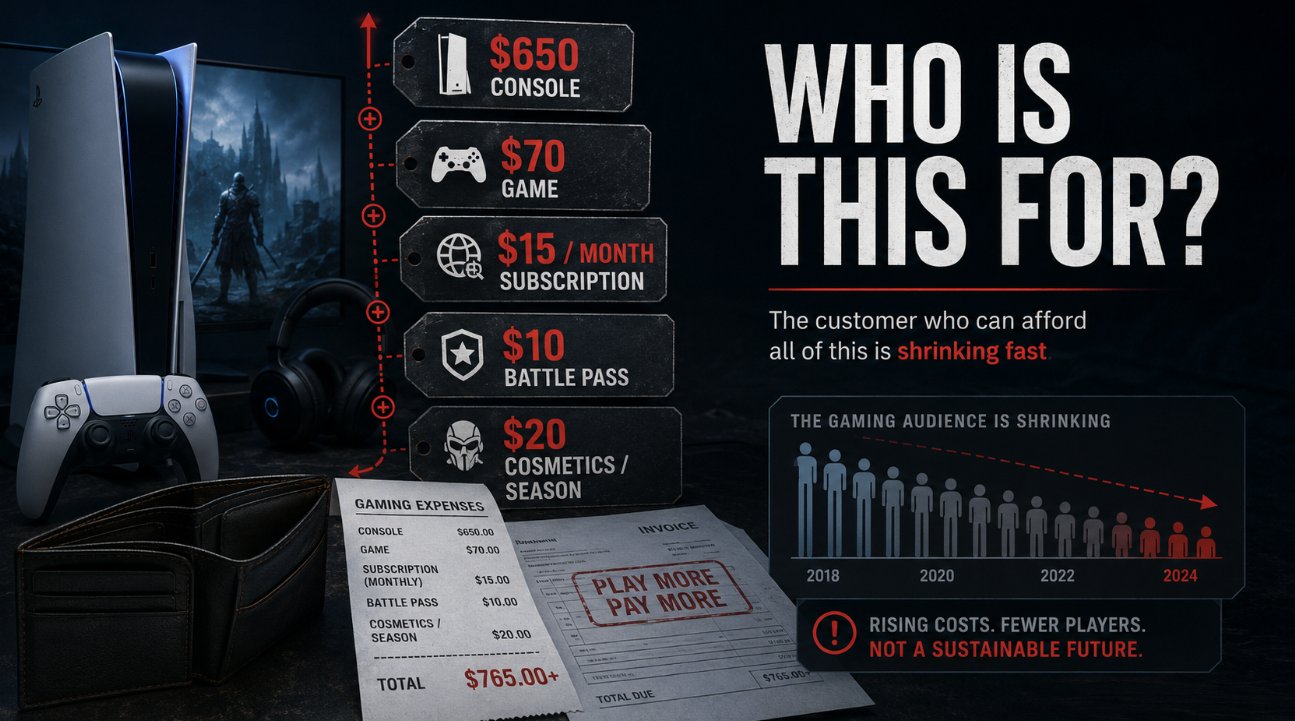
I've been writing about this all month. PS5 sales dropped 46% after two price hikes. The console is $650. The Pro is $900. Sony wrote off $560 million on Bungie. Every live service bet they've made outside of Helldivers has failed. The numbers are not good and everyone can see it.
So what do you do when your console isn't selling? You don't lower the price. You don't bundle more value into the package. You don't make the hardware more appealing through competitive pricing or a stronger Game Pass competitor. No. You make the alternatives disappear. You take options away from the consumer so the only path to your games runs through your hardware.
That is what this move is. This is not a strategy born from confidence. This is desperation dressed up as exclusivity. Sony is not choosing to keep games on PlayStation because the platform is thriving. They're forcing games onto PlayStation because the platform needs the help.
And look, I'm not surprised. I kind of knew this was coming. We've been beating this drum about what Sony's response would be to declining sales and I said it would probably look something like this. They need reasons for people to buy the console. And if the price isn't going to come down, the only lever left is making the games unavailable anywhere else.
The Gamble
Here's where it gets risky for Sony. They're betting that the PC audience they spent five years building will now buy a $650 console to keep playing PlayStation games. That is a massive assumption. Because those PC players didn't migrate to PlayStation gaming out of brand loyalty. They came because the games were available on the platform they already preferred. Remove the games and you don't automatically gain a console sale. You might just lose a customer entirely.
Think about it from the consumer's perspective. You're a PC gamer. You've been playing God of War, Spider-Man, Ghost of Tsushima on your rig. Sony tells you those days are over. Now you need to spend $650 on a PS5 to play the next entries. Plus $70 per game. Plus $60 a year for PS Plus if you want the full experience.
Some people will make that jump. But a lot of people won't. A lot of people will look at that price tag and then look at the massive library of PC games available to them on Steam. They'll see indie titles we've been writing about all year that cost $6 to $20 and are scoring higher than most AAA releases. And they'll decide that PlayStation exclusives alone aren't worth the investment.
And if those people walk away Sony doesn't just lose the PC revenue they were already making. They lose the audience entirely. No console sale. No game sale. No PS Plus subscription. Nothing.
Xbox Is Watching This
The timing here is interesting because Xbox is going through its own existential crisis right now. Asha Sharma's "this cannot continue" memo. Layoffs coming in July. Revenue dropping. But Xbox's response has been the opposite of Sony's in some ways. They went multiplatform. They put games on PlayStation. They put games on PC and mobile. The philosophy was meet the player where they are.
Now they're partially reversing that too with Gears E-Day and Clockwork Revolution being console exclusive. But the overall direction has been toward openness, not retreat.
Sony is going full fortress. Pull up the drawbridge. Lock the gates. If you want our games, you come to us. Whether that's the right call depends entirely on how strong the lineup is. Wolverine in September. GTA 6 in November. Those will sell consoles regardless. But beyond this year? What does 2027 look like? What does 2028 look like? Because if the lineup thins out, the fortress strategy becomes a prison.
The Bigger Picture
We've been writing about the gaming industry pricing itself out of its own customer base all year. Hardware costs quadrupling from the RAM crisis. Consoles hitting $650. Games pushing toward $80 and $100. Battle passes and monetization inflating on top of everything else. And now the one platform holder that was giving PC gamers a way to play without buying a console is slamming that door shut.
This comes off as scummy to me. And desperate. Sony had options. They could have released ports day and date with console to eliminate the delay problem. They could have priced ports competitively. They could have treated the PC audience as an expansion of their ecosystem instead of a threat to their hardware sales. Instead they chose coercion over value.
It might work in the short term. Wolverine being PS5 only will move some consoles. But long term? If these games don't sell well enough at the new console prices, and if the studios making them start looking at other options because the install base isn't there, this could be the move that accelerates the decline instead of reversing it.
We're watching both major platform holders scramble in real time. Xbox admitting the model is broken. Sony trying to force it to work through exclusivity. Neither approach feels like a solution. It feels like two companies reaching for different life preservers while the ship takes on water.
Time will tell which one stays afloat. But I wouldn't bet the house on either of them right now.
Share this article
Comments

James Brooke
Founder & Editor
Gaming industry analyst and video editor covering gaming trends, indie games, and industry analysis.
About the author →Related Articles
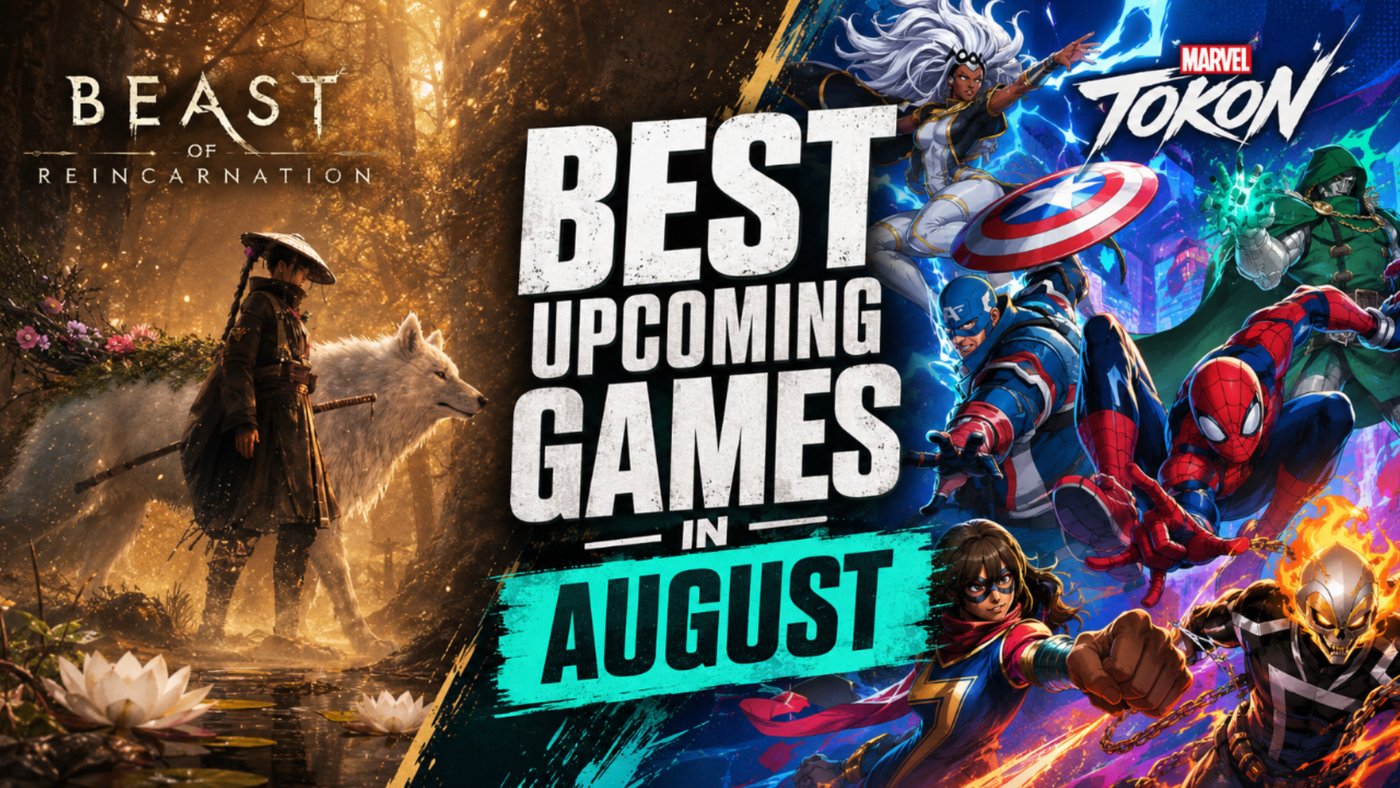
Best Games August 2026: 5 Headliners and 5 Under the Radar
Game Freak outside of Pokemon. MGS4 finally on modern hardware. Hell Let Loose Vietnam. A Marvel fighting game from Arc System Works. August is the warm up lap before September destroys everything.
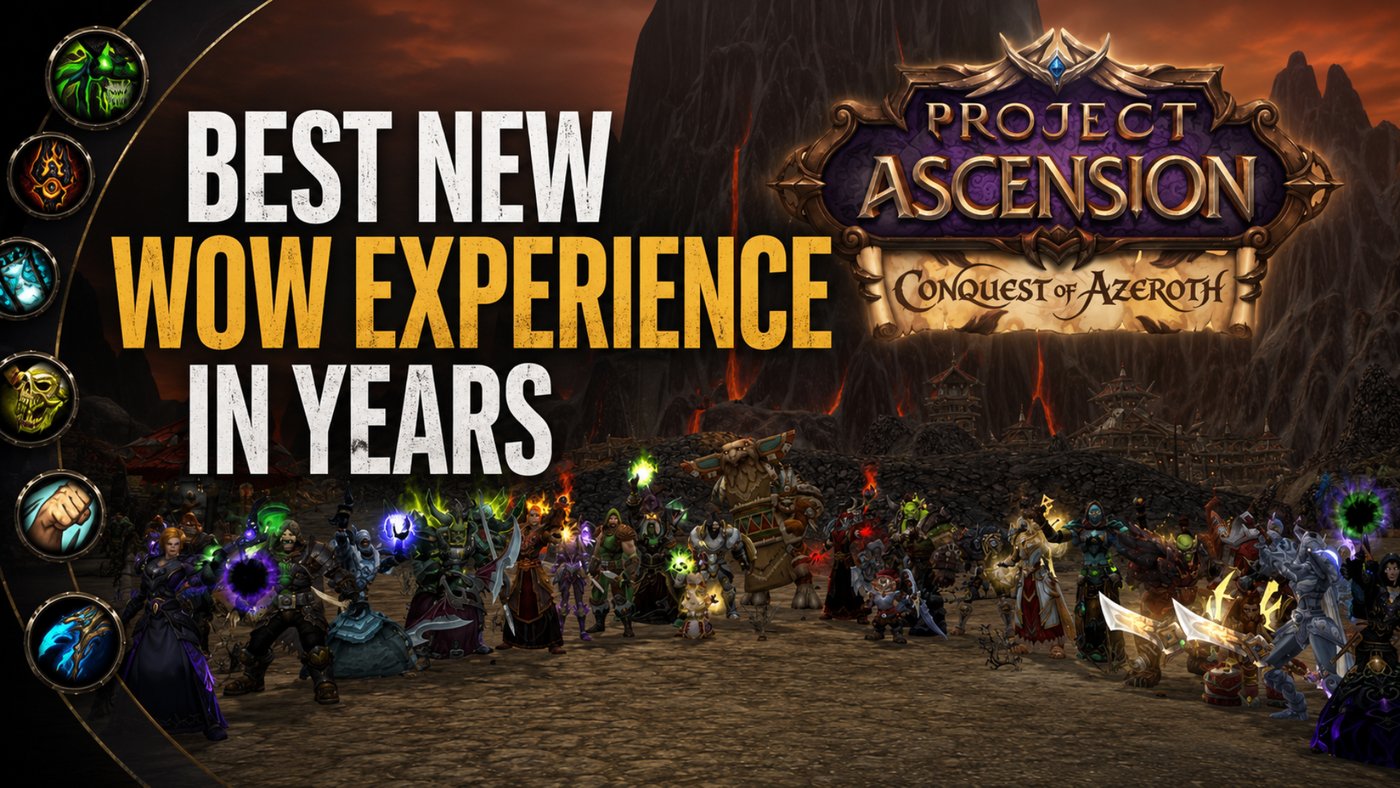
Conquest of Azeroth: The Best New WoW Isn't From Blizzard
21 classes. 70 specs. 30K players per server. 10 hour queues on opening day. The best new WoW experience in years and Blizzard had nothing to do with it. Play it while you can.
Sony Is Killing Physical Games. Their Own Studio Just Trolled Them About It.
170,000 signatures. Six days of silence. Dominoes making memes. And Insomniac publicly confirming Wolverine gets a real disc while the parent company kills the format. Sony's silence is the statement.
You May Also Like
Latest Patch Notes in Gaming — Week of July 20–26, 2026
Battlefield 6 put boats in the game. Heroes of the Storm reworked Ragnaros. 2XKO overhauled its Fuse systems. Phasmophobia rebuilt 13 Willow Street. Ten games patched this week — here's every update.
The Mound: Brilliant Co-Op Mechanic, Rough Execution
The insanity system is unlike anything in co-op horror right now. You can't trust your own screen. But the game around that mechanic needs work. If ACE Team keeps building, something special is underneath.
Dinoblade: A Viral Animation Clip Became Steam's #1 Game
A 30 second animation clip went viral in 2022. Four years later it's a real game sitting at #1 on Steam with 89% positive reviews. One developer. $20. A dinosaur with a greatsword. And the boss fights are genuinely incredible.