
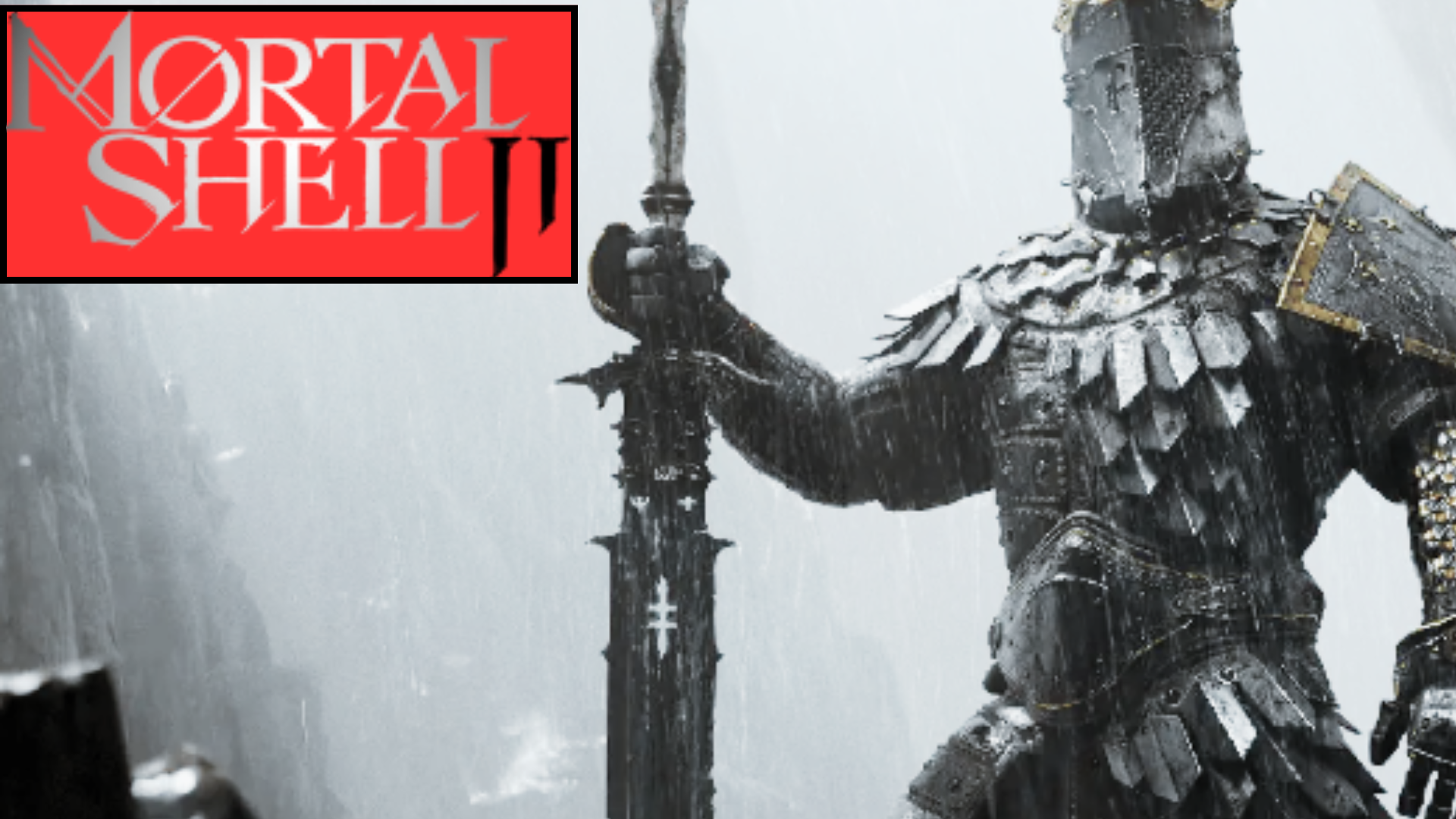
Mortal Shell 2 Looks Incredible. And It's Being Made by 30 People.
I love this story. I genuinely love it.
Four developers left AAA in 2017. They had credits on Ghost of Tsushima, Call of Duty, and the VFX work behind Alita: Battle Angel. They could have stayed comfortable. Instead, they started Cold Symmetry because they wanted to make the game they wanted to play.
Their debut, Mortal Shell, launched in 2020 with a team that averaged about 15 people across its two-year development. It was a soulslike that didn't try to be Dark Souls. It had this genuinely unique shell possession mechanic that let you inhabit the bodies of fallen warriors, each with their own abilities and playstyles. Critics compared it to playing Dark Souls for the first time. It got nominated for Best Debut Game at The Game Awards. And it sold over two million copies.
No massive marketing budget. No publisher acquisition. No pivot to live service. Just a small team making a specific kind of game for a specific kind of player, and the market showing up for it.
And now they're back. And the sequel looks like a completely different scale.
What We Just Saw
On April 1, Cold Symmetry and publisher Playstack dropped a 12-minute gameplay reveal for Mortal Shell II. And I need to be clear about something. This is not a minor step up from the first game. This is a leap.
The original Mortal Shell was largely contained to Fallgrim, a cold, marshy environment that, while beautifully designed, was relatively compact. You could see the seams of a small team working within their limitations. That was fine. The game earned its audience because of what it did well, not what it couldn't do.
Mortal Shell II breaks that open. The game features a compact but interconnected open world that spans multiple biomes. Snowy landscapes, arid mountains, derelict temples, forbidden forests, icy graves, citadels carved from bone. Over 60 handcrafted dungeons. And the word "handcrafted" matters here. These aren't procedurally generated filler rooms. They're designed environments built by people who clearly care about what's around each corner.
The gameplay reveal showcased three playable shells. Tiel, The Acolyte. Eredrim, The Venerable. And Proxima, The Broodseeker. Each one carves a different path through the world with their own combat style and approach. The combat itself has been completely reworked. It's faster, more aggressive, and now includes ranged firearms alongside the melee. There's no stamina bar restricting your movement. Instead, the system is built around breaking enemy posture and capitalizing with critical strikes.
And in what might be one of the most unexpected reveals I've seen in a soulslike, one of the shells apparently lets you transform into a sheep. I'm not making that up. There's a brief moment in the trailer where the player character morphs into a sheep and starts swinging at enemies. I have no idea what that's about and I kind of love that.
30 People
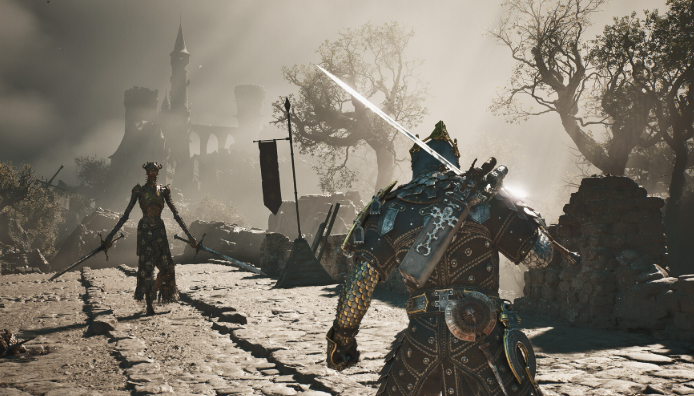
Here's the number that keeps hitting me. Cold Symmetry is a 30-person studio. That's it. Thirty people built what we just saw in that 12-minute gameplay reveal.
For context, the first Mortal Shell was made with about 15 people and it was a tight, focused, roughly 12-15 hour experience with a handful of major areas. Now, with double the team, they've built an interconnected open world with over 60 dungeons, multiple biomes, expanded combat with firearms, and a deeper shell system with more characters and more upgrade paths.
That is an insane development efficiency. And it speaks to something I keep coming back to on this site. When a small team has a clear creative vision and isn't being pulled in twelve different directions by executives who've never touched a controller, they can build something that punches way above its weight class.
The Unreal Engine interview with Cold Symmetry from back in 2020 is worth reading if you haven't. The co-founders talked about how they cut features that didn't serve the core identity. A procedural generation system. An item-throwing mechanic. A miniaturization potion. They had all these ideas, but they kept coming back to the question: does this serve the game we're making? If not, cut it.
That discipline is rare. Especially when big studios are doing the exact opposite, throwing every feature at the wall and praying something sticks. More mechanics, more systems, more characters, more everything. And the result is games that cost $300 million and still feel hollow.
Cold Symmetry knows what they are. They make dark, brutal, handcrafted soulslikes for people who want that specific experience. And they're getting better at it with every release.
The Business Side
Let's talk numbers for a second because the business story here is just as interesting as the game itself.
Mortal Shell II is priced at $49.99 for the standard edition. Not $70. Fifty bucks. There's also a Revered Edition at $69.99 that comes with a collector's box, steelbook, art prints, and an art book. That edition is physical-only and exclusive to PS5. Pre-orders for both editions are live now, with pre-order bonuses including two Harbinger skins.
The game is coming to Steam, PS5, and Xbox Series X|S later in 2026. No exact date yet, but the gameplay reveal's timing suggests a Summer Game Fest announcement is likely. There's also an open PC beta reportedly planned for this summer.
Playstack, their publisher, has been named UK Publisher of the Year for two consecutive years. And critically, Cold Symmetry is still independent. They haven't been acquired. They haven't been absorbed into a larger corporate structure. They're still the same studio that four developers founded in 2017, just bigger and with more resources earned through their own success.
That's the model. Ship a good game. Sell it at a fair price. Earn your audience. Reinvest into making the next one better. No shortcuts. No corporate parent pulling strings. No live-service bait and switch.
Why This Matters
I cover a lot of bad news on this site. Studio closures, layoffs, price hikes, broken launches. That's the reality of the industry right now and pretending otherwise would be dishonest.
But stories like Cold Symmetry are the other side of that coin. They're proof that the path still works. You can leave AAA, start something of your own, make the game you want to make, and find an audience that wants exactly what you're building. Two million copies sold. A Game Awards nomination. A sequel that looks genuinely ambitious. And they did it with 30 people.
In a month where Sony is closing studios, Epic is laying off a thousand employees, and every major publisher is talking about "right-sizing" and "cost optimization," Cold Symmetry is just over here making a really cool-looking game with a team small enough to fit in a conference room.
Credit where credit's due. This is what it looks like when you let talented people make the thing they're passionate about. I can't wait to play it.
Mortal Shell 2 Trailer - https://www.youtube.com/watch?v=uDuf-im3stk
Share this article
Comments
Related Articles
"It Was Just a Placeholder." The Gaming Industry's Favorite AI Excuse Has Become a Script.
Three studios. Three apologies. The same sentence. The problem isn't AI in development. It's that nobody disclosed it until players caught them. The pattern is undeniable.
While Everyone Else Squeezes You for More, Valve Just Quietly Made Gaming Cheaper for Half the Planet
Sony raises console prices. Publishers push $70 as the new normal. Valve responds by building tools to make games more affordable in 35 currencies. The contrast tells you everything about where the industry is right now.
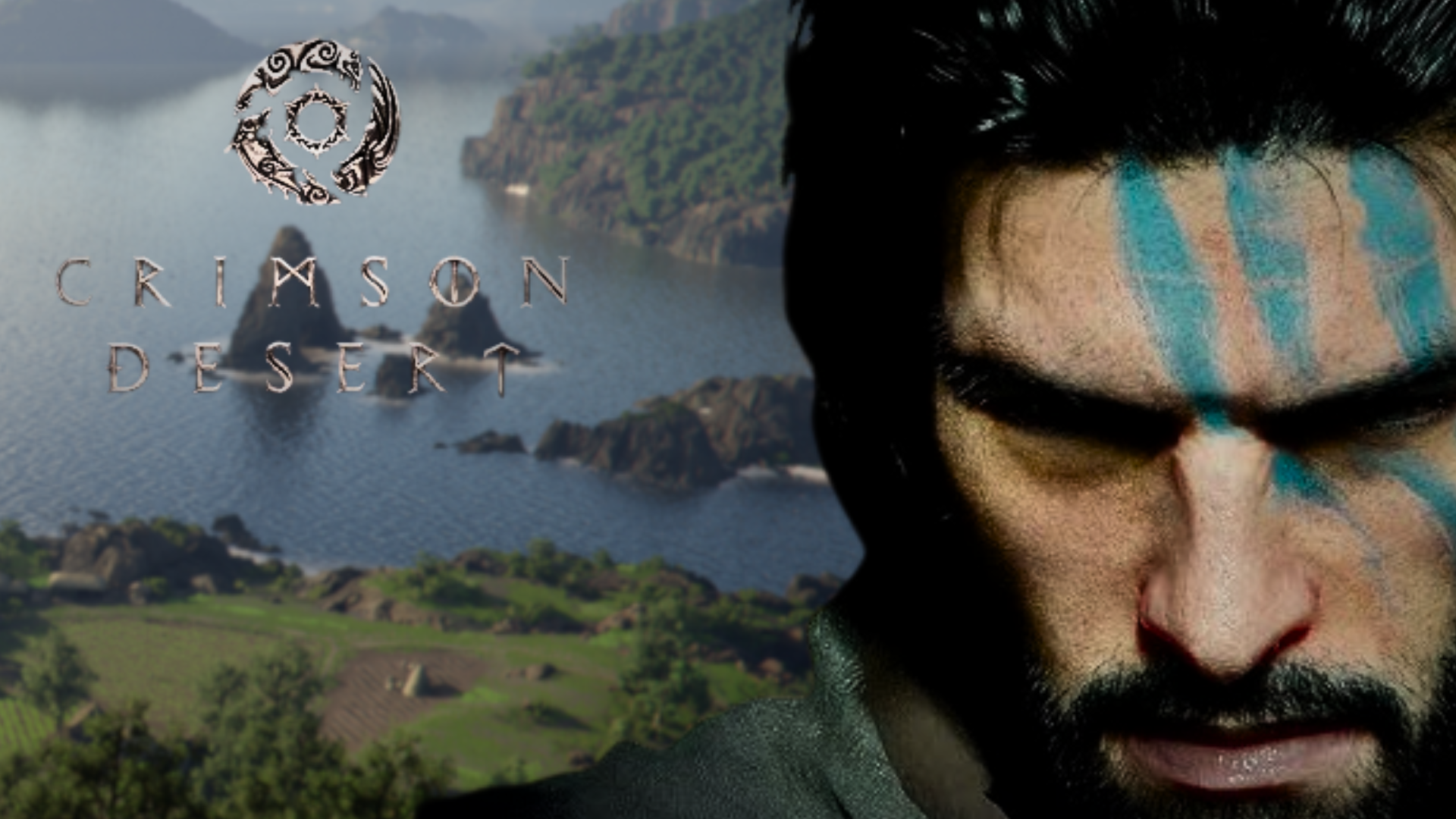
Crimson Desert Is Already Breaking Records and It Hasn't Even Launched Yet
Crimson Desert Is Already Breaking Records and It Hasn't Even Launched YetThree million wishlists. Four hundred thousand pre-launch copies sold on Steam alone. Over $20 million in revenue before a...
You May Also Like
REPLACED: Eight Years, a War, and Zero Compromises
The game was finished. The reviews were positive. They delayed it anyway.
One Guy. No Publisher. No Multiplayer. $15. Road to Vostok Just Launched and It's Already Winning.
A solo Finnish developer turned down every publisher, ported his game from Unity to Godot in 615 hours, released four free demos, and just launched a $15 hardcore survival game to 5,000+ day-one players and Very Positive Steam reviews. Full breakdown at EarlyMeta.
Eidos Montreal Spent Hundreds of Millions on a Game Nobody Will Ever Play. Then They Fired 124 People.
Seven years. Four game engines. Hundreds of millions of dollars. A Deus Ex sequel killed to fund it. Then Embracer canceled Wildlands and fired 124 people. Full breakdown with receipts.