
"It Was Just a Placeholder." The Gaming Industry's Favorite AI Excuse Has Become a Script.
Three studios. Three apologies. The same sentence, almost word for word.
"AI-generated assets were used strictly as temporary placeholders during development and were never intended to be part of the final release."
That's not a coincidence. That's a press template. And I'm going to walk you through every single time it's been deployed, because the pattern here tells you something much bigger than one game shipping a weird painting of a horse fusing with a human.
The Crimson Desert Version
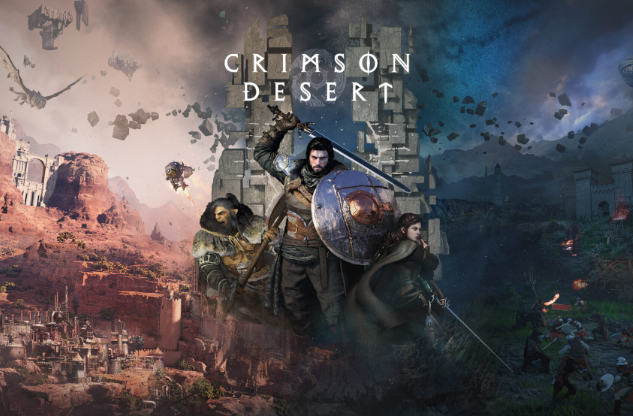
Crimson Desert launched on March 19. Massive game. Beautiful world. Nearly 250,000 concurrent players on Steam in its first weekend. Two million copies sold in 24 hours. By every reasonable metric, a success story.
And then, within days, players started finding the paintings.
I'm not talking about subtle stuff. I'm talking about framed artwork inside the game where horses are melting into their riders. Where limbs dissolve into jagged, stone-like shapes. Where swords clash at impossible angles and a mage is rendered in that unmistakable, flat AI style. The kind of images where you look at them for two seconds and something just feels off.
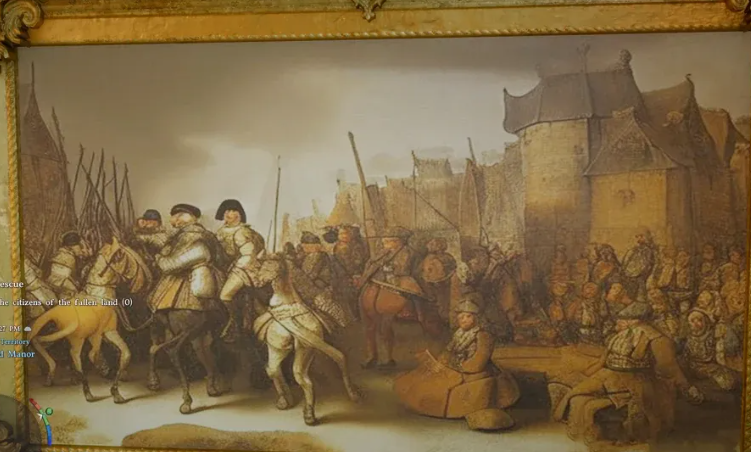
Reddit lit up. Twitter lit up. And Pearl Abyss had a problem.
On March 23, four days after launch, they put out a statement. Here's what they said. AI tools were used to "rapidly explore tone and atmosphere" during early production. The generated assets were intended as placeholders. They were "unintentionally included in the final release." Pearl Abyss promised a "comprehensive audit of all in-game assets" and apologized for the "lack of transparency."
Then, over this past weekend, they patched them out. Patch 1.01 replaced the AI paintings with hand-drawn artwork. Players have been comparing the before and after screenshots, and I can't lie, the replacements actually look great.
But here's the thing. Players are already finding ones they missed. Outside the Goldleaf trading tent. On goblin notice boards. In letters. The audit isn't done. The apology tour is still running.
And none of this is new.
The Script
Let me show you something. I'm going to put three statements side by side.
11 Bit Studios, June 2025, after AI text prompts and AI-generated translations were found in The Alters: "AI-generated assets were used strictly as temporary WIPs during the development process and in a very limited manner. Unfortunately, due to an internal oversight, this single placeholder text was mistakenly left in the game."
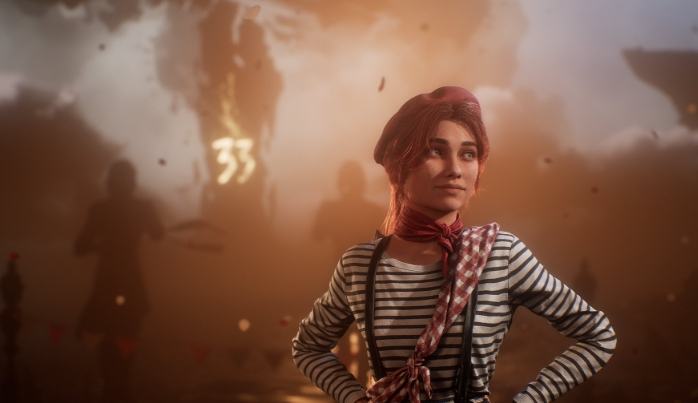
Sandfall Interactive, December 2025, after AI placeholder textures were found in Clair Obscur: Expedition 33: "When the first AI tools became available in 2022, some members of the team briefly experimented with them to generate temporary placeholder textures." They said these were "missed" during QA and patched out within five days.
Pearl Abyss, March 2026, after AI-generated paintings were found in Crimson Desert: "While these tools were primarily used during early production, with the expectation that these assets would be replaced prior to release, we recognize that this does not excuse the lack of transparency."
Temporary. Placeholder. Unintentional. Oversight. Not intended for the final release.
It's the same sentence wearing three different outfits.
The Problem Isn't the Tool. It's the Hiding.
I want to be very clear about what this story actually is. Because I think a lot of the conversation around AI in gaming gets muddied by people who want it to be simpler than it is.
This is not about whether developers should use AI during the development process. Tools are tools. Studios use all kinds of technology to build games. They use procedural generation, they use middleware, they use marketplace assets, they use motion capture algorithms, they use whatever gets the job done within their budget and timeline. AI is another tool in that toolbox. Debating whether it should exist is a conversation for a different day.
What this is about is transparency.
Every single one of these studios got caught. Not one of them disclosed voluntarily. Players found the AI art, players found the AI text, players found the AI translations. And then, only after being caught, the studios deployed the script.
If you're going to use generative AI in your development process, just say so. Put it on your Steam page. Mention it in your marketing materials. Let people make informed decisions. That's it. That's the bar. And three studios in less than a year couldn't clear it.
Why the Same Excuse Keeps Showing Up
So why does this keep happening? Why do AI assets keep shipping in finished games when studios say they were never supposed to be there?
Because AI-generated assets are now embedded in game development workflows. They're being used to fill gaps during production, to mock up environments, to generate texture ideas, to block out visual concepts. That's a normal part of modern game development.
But here's what's happening. These placeholder assets enter the build. They sit in the game files. And as the project moves through crunch, through deadline pressure, through QA passes that are already stretched thin, these placeholders don't get replaced. They ship.
The excuse is always the same because the problem is always the same. AI placeholders are now standard in development pipelines, and the step where they get replaced is the step that keeps getting skipped under pressure. That's not bad luck. That's a process failure.
And honestly? I get it. Game development is insanely complex. QA can't catch everything, especially when studios are cutting headcount left and right. I've covered enough of this industry to know that the people making these games are often overworked, underpaid, and operating under impossible deadlines.
But that makes the transparency piece even more important. If you know that AI placeholders are in your pipeline. If you know that crunch and deadline pressure increase the risk of them shipping. Then disclose it upfront. Don't wait for players to find it and then act surprised.
The Consequences Don't Make Sense
Here's what makes this even more confusing. The consequences for getting caught are completely inconsistent.
Clair Obscur: Expedition 33 got hit hard. Sandfall Interactive had its Indie Game Awards wins stripped. Game of the Year and Debut Game, both pulled. The Indie Game Awards have a hard line on generative AI, and Sandfall's own producer had confirmed AI usage in an interview months before the ceremony. They got caught, and the punishment was public and immediate.
But the game still won nine awards at The Game Awards, including Game of the Year. The biggest awards show in gaming didn't care. Sales spiked 6x after The Game Awards ceremony.
11 Bit Studios? They put out a statement and moved on. The Alters had AI text prompts literally visible on in-game monitors. ChatGPT responses sitting there in plain sight. 11 Bit called it "0.3% of the overall text" and basically said "we should have disclosed it, our bad." No awards were stripped. No real fallout.
Crimson Desert? Nearly 5 million copies sold. The CEO admitted the story was weak because they focused on gameplay. The AI art got patched. The game is doing fine.
So what's the actual incentive to disclose? Because right now, the math looks like this: use AI during development, don't mention it, hope nobody notices, and if they do, deploy the script. Apologize. Promise an audit. Patch it out. Move on.
The cost of getting caught is a bad news cycle for a week. The cost of getting ahead of it is a bad news cycle before your game even launches. I'm not saying that's the right calculation. I'm saying that's the calculation these studios are making. And until the consequences of hiding it are worse than the consequences of disclosing it, the script isn't going anywhere.
Steam's Disclosure Problem
And here's where Valve enters the conversation. Because Steam has a policy. Developers are required to disclose the use of AI-generated content on their store pages. It's right there in the rules.
The Alters didn't disclose. Clair Obscure didn't disclose. Crimson Desert didn't disclose.
Nothing happened.
I just wrote a piece about Valve doing right by players with their new regional pricing tools, and I meant every word of it. Credit where credit's due. But on AI disclosure, Steam's policy is a sign on a wall that nobody reads and nobody enforces.
If Valve is serious about transparency, the policy needs teeth. If they're not serious, they should just take it down so we all know where we stand. Because right now, it's theater. And players are the ones left playing detective.
What I Want to See
I need them to stop hiding it.
Put the disclosure on the store page. Tell players what tools were used and how. Let the audience decide what they're comfortable with. Some players won't care at all. Some players will care a lot. Both of those positions are valid. But neither group can make an informed decision if the information is hidden from them until somebody finds a horse melting into a person on a painting in a tavern.
The gaming industry has a massive trust problem right now. Layoffs, price hikes, broken launches, abandoned live-service games, studios closing before they ship anything. The last thing this industry needs is another reason for players to feel like they're being lied to.
Transparency costs nothing. Literally nothing. A line of text on a store page. A mention in a blog post. A note in the credits. It is the easiest possible thing to do right. And three studios in less than a year couldn't manage it.
Looking Forward
Crimson Desert's patch is live. Some AI art is gone. More will probably be found. Pearl Abyss will keep auditing. The game will keep selling. And six months from now, another studio will ship another game with AI assets baked in, and we'll read the same statement with the same words in the same order.
Unless something changes. Unless Steam enforces its disclosure policy. Unless the industry decides that honesty upfront is less painful than an apology after the fact. Unless studios realize that the script doesn't work when everybody's already read it.
The question isn't whether it'll happen again. It's whether we're going to keep accepting the same answer.
Valve article - https://earlymeta.com/article/while-everyone-else-squeezes-you-for-more-valve-just-quietly-made-gaming-cheaper-for-half-the-planet
Share this article
Comments
Related Articles
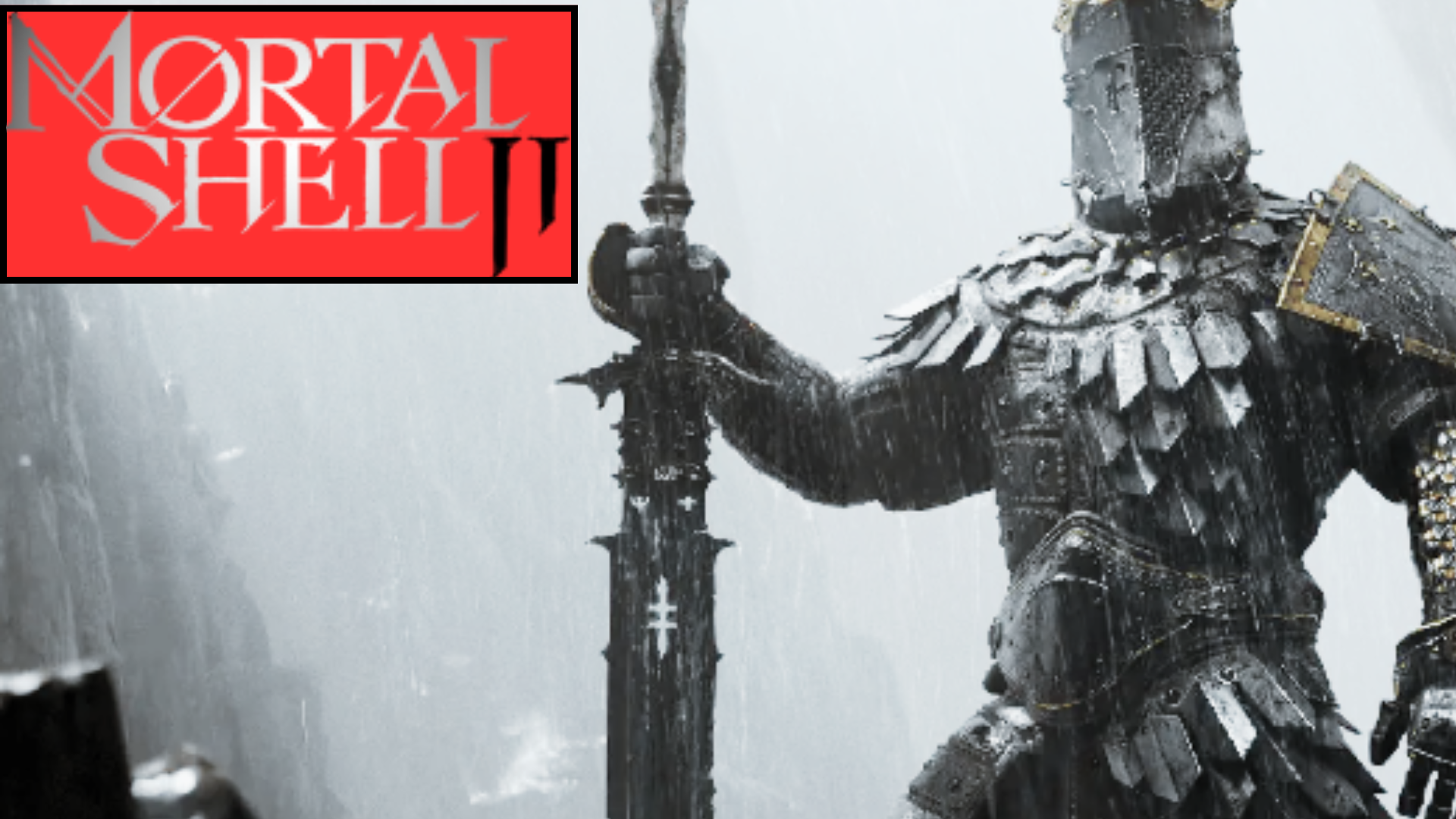
Mortal Shell 2 Looks Incredible. And It's Being Made by 30 People.
Cold Symmetry left AAA in 2017 with four developers. Mortal Shell sold 2 million copies. Now Mortal Shell 2 has 60+ handcrafted dungeons, an open world, firearms, and a team of 30. This is how indie gets it right.
While Everyone Else Squeezes You for More, Valve Just Quietly Made Gaming Cheaper for Half the Planet
Sony raises console prices. Publishers push $70 as the new normal. Valve responds by building tools to make games more affordable in 35 currencies. The contrast tells you everything about where the industry is right now.
Crimson Desert Is Already Breaking Records and It Hasn't Even Launched Yet
Crimson Desert Is Already Breaking Records and It Hasn't Even Launched YetThree million wishlists. Four hundred thousand pre-launch copies sold on Steam alone. Over $20 million in revenue before a...
You May Also Like
REPLACED: Eight Years, a War, and Zero Compromises
The game was finished. The reviews were positive. They delayed it anyway.
One Guy. No Publisher. No Multiplayer. $15. Road to Vostok Just Launched and It's Already Winning.
A solo Finnish developer turned down every publisher, ported his game from Unity to Godot in 615 hours, released four free demos, and just launched a $15 hardcore survival game to 5,000+ day-one players and Very Positive Steam reviews. Full breakdown at EarlyMeta.
Eidos Montreal Spent Hundreds of Millions on a Game Nobody Will Ever Play. Then They Fired 124 People.
Seven years. Four game engines. Hundreds of millions of dollars. A Deus Ex sequel killed to fund it. Then Embracer canceled Wildlands and fired 124 people. Full breakdown with receipts.