
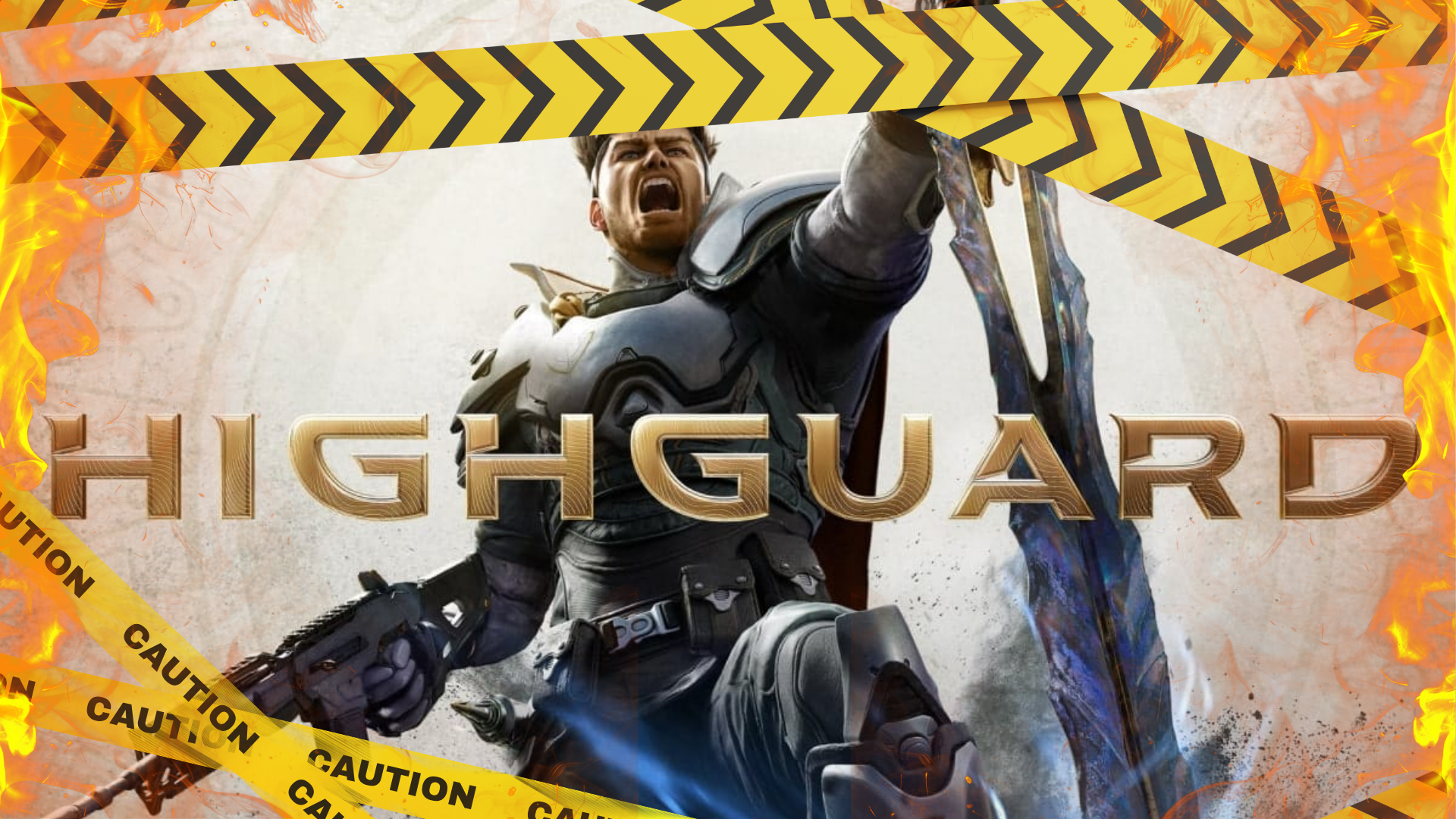
Highguard Developers Are Missing the Point—And That's the Real Problem
Highguard Developers Are Missing the Point—And That's the Real Problem
Look, I'll be honest with you. Watching the discourse around Highguard unfold over the past few weeks has been genuinely frustrating, but probably not for the reason you'd expect.
Sixteen days. That's how long it took for Wildlight Entertainment to go from launching their debut game to laying off most of their staff. Sixteen days from "the future seemed bright" to "unfortunately, I was laid off today." And now, instead of any real introspection about why Highguard failed, we're getting a narrative from developers that essentially boils down to: "Gamers are mean and content creators wanted us to fail."
And here's the thing—that's not entirely wrong. But it's also nowhere close to the full picture. And that refusal to see the full picture? That tells you everything you need to know about how these guys got here in the first place.
The Developer Response That Started a Firestorm
On February 12th, former Highguard tech artist Josh Sobel published a lengthy post on X titled "Reflecting On Shipping My First Game." It's an emotional read. Sobel poured two and a half years into this project. He was laid off the day before. The wounds are fresh.
But the framing of that post is where things get complicated.
Sobel argues that Highguard was "turned into a joke from minute one" due to "false assumptions" about a paid Game Awards slot (which, to be fair, wasn't true—Geoff Keighley gave them that spot for free). He talks about receiving over 14,000 negative reviews from users with less than an hour of playtime. He blames content creators who "love to point out the bias in folks who give positive previews after being flown out for an event, but ignore the fact that when their negative-leaning content gets 10x the engagement of the positive, they've got just as much incentive to lean into a disingenuous direction."
And then he drops this line: "All products are at the whims of the consumers, and the consumers put absurd amounts of effort into slandering Highguard. And it worked."
Slandering.
Let that word sit for a second. Because that's not criticism. That's not feedback. That's slander in his view.
The Harassment Was Real—Let's Get That Out of the Way
Credit where credit's due: Sobel did face genuine harassment. People mocked him for having autism listed in his bio. They told him to "get out the McDonald's applications." Content creators made videos specifically targeting him after he made his Twitter private. That's not criticism—that's just being a terrible person online. And nobody deserves that.
The layoffs are devastating. Real people lost real jobs working on something they cared about. That sucks. It always sucks. I've covered enough studio closures to know that the human cost of these failures is immense.
But here's where it gets murky: using harassment as a shield against all criticism doesn't hold up. And conflating "people were mean to me online" with "that's why our game failed" is a dangerous deflection.
So Why Did Highguard Actually Fail?
This is where the conversation needs to shift, because there are actual, legitimate, documented reasons Highguard didn't connect with players. And these aren't manufactured grievances from rage-bait YouTubers looking for clicks. These are criticisms from players who tried the game and professional reviewers who gave it honest assessments.
Performance Issues That Shouldn't Exist in 2026
Steam reviewer BrotherFrog summed it up pretty bluntly: "Why does this run so poorly? Actual 2026 game moment." They listed specs that included a Ryzen 7 7800X3D and an RTX 5080—hardware that should brute-force its way through anything. And they couldn't get stable performance in the shooting range.
That's crazy to me. You've got former Apex Legends and Titanfall developers—people who know how to ship polished shooters—and the game launches with performance issues on high-end rigs? Multiple reviews cite framerate problems, inconsistent optimization across different setups, and general technical jank that made first impressions rough.
In a market where you're competing against polished, established live-service games, you don't get second chances on performance. Players bounce. That's just reality.
An Art Style That Pleased Nobody
One of the most common criticisms I saw had nothing to do with ideology or culture war nonsense. It was about Highguard's visual identity—or rather, its complete lack of one.
Creative Bloq ran a whole piece breaking down how the game's art failed by "trying to please everyone." One observer on X called it "ArtStation front page: the video game"—not as a compliment, but as a critique of how generic and derivative every asset looks. Another described it as "an incestuous sludge of uninspired industry portfolio aesthetics designed for maximum mass appeal."
Harsh? Sure. But here's the thing—they're not wrong.
Kotaku's review called the game "such a boring game to look at," noting that every asset has had "any potential character and grit sanded down to ensure the various pieces blend together. And they do blend. Perfectly. Too perfectly. Nothing sticks out. There's no charm. No quirks. Nothing to talk about."
The review went on to say: "I've played over 14 hours of the game now across many matches, and I struggle to name a character beyond Slade."
Fourteen hours. Can't name the characters. That's not toxic gamers sabotaging your game. That's a design failure.
Hero Shooter Fatigue Is Real
I just don't get it, man. How do you look at the current landscape—Marvel Rivals dominating, Overwatch 2 on life support, Concord dead in two weeks, Marathon struggling to find footing—and think "yes, now is the time to launch another hero shooter"?
Players aren't stupid. They can see a saturated market. They already have their game of choice, and switching costs are high. You're asking people to learn new characters, new maps, new systems, build new friend groups, invest new time—for what? For a game that's trying to be "a little bit of everything" without excelling at anything?
PC Gamer's review hit this directly: "Highguard's central mode is genuinely cool, but it's overstuffed with FPS trends that should go away for a while." They called the game "artistically tacky" and "overcomplicated."
When your positive reviews are saying things like "it's often fun, but..." you've got a problem.
The 3v3 Problem Nobody Addressed
Multiple reviews cited the 3v3 format on massive maps as fundamentally broken. As one Steam reviewer put it: "The map is the size of Latvia but you only have 3 players so most of your time is spent running around the map looking for something to kill."
The pacing was off. The matches felt empty. And while Wildlight did eventually add a permanent 5v5 mode, that came after first impressions had already been cemented.
The Industry Veteran Who Said What Everyone Was Thinking
Adrian Chmielarz—creative director at The Astronauts, the guy behind Witchfire, The Vanishing of Ethan Carter, and Painkiller—posted a response to Sobel's reflection that cuts to the heart of the issue.
"There is no bigger mystery in game development to me than games that hundreds of people work on for years, and nobody can see that they are just bad and stand no chance. Highguard is one such game, and now you have a developer still unable to believe they made a bad game."
He continued: "No, it's 'the gamer culture' that killed it. And The Game Awards. And the rage-baiting YouTubers. Not the boring, artificial world. Not the pseudo-edgy yet generic characters. Not the corpo-style UI. Not the tired genre."
That's a developer with decades of experience calling this out. Not a toxic gamer. Not a rage-bait content creator. A peer in the industry.
And his final point is the one that should haunt every studio: "It truly boggles my mind. The article starts with quotes about how the game was received internally, yet all it took was one trailer for an average gamer to understand this was doomed to fail."
The Echo Chamber Problem
Sobel's reflection includes this telling detail about internal sentiment before launch: "There's no way this will flop." "This has mainstream hit written all over it." "If there's one project nobody in the industry is worried will fail, it's yours."
How does this happen? How do hundreds of people work on something for years, surrounded by nothing but positive feedback, only to watch it collapse the moment it meets the real market?
The answer is uncomfortable: toxic positivity. Internal echo chambers. A refusal to stress-test assumptions against people who don't have a vested interest in the project succeeding.
As one Twitter user responding to Sobel put it: "The truth is, you guys were high on your own farts. People pooped on it because it was bad. It was generic."
Brutal? Yes. But the alternative is learning nothing and repeating the same mistakes.
The Actual Lesson Here
We've seen this story before. Concord. XDefiant. MultiVersus 2.0. Hyenas. Studios launch live-service games into saturated markets with unclear identities, performance issues, and no compelling reason for players to switch from what they're already playing. The games fail. And then someone blames "gamer culture."
The gaming community can absolutely be toxic. Harassment is real and inexcusable. Content creators do sometimes chase engagement over accuracy. All of that is true.
But none of that explains why 97,000 people tried Highguard at launch and chose not to stay. Those weren't review bombers who never touched the game. Those were actual players who gave it a shot and decided it wasn't worth their time.
The question these guys should be asking isn't "why did gamers slander us?" It's "why did players who tried our game leave within hours?"
Until that question gets answered honestly—without deflection, without blame-shifting, without treating every critic as a bad-faith actor—this is going to keep happening. Studio after studio. Layoff after layoff. Dream after dream crushed against the rocks of a market that has no patience for games that don't respect players' time.
What Happens Next
Wildlight says a "core group of developers" will continue supporting Highguard. There's a roadmap. There are patches coming. Maybe it pulls a No Man's Sky and turns things around. Stranger things have happened.
But for that to work, someone at that studio has to look at the actual feedback—not the harassment, not the memes, but the substantive criticism—and ask: "What if they're right? What if we just made a game that wasn't good enough?"
That's the only path forward. And based on everything I've seen this week, I'm not sure they're ready to walk it.
The real tragedy here isn't that Highguard failed. Games fail all the time. The real tragedy is that when people tried to tell these guys why it was failing, the response was "you're slandering us."
That's how you guarantee the next project ends the same way.
Share this article
Comments

James Brooke
Founder & Editor
Gaming industry analyst and video editor covering gaming trends, indie games, and industry analysis.
About the author →Related Articles
Bungie Just Cut Half Its Studio. 400 People Gone. What's Even Left?
Over 400 people on a single layoff call. Half the studio. Marathon can't hold an audience. Destiny is over. The studio that made Halo is heading toward extinction and nobody can explain what comes next.

Bungie Just Killed Destiny for a Game Nobody Wanted
Sony paid $3.6 billion. Destiny is dead. Destiny 3 doesn't exist. More layoffs are coming. And the developers who built the franchise are being funneled into a game that 10,000 people play.

Slay the Spire 2 Review Bomb: Stop Telling Consumers What Counts
Three review bombs in two months. 80,000 negative reviews. And the only debate anyone wants to have is whether or not it's fair. We're asking the wrong question.
You May Also Like
Moonlight Peaks Is a Vampire Farming Sim That Just Launched to 87% Positive on Steam. For $35.
You play as Dracula's kid who ran away from home to start a farm. You sleep in a coffin. You water crops with magic spells. 87% positive on Steam in two days. $34.99 and no nonsense.
Sony Is Killing Physical Games. Their Own Studio Just Trolled Them About It.
170,000 signatures. Six days of silence. Dominoes making memes. And Insomniac publicly confirming Wolverine gets a real disc while the parent company kills the format. Sony's silence is the statement.
Hunger: The Extraction RPG That Might Finally Get It Right
The team that built Hell Let Loose is back with something completely different. Hunger is an extraction RPG set in Napoleonic Europe and from everything I've seen in the playtest it already looks ready for early access.