

Console Gaming in 2026: Price Hikes, Face Scans, and a $1,200 Xbox
I just don't get it, man.
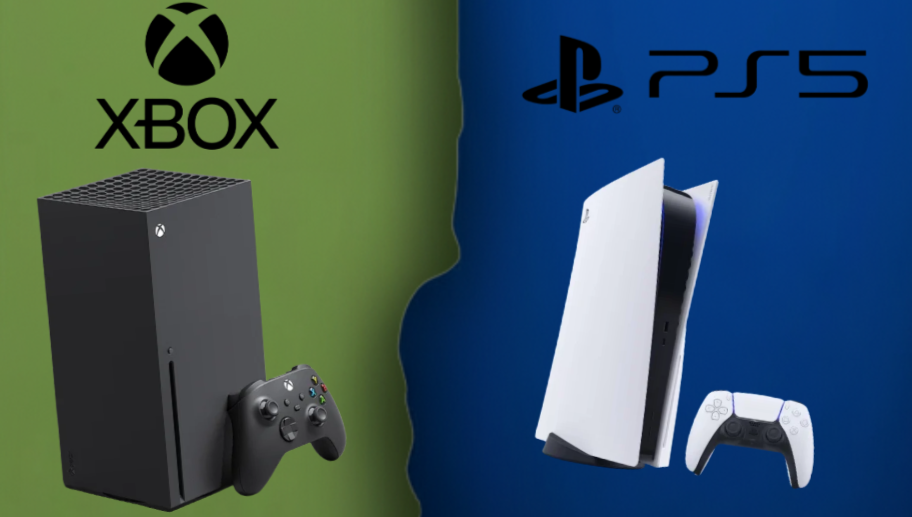
In the span of one week, PlayStation announced that you'll need to submit a face scan or government ID to use voice chat. Xbox admitted the next console could cost over $1,200. And Microsoft walked back its Game Pass price hikes only to quietly remove the single biggest reason most people subscribed in the first place.
All of this. In one week.
If you're sitting there wondering why PC gaming and indie games keep winning the conversation, this is why. The console space isn't just struggling. It's actively making decisions that push people away. And the wildest part is that every single one of these decisions is being framed as something good for players.
Let me walk you through how fast this is unraveling.
Xbox Game Pass: The Blink That Wasn't
Let's start with the one that looks like good news. Because it isn't.
In October 2025, Microsoft raised Game Pass prices by roughly 50% across the board. Ultimate went from $19.99 to $29.99. PC Game Pass jumped from $11.99 to $16.49. The backlash was immediate. Subscribers started leaving. The service that was once positioned as "the Netflix of gaming" started looking more like the cable package you cancel because you realize you're paying for 200 channels you don't watch.
So this week, new Xbox CEO Asha Sharma lowered the prices. Ultimate drops from $29.99 to $22.99. PC Game Pass goes from $16.49 to $13.99. Headlines everywhere. "Xbox Listens to Fans." "Game Pass Gets Cheaper."
But here's what was buried in the fine print. New Call of Duty titles are no longer available on Game Pass at launch.
Hold up.
Call of Duty was the entire pitch. Microsoft spent $69 billion acquiring Activision Blizzard, and the single most visible consumer-facing justification was "Call of Duty on Game Pass day one." That was the reason people subscribed. That was the reason people stayed. That was the talking point that made the acquisition make sense to players.
And now it's gone. Quietly. Packaged inside a price cut so people would focus on the number going down instead of the value going down with it.
This isn't Xbox listening to fans. This is Xbox rearranging deck chairs. They raised the price too high, lost subscribers, panicked, lowered the price, and removed the most expensive content from the service to make the math work internally. You're paying less, but you're getting less. And the thing you're no longer getting is the thing you were paying for.
That's not a deal. That's a restructure disguised as generosity.
PlayStation: Show Us Your Face
Meanwhile, Sony decided that the best way to improve the PlayStation experience is to demand your biometric data.
Starting in June 2026, PlayStation users will need to verify their age to use communication features. Voice chat. Text messages. Party play. Game broadcasting. If you don't verify, those features get locked. You can still play games and buy things from the store, but you can't talk to your friends while you do it.
The verification process uses a third-party service called Yoti. You've got three options. Submit to a facial scan that uses AI to estimate your age based on your facial geometry. Upload a government-issued ID like a driver's license. Or verify through your mobile phone provider.
Let me say that again. Sony wants you to either let an AI scan your face, hand over a copy of your government ID, or give them access to your phone carrier data. To use voice chat. On a console you already own. On a service you already pay for.
Sony says this is about protecting kids. About compliance with the UK's Online Safety Act and similar regulations rolling out globally. And look, child safety matters. Nobody is arguing against protecting minors online.
But here's what nobody at Sony seems willing to acknowledge. The people being asked to verify their age are overwhelmingly adults who have had PlayStation accounts for 10, 15, 20 years. Who have credit cards on file. Who have been buying age-restricted games on PSN for the entire existence of the platform. They've already proven they're adults. Every single time they bought an M-rated game. Every single time they renewed their PlayStation Plus subscription with a credit card.
And now Sony wants a face scan on top of all that. Because "global regulations."
The community response has been exactly what you'd expect. People are furious. The comments under every article about this are wall-to-wall frustration. Players are threatening to cancel PlayStation Plus subscriptions they've held for a decade. And the data security concerns aren't hypothetical. Spain's data protection authority already fined Yoti over $1 million for mishandling biometric data. That's the same company Sony is trusting with your face scan.
And this is spreading. Xbox implemented similar requirements in the UK in late 2025. Discord tried to roll out age verification and faced so much backlash they pushed it to the end of 2026. This isn't a PlayStation problem. It's an industry-wide drift toward requiring players to prove they're allowed to use the things they already bought.

Project Helix: The $1,200 Console
And then there's the next generation. Which is looking like it might be priced for a different species.
Xbox CEO Asha Sharma confirmed this week that the ongoing global memory shortage will directly impact Project Helix's pricing and availability. Her exact words were, "Memory costs will impact pricing, will impact availability."
Industry estimates are placing Project Helix somewhere between $900 and $1,500. Some insiders have it targeting $1,200. For a gaming console.
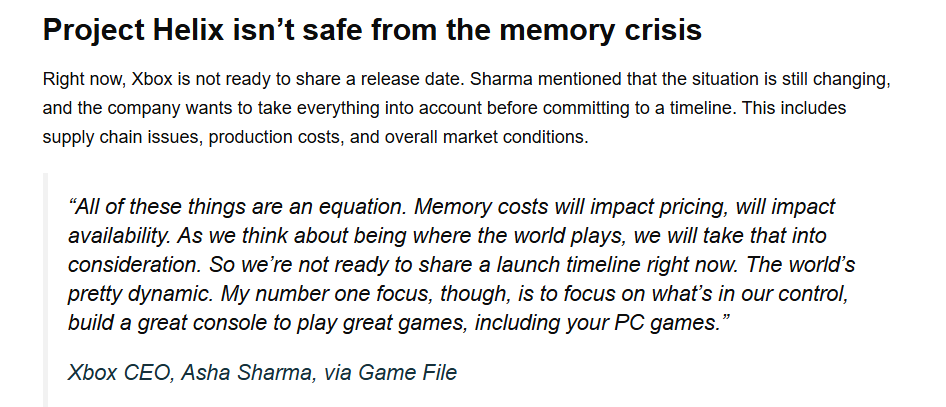
Microsoft is positioning Helix as a hybrid that plays both Xbox and PC games, which is supposed to justify the premium. And maybe it does if you're comparing it to a $2,000 gaming PC. But consoles have never been compared to gaming PCs. They've been compared to other consoles. And a $1,200 console is a fundamentally different product than a $500 one. It's not an upgrade. It's a category change. You're not selling a console anymore. You're selling a luxury item.
Sony isn't in a better position. PS6 rumors have the price pushing toward $1,000. The same memory shortage is hitting everyone. Samsung phones are more expensive. GPUs are more expensive. Valve delayed the Steam Machine because of component costs. The entire consumer electronics market is being squeezed by AI companies buying up global memory supply for data centers.
So the next generation of consoles could realistically cost $1,000 to $1,500. At a time when people are already struggling to justify the value of their current subscriptions.
The Value Proposition Is Collapsing
Here's where all of this connects. Because none of these stories exist in isolation.
Console gaming has always been sold on a simple value proposition. You buy a box. You buy games. You play them. The box is affordable enough that it's not a major financial decision. The games are complete enough that you feel like you got your money's worth. The online services are functional enough that you don't think about them.
Every single part of that equation is breaking right now.
The box is about to cost $1,000 or more. The subscription services are getting more expensive while removing their most valuable content. The games are $70 and increasingly launch incomplete. And now you have to scan your face to use voice chat.
Meanwhile, a kid in Finland just shipped a $15 survival game that works on day one. A solo developer sold 8 million copies of a $20 co-op game. A robot cowboy shooter launched today at $20 with 97% positive reviews. Valve is selling a controller with no stick drift for $99. Steam takes your money and lets you talk to your friends without demanding a copy of your driver's license.
The contrast has never been sharper. And at some point, the console manufacturers need to answer a question that used to be unthinkable.
Why would someone choose this over a PC?
Not a $3,000 PC. A $700 PC. A Steam Deck. A handheld running SteamOS. A setup that costs less than the next Xbox, plays more games, doesn't require a subscription to play online, and doesn't need your biometric data to let you talk to your friends.

This Isn't Doom and Gloom. It's a Reality Check.
I'm not saying consoles are dead. They're not. PlayStation exclusives still matter. Xbox has a new CEO who's at least making moves in the right direction with the Game Pass pricing, even if the CoD removal undercuts it. The convenience factor of a console is real. Not everyone wants to deal with drivers and settings and hardware compatibility.
But convenience only carries you so far when the price triples and the experience gets worse. And right now, the console space is testing how much inconvenience and how many price hikes players will absorb before they start looking elsewhere.
Some of them already are. PC gaming's market share has been growing steadily. The handheld market is exploding. SteamOS is spreading to third-party devices. Indie games are pulling player hours away from AAA at an accelerating rate.
The console manufacturers can see the same data we can. The question is whether they care enough to change course before the next generation launches at a price point that turns consoles into a niche product.
Because right now, the people making the decisions in this space seem to be doing everything they can to convince players to leave. And sooner or later, players are going to take them up on it.
That's where we're at right now. And...Well... It sucks
Share this article
Comments

James Brooke
Founder & Editor
Gaming industry analyst and video editor covering gaming trends, indie games, and industry analysis.
About the author →Related Articles

Best Games August 2026: 5 Headliners and 5 Under the Radar
Game Freak outside of Pokemon. MGS4 finally on modern hardware. Hell Let Loose Vietnam. A Marvel fighting game from Arc System Works. August is the warm up lap before September destroys everything.

Conquest of Azeroth: The Best New WoW Isn't From Blizzard
21 classes. 70 specs. 30K players per server. 10 hour queues on opening day. The best new WoW experience in years and Blizzard had nothing to do with it. Play it while you can.
Sony Is Killing Physical Games. Their Own Studio Just Trolled Them About It.
170,000 signatures. Six days of silence. Dominoes making memes. And Insomniac publicly confirming Wolverine gets a real disc while the parent company kills the format. Sony's silence is the statement.
You May Also Like
Latest Patch Notes in Gaming — Week of July 20–26, 2026
Battlefield 6 put boats in the game. Heroes of the Storm reworked Ragnaros. 2XKO overhauled its Fuse systems. Phasmophobia rebuilt 13 Willow Street. Ten games patched this week — here's every update.
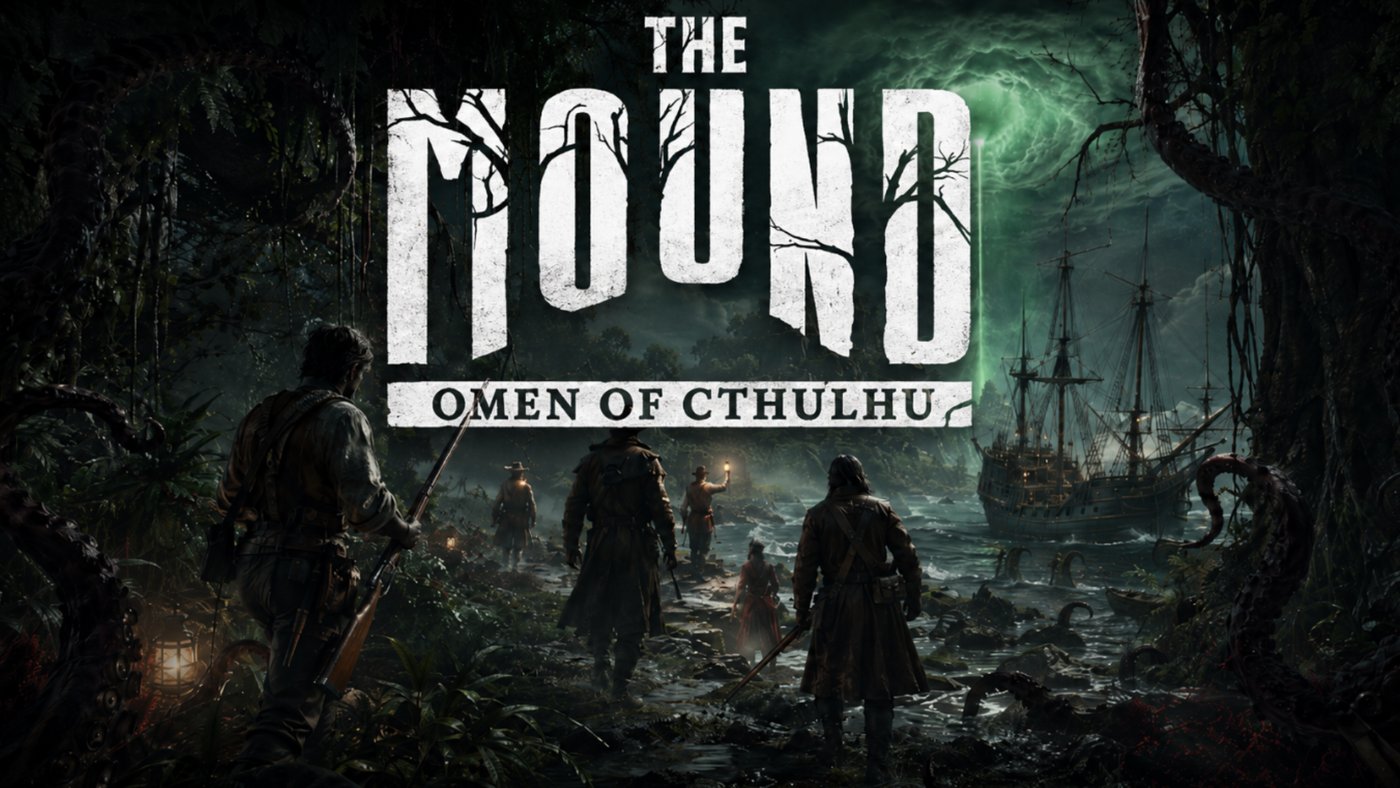
The Mound: Brilliant Co-Op Mechanic, Rough Execution
The insanity system is unlike anything in co-op horror right now. You can't trust your own screen. But the game around that mechanic needs work. If ACE Team keeps building, something special is underneath.
Dinoblade: A Viral Animation Clip Became Steam's #1 Game
A 30 second animation clip went viral in 2022. Four years later it's a real game sitting at #1 on Steam with 89% positive reviews. One developer. $20. A dinosaur with a greatsword. And the boss fights are genuinely incredible.