
Best Indie Games Under $30 That Are Better Than $70 AAA Games in 2026
Sub-$30 games on PC rose 156% between 2022 and 2025. That's not a typo. That's not some obscure data point buried in an earnings call nobody reads. That is the single most important number in gaming right now, and it tells you everything you need to know about where this industry is heading.
While AAA publishers keep pushing prices higher, chasing $80 standard editions and floating the idea of $100 games, players are doing something the industry clearly didn't plan for. They're finding better games for a fraction of the cost. And they're not going back.
So today, I want to do something simple. I want to walk you through the best indie games you can buy right now for under $30, put them side by side with the $70 AAA releases they're outperforming, and let the numbers speak for themselves. Because the numbers are brutal.
The Math That AAA Publishers Don't Want You to See
Let me make this clear before we get into the list.
Newzoo's 2026 PC and Console Gaming Report dropped in March, and the data is staggering. Sub-$30 games now account for 32% of PC's total revenue distribution by launch price. For comparison, they only make up 7% on PlayStation and 9% on Xbox. PC gamers figured this out first, and the rest of the market is starting to follow.
And here's the thing. Newzoo is projecting that Steam-led PC growth will push PC game sales past the combined console game sales of Switch 2, PS5, and Xbox Series by 2028. The platform where cheap indie games thrive is about to become the biggest gaming market on the planet.
So when someone tells you indie games are "niche," show them that number. 156% growth in sub-$30 purchases. That's not niche. That's a structural shift.
Now let's talk about the games making it happen.

Slay the Spire 2. $24.99. 95% Positive. 574,000 Concurrent Players.
I'm going to say that again as clearly as possible. A $25 game hit 574,000 concurrent players on Steam within its first week.
Slay the Spire 2 launched in early access on March 5, 2026, and it immediately became one of the biggest indie launches in Steam history. In just two weeks, Mega Crit's sequel sold 4.6 million copies and generated over $92 million in revenue. That already surpasses the lifetime Steam earnings of Hollow Knight: Silksong.
And you know what makes this even more impressive? No microtransactions. No battle pass. No season pass. No $15 DLC for content that should have been in the base game. Just a complete, polished product at $25 that respects your time and your wallet.
The reviews tell the story. 95% Overwhelmingly Positive with over 90,000 reviews. Players are calling it a genuine upgrade over the original in almost every way. New characters, co-op for up to four players, deeper progression, better art. Everything a sequel should be.
Compare that to Concord. Sony spent an estimated $200 to $400 million on that game. It lasted eleven days before getting pulled from shelves. The studio behind it, Firewalk, was shut down entirely. You could buy Slay the Spire 2 sixteen times for the price of one Concord copy, and Slay the Spire 2 will still be here next year.
That's crazy to me.
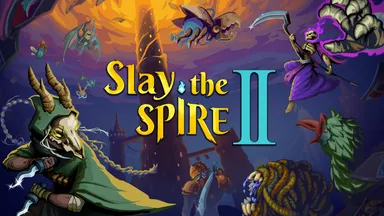
Schedule I. $19.99. 98% Positive. Made by One Developer.
Let that sink in. One person made Schedule I. One.
This game has 286,000 reviews on Steam with a 98% Overwhelmingly Positive rating. It was one of the top-selling games on the entire platform in 2025, and it's still pulling massive numbers in 2026. The game currently sits at a 30% discount bringing it down to $13.99, which is just absurd value for what you're getting.
Schedule I, R.E.P.O., and PEAK together made up 3.2% of PC's entire top sub-$30 revenue in 2025. These are games made by tiny teams with tiny budgets that are genuinely competing with the biggest publishers on the planet.
Meanwhile, King of Meat launched at $30 with MrBeast doing promotional content and Amazon publishing it. It never exceeded 400 concurrent players. Not 400,000. Not 40,000. Four hundred. It's shutting down in April.
I just don't get it, man. How do you have Amazon's resources, MrBeast's reach, and still can't compete with one guy making a drug dealing sim in his apartment? The answer is simple. Is it fun? Is it cool? Schedule I is both. King of Meat was neither.
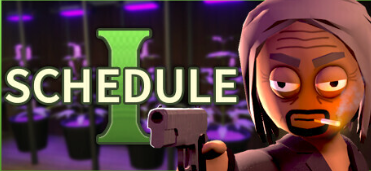
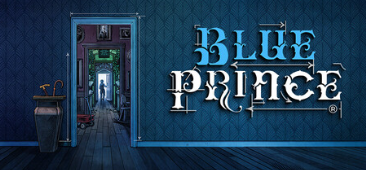
Blue Prince. The Puzzle Game That Outsmarted AAA.
Blue Prince is a masterclass in what happens when a small team asks one question and answers it perfectly. Can we make a puzzle game where the house itself changes every time you walk through it?
Yes. Yes they can. And it won the Indie Game of the Year nomination for 2025 to prove it.
This is a slow-burn puzzle game set in a manor where rooms don't exist until you open the door. Every day, you get three room blueprints to choose from, and the layout rearranges completely. Finding room 46 is the goal, but the journey there is one of the most clever, rewarding puzzle experiences on any platform.
This is the kind of game that could never survive a publisher committee meeting. Some executive would have demanded combat. Another would have pushed for multiplayer. A third would have wanted a seasonal content roadmap. And the entire thing would have collapsed into another forgettable live-service game that dies in six weeks.
Instead, a small team made exactly what they wanted to make. And it's brilliant.
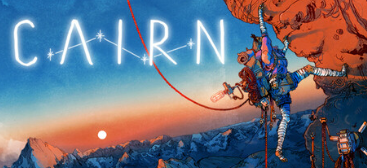
Cairn. A Climbing Game That Makes You Feel the Mountain.
Cairn does something I've never seen before. It makes climbing feel physical. Not "press X to climb" physical. Actually physical. You guide each hand and foot placement independently. Your character's breathing gets heavier. Her legs shake. There are no health bars or stamina meters. You read her body language to know how she's doing.
That is game design. That is innovation. That is what happens when developers ask "is it fun, is it cool" instead of "how many battle passes can we sell."
For under $30, you get an experience that treats you like an adult, respects your intelligence, and delivers something genuinely new. Meanwhile, the last three $70 open-world games I played were functionally identical to each other. Same towers to climb. Same map icons to clear. Same enemy camps with the same loot tables.
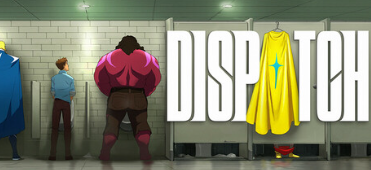
Dispatch. 3 Million Copies. Single-Player. Narrative-Driven. Under $30.
Credit where credit's due. Dispatch sold over 3 million copies, and it did it by being everything AAA publishers told us nobody wants anymore. It's single-player. It's narrative-driven. It's not a live-service game. It doesn't have cosmetic stores or premium currencies or weekly challenges that expire.
It's just a good game that tells a good story. That's it. End of story.
And somehow, against every boardroom prediction and investor presentation that said single-player narrative games are dead, it outsold most AAA releases from the same window.
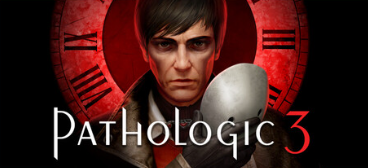
Pathologic 3. A Horror Game That Trusts You.
Pathologic 3 is not for everyone. Let me be honest about that upfront. This is a psychological horror game where you have twelve days to save a town, where every decision has irreversible consequences, and where the horror isn't jumpscares. It's the moral weight of the choices you're making.
It's hand-drawn. It's deeply weird. It's absolutely uncompromising in its vision. And it's one of the best games of 2026.
This is what I mean when I talk about indie games doing things AAA literally cannot do. No boardroom is greenlighting Pathologic 3. No focus group would approve this game. The pitch meeting alone would get you escorted from the building. But it exists because indie development allows singular creative visions to survive, and gaming is better for it.
Mewgenics. From the Creators of Binding of Isaac.
Edmund McMillen's latest game is a turn-based strategy game about breeding cats to send on missions. I know how that sounds. Stay with me.
Mewgenics is one of the deepest strategy games released in years. Hundreds of items, an absurd number of possible cat combinations, and a level of mechanical depth that makes you realize how shallow most AAA strategy games have become. Reviewers are calling it one of the deepest strategy experiences on the platform, and it's pure indie through and through.
The Price Comparison That Breaks Your Brain
Here's the math breakdown. Let me do it for you.
If you bought every indie game I just listed at full price, you're looking at roughly $175. And that's being generous with the estimates.
Now take the AAA side. Battlefield 6 at $70. Whatever the next Assassin's Creed costs at $70. GTA 6 is rumored between $70 and $100. Switch 2 games are launching at $80. You're looking at $280 to $320 for three to four AAA games.
So for the price of three AAA games, you could buy seven critically acclaimed indie titles, most of which have better review scores, longer player retention, and no additional monetization trying to pry more money out of you after the purchase.
And let me remind you. Battlefield 6 just had the biggest launch in franchise history. Six months later, EA is already laying off the people who made it. That tells you everything you need to know about how these guys view success.
Why This Is Happening Now
This isn't random. This isn't a fluke. There are structural reasons why indie games are eating AAA alive in 2026.
First, the tools have caught up. Unreal Engine 5 is free to use. Small teams can make games that look genuinely next-gen without $200 million budgets. Clair Obscur: Expedition 33 was made by a small French studio and it looks like a Final Fantasy game. The visual gap between indie and AAA is closing fast, and in some cases it's already gone.
Second, the price gap has become absurd. When AAA games were $60 and complete, the value proposition made sense. But $70 for a game that still has a battle pass, a premium currency store, and $30 worth of day-one DLC? Players aren't stupid. They can see that a $25 indie game is giving them a better deal.
Third, streamers and content creators have democratized discovery. You don't need a $50 million marketing campaign anymore. One popular streamer plays your game, and suddenly you have 500,000 wishlists. Slay the Spire 2 didn't need a Super Bowl ad. It needed to be good. Word of mouth did the rest.
And fourth, and this is the big one, indie developers are asking the right questions. Is it fun? Is it cool? That's it. Those are the only two questions that matter. And while AAA studios are running focus groups and optimizing for engagement metrics and building retention funnels, indie devs are just... making fun games. And it turns out that's what people want to buy.
The Industry Created This. Not Us.
Look, I'll be honest with you. I take no joy in watching AAA studios struggle. When Bluepoint Games gets shut down by Sony, real people lose their jobs. When Dark Outlaw Games gets closed before it even ships a game, that's a team of talented developers who did nothing wrong. When Red Storm Entertainment, the studio Tom Clancy co-founded 30 years ago, gets gutted by Ubisoft, that's history being erased.
But the executives making these decisions? The publishers pushing $70 price tags on unfinished games while cutting the people who actually built them? They created this. Not us.
Players didn't wake up one day and decide to hate AAA games. The industry spent years teaching them that $70 buys you a broken launch, a battle pass, and a studio closure announcement six months later. They taught players that the only language that works is consequences. So now players are speaking that language fluently.
And where are they going? To the $25 game with 95% positive reviews and no microtransactions. To the $20 game made by one person that has better player retention than a $200 million live-service flop. To the studios that respect their time, their intelligence, and their wallets.
The pendulum is swinging. And it's not swinging back.

What You Should Be Playing Right Now
If you've been on the fence about any of these games, here's my honest recommendation. Start with whatever sounds most interesting to you. That's the beauty of indie games. They're cheap enough that you can take a chance. You're not gambling $70. You're spending what you'd spend on lunch.
Slay the Spire 2 if you want the safest bet. 95% positive with 90,000 reviews doesn't lie. Schedule I if you want something absurdly addictive and don't mind a little moral ambiguity. Blue Prince if you want your brain to hurt in the best way. Cairn if you want something genuinely new. Dispatch if you miss single-player stories. Pathologic 3 if you want something that will stay with you for months.
Or buy all of them. For the price of one AAA game and its deluxe edition, you can have a library of games that will last you the rest of the year.
The data is clear. The reviews are clear. The player counts are clear. Indie games aren't just an alternative to AAA anymore. In 2026, they're the better choice. And it's not even close.
Many of these games are on sale on steam now!
Share this article
Comments

James Brooke
Founder & Editor
Gaming industry analyst and video editor covering gaming trends, indie games, and industry analysis.
About the author →Related Articles
Moonlight Peaks Is a Vampire Farming Sim That Just Launched to 87% Positive on Steam. For $35.
You play as Dracula's kid who ran away from home to start a farm. You sleep in a coffin. You water crops with magic spells. 87% positive on Steam in two days. $34.99 and no nonsense.
Meccha Chameleon Sold 2 Million Copies in a Week. It Costs Six Dollars. One Person Made It.
One developer. Six dollars. Two million copies in a week. 132K concurrent players. It outsold Forza and Final Fantasy on the Steam charts. A game about painting yourself to look like a wall.
Sand Raiders of Sophie Playtest: I Played All Weekend. Here's Where It's At.
I've been following this game for over a year. Played the early alpha. The server slam this weekend was a completely different experience. When it worked it was fantastic. Here's where it's at.
You May Also Like
Latest Patch Notes in Gaming — Week of July 6–12, 2026
Marvel Rivals pushed three patches in one week. TF2 got six new maps. Diablo IV fixed a Steam Deck crash. Guild Wars 1 got a major skill rebalance in 2026. Ten games patched this week — here's every update.
Xbox Just Cut 3,200 Jobs. Three Days Later the CEO Is Advising the Federal Reserve.
3,200 jobs cut. The internal memo published on Twitter. 64 cents lost on every dollar invested. 14 layers of management. And three days later the CEO who did it all is advising the Federal Reserve on jobs. You cannot make this up.
Sony Is Killing Physical Games. Their Own Studio Just Trolled Them About It.
170,000 signatures. Six days of silence. Dominoes making memes. And Insomniac publicly confirming Wolverine gets a real disc while the parent company kills the format. Sony's silence is the statement.