

Slay the Spire 2 Review Bomb: Stop Telling Consumers What Counts
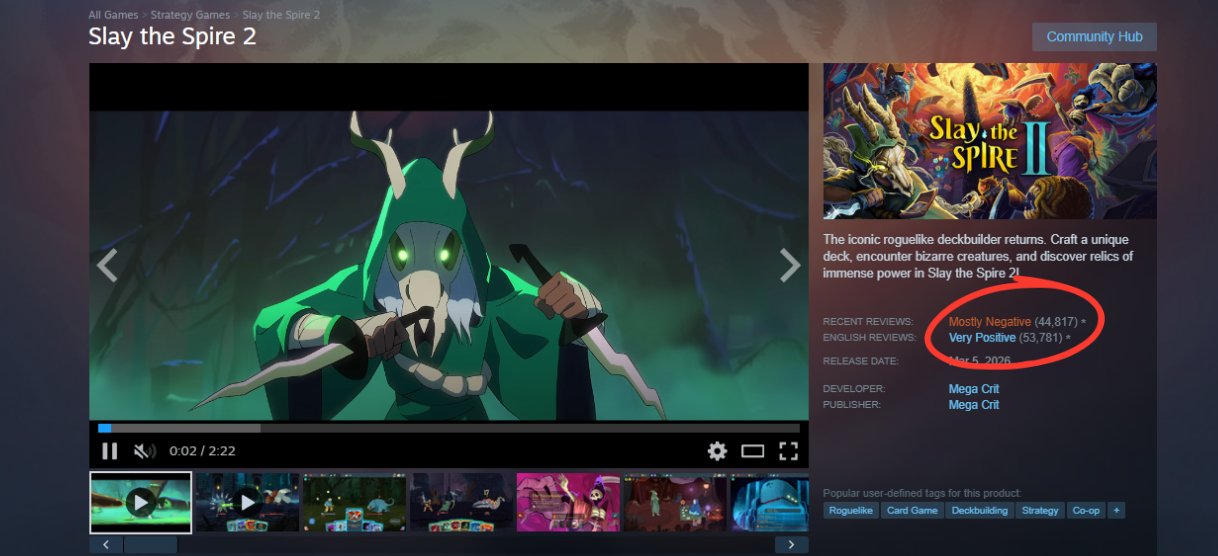
80,000 negative reviews. Three separate waves. And the only conversation anyone wants to have is whether or not it's fair.
Slay the Spire 2 has been review bombed three times in two months. The first wave came from Chinese players pushing back on balance changes. The second came after the first major update reworked a hated boss and tightened deck building in ways that players felt restricted their creativity. The third came after people discovered that Anita Sarkeesian was credited as a consultant in the game.
Each one of these waves had a different trigger. All of them landed in the same place. Steam reviews. And each time, the same debate followed. Is this fair? Is this legitimate? Should this count?
I think we're asking the wrong question.
The Timeline Matters
Let's lay it out because context is getting buried under headlines.
Slay the Spire 2 launched into early access on March 6, 2026. It peaked at 574,000 concurrent players. It sold over 5 million copies. Reviews were sitting at "Overwhelmingly Positive" with a 96% rating. By every measure, this was one of the biggest early access launches in Steam history.
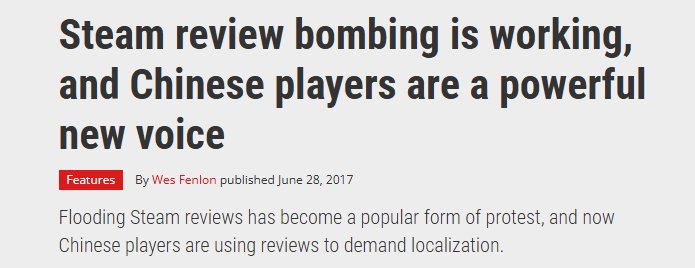
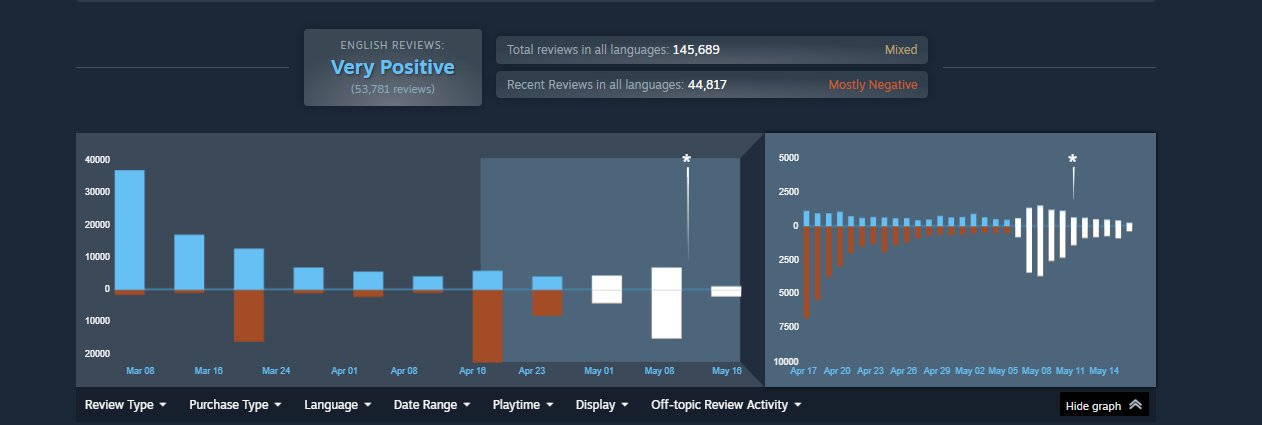
Two weeks later, the first wave hit. Mega Crit pushed a beta patch that nerfed a core card for the Silent class. Chinese players, who make up a massive portion of the player base, flooded the review section with over 9,000 negative reviews in a single day. PC Gamer noted at the time that Chinese players often use Steam reviews as their primary feedback channel because other platforms are harder to access in that region. The English language reviews stayed overwhelmingly positive. The overall score barely moved.
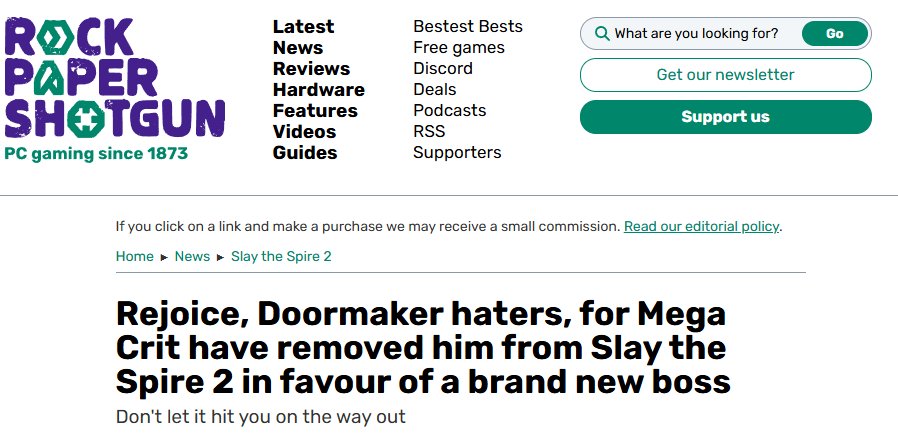
Then came the April update. The first major patch rolled beta changes into the main branch. A boss called Doormaker was universally despised. Deck building felt more restrictive. Over 21,000 negative reviews landed in five days. The game cratered to 66% positive lifetime and 48% positive on recent reviews. Mega Crit responded by removing Doormaker entirely and walking back some of the more controversial changes. That helped. But those reviews didn't go away.
And then in early May somebody noticed Sarkeesian's name in the credits. It had been there since launch. Nobody cared for two months because nobody checked. But once it went viral, a third wave hit. People started buying the game specifically to leave a negative review and then immediately refunding it. As of now, the game sits at around 80,000 negative reviews total. That is nearly 14 times more than the original Slay the Spire accumulated in nine years.
Steam has flagged the recent activity as "off topic review activity." The media has called it Gamergate 2.0. And the actual conversation that matters, what these reviews actually represent and who they exist for, has been completely lost.
Consumers Get to Decide What Matters to Them
Here's my position on this. Somebody who purchases or is considering purchasing a product has every right to factor in whatever they want when deciding whether to buy it. That includes who made it. Who consulted on it. Who is associated with it in any capacity. That information is relevant to the buyer because the buyer decided it was relevant. End of story.
The games industry has labeled this behavior "review bombing" as if attaching a scary name to it changes what it actually is. It's consumer feedback. It's people using the one tool they have to communicate directly with a developer and with other potential buyers. The Chinese players used it to push back on design changes they didn't agree with. And it worked. Mega Crit responded. Doormaker is gone. Balance was adjusted.
The Sarkeesian wave is being treated differently because the subject is politically charged. But the mechanism is the same. People are telling the developers and telling future buyers that this is something they care about. You don't have to agree with their reasoning. You don't have to think it's proportional. But you don't get to strip their agency and pretend like it doesn't count because you disagree with why they're upset.
I keep hearing that reviews should only be about gameplay. Says who? Who made that rule? Last time I checked the Steam review system asks one question. Do you recommend this product? Yes or no. It doesn't say do you recommend the gameplay. It doesn't say do you recommend this product based on criteria that the media has pre approved. It asks a simple question and lets the buyer answer it however they see fit. That's by design. That's the whole point.
The Studio Knew the Risk
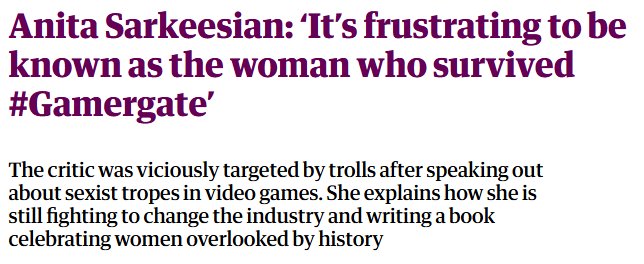
Anita Sarkeesian, regardless of anybody's personal opinion of her, carries a massive amount of controversy. That has been true for over a decade. Hiring her as a consultant is a decision that comes with a very specific set of risks. And those risks were completely predictable. There is not a single person in this industry who could look at that credit and not know exactly what would happen the moment players found it.
So you have two options. Either you stand by the decision, let the game speak for itself through its gameplay, and accept whatever comes with it. Or you don't bring that kind of attention to your project in the first place.
Mega Crit hasn't said a word about any of this. Maybe thats the smart play. The game is still pulling nearly 190,000 concurrent players daily. It's still one of the most played games on Steam. The gameplay hasn't changed. The reviews will eventually stabilize. And the people who are actually playing the game, the ones logging hundreds of hours and climbing the Spire every day, they seem to be doing just fine.
But the score is what it is. And pretending that these reviews don't count because they're about the wrong thing, that just isn't how consumer markets work.
The Media Is Having the Wrong Conversation
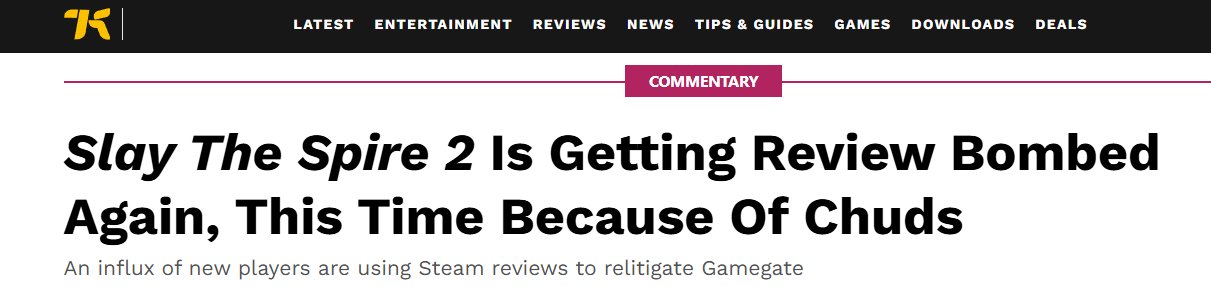
Every major outlet covering this story has landed on the same framing. Gamergate 2.0. Chuds. Reactionaries. Review bombing as harassment. And look, I'm not going to pretend like there aren't some genuinely unhinged people in those review sections. There are. There always are. You're going to find bad faith actors in every single controversy that involves the internet. That's just reality.
But the framing is doing something very specific. It's taking the most extreme voices, the loudest and dumbest ones in the room, and using them to discredit the entire wave. That's the same playbook we've seen every single time. Find the worst example and hold it up like it represents everybody. Then use that to wave away every legitimate concern in the pile.
What none of these outlets want to engage with is the actual pattern here. This game has been review bombed three separate times in two months. The first two times had nothing to do with politics. They were about gameplay. About design decisions that players felt were wrong. And those review bombs worked. The developers responded. Changes were made. The system functioned exactly as intended.
So why is the third wave suddenly illegitimate? Because the subject changed? Because now it's about a person instead of a card nerf? The mechanism is the same. The platform is the same. The intent is the same. People are using the tools available to them to signal what they do and do not support with their money.
You don't have to like it. But calling it a hate movement because it makes you uncomfortable is not journalism. It's deflection.
Steam Reviews Exist for Buyers, Not Developers
I've talked about this before. Steam's review system is one of the most powerful tools consumers have in this industry. It holds developers accountable. It gives players a direct line of communication. And it's one of the very few places where feedback cannot be buried, censored, or managed by a PR team.
That power comes with consequences. Sometimes a game gets hit with negative reviews for reasons that feel unwarranted. Sometimes the feedback is unfair. Sometimes it's messy and emotional and driven by things that have nothing to do with the actual experience of playing the game.
That is the cost of giving consumers a voice. And I would rather have a system where buyers can say whatever they want about a product they paid for than a system where somebody else gets to decide which opinions are valid.
Slay the Spire 2 is still a great game. It's still one of the best selling games of 2026. And in six months, the score will probably stabilize and none of this will matter. But the conversation around it reveals something that keeps showing up across this industry. A refusal to acknowledge that buyers have agency. A need to control the narrative around consumer feedback. And a media apparatus that would rather label people than listen to them.
Nothing is fair when it comes to consumers spending money and informing others about where that money goes. It never has been. And the minute you start trying to tell people what they're allowed to care about when making a purchase, you've already lost the plot.
Share this article
Comments

James Brooke
Founder & Editor
Gaming industry analyst and video editor covering gaming trends, indie games, and industry analysis.
About the author →Related Articles
Bungie Just Cut Half Its Studio. 400 People Gone. What's Even Left?
Over 400 people on a single layoff call. Half the studio. Marathon can't hold an audience. Destiny is over. The studio that made Halo is heading toward extinction and nobody can explain what comes next.

Bungie Just Killed Destiny for a Game Nobody Wanted
Sony paid $3.6 billion. Destiny is dead. Destiny 3 doesn't exist. More layoffs are coming. And the developers who built the franchise are being funneled into a game that 10,000 people play.
Eidos Montreal Spent Hundreds of Millions on a Game Nobody Will Ever Play. Then They Fired 124 People.
Seven years. Four game engines. Hundreds of millions of dollars. A Deus Ex sequel killed to fund it. Then Embracer canceled Wildlands and fired 124 people. Full breakdown with receipts.
You May Also Like

Best Games August 2026: 5 Headliners and 5 Under the Radar
Game Freak outside of Pokemon. MGS4 finally on modern hardware. Hell Let Loose Vietnam. A Marvel fighting game from Arc System Works. August is the warm up lap before September destroys everything.
Latest Patch Notes in Gaming — Week of July 20–26, 2026
Battlefield 6 put boats in the game. Heroes of the Storm reworked Ragnaros. 2XKO overhauled its Fuse systems. Phasmophobia rebuilt 13 Willow Street. Ten games patched this week — here's every update.
The Mound: Brilliant Co-Op Mechanic, Rough Execution
The insanity system is unlike anything in co-op horror right now. You can't trust your own screen. But the game around that mechanic needs work. If ACE Team keeps building, something special is underneath.