

Clockwork Ambrosia: 14 Years in the Making and Finally Here
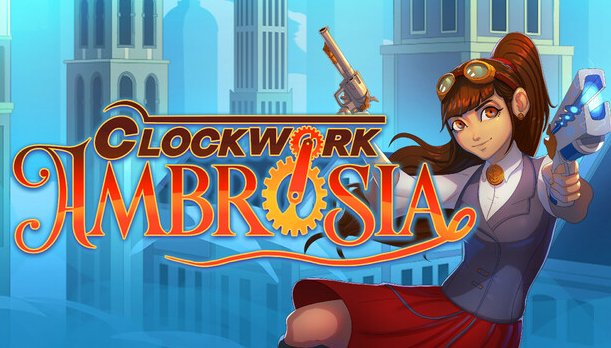
Fourteen years.
Nathan Hiemenz started building Clockwork Ambrosia in 2011. Fresh out of DigiPen. A small studio called Realmsoft in Austin, Texas. One game. One vision. A steampunk Metroidvania where the weapons are the progression system. Not health bar upgrades. Not incremental stat boosts. Actual weapon behavior changes that fundamentally alter how you fight.
Fourteen years later, it's finally here. Clockwork Ambrosia launched today on Steam. And the weapon system that Hiemenz has been refining since before most indie games on the market existed is exactly as wild as he promised.
The Weapons Are the Game
Most Metroidvanias give you a new ability every few hours. Double jump. Dash. Wall climb. You know the formula. Clockwork Ambrosia does that too. But the real progression is in what you do to your guns.
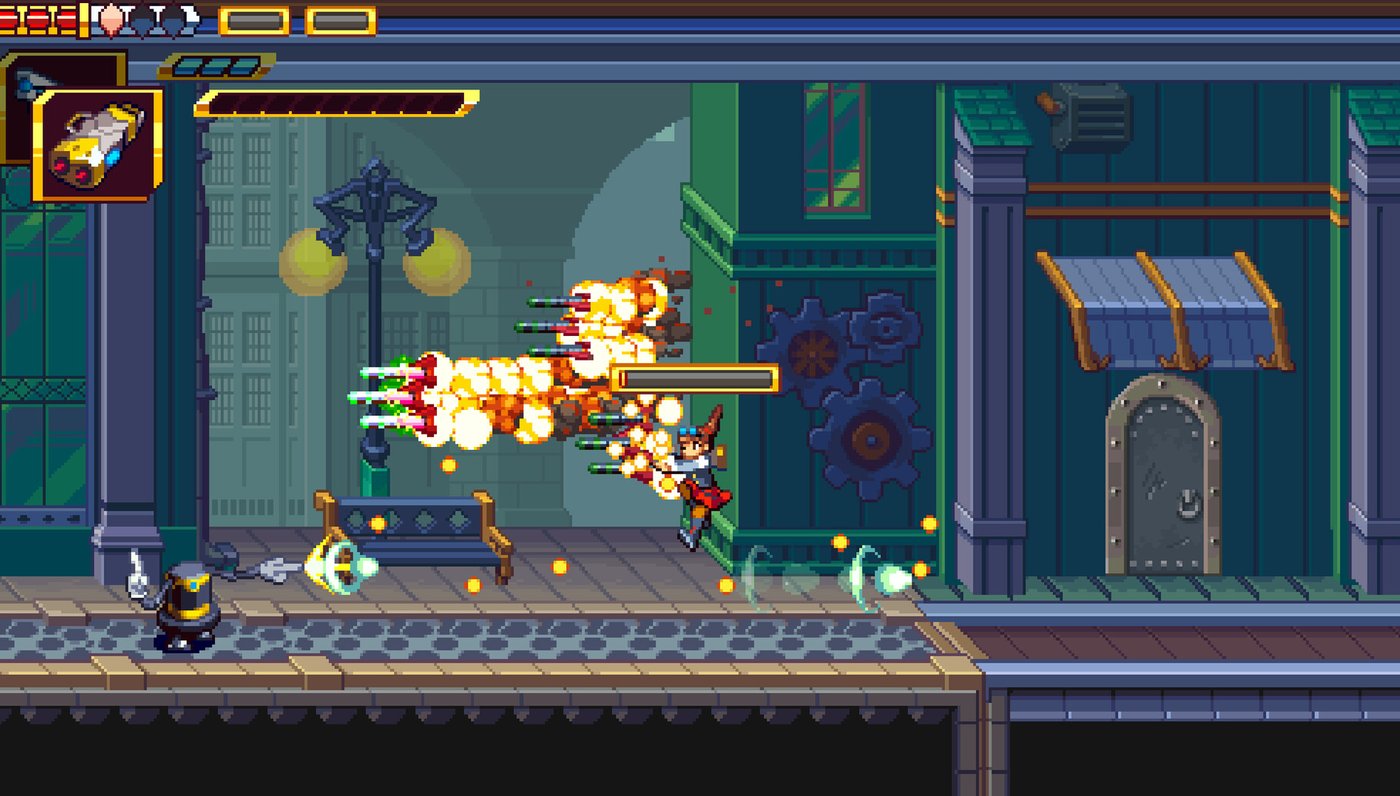
Six weapons. Over 150 modifications. Each mod doesn't just add damage or fire rate. It changes how the weapon behaves at a fundamental level. Add a mod that fires extra rounds. Then add one that splits projectiles. Then add one that makes split projectiles bounce. Suddenly your basic revolver is a screen-filling chaos machine that ricochets off every surface in the room.
Loot Level Chill's reviewer described making a revolver that no longer fired in a straight line. Bouncing bullets. Total chaos. Not a good build by any stretch. But so fun they refused to swap it out for something better. That's the energy this system is built on. It's not about optimization. It's about experimentation. About building something absurd and seeing if it works.
The system takes a while to open up. That's the one consistent criticism across reviews. The first couple of hours play it safe. Standard shots. Basic mods. The craziness doesn't fully kick in until you've explored enough to find the mods that break the rules. If you're the type of player who bounces off games in the first hour, Clockwork Ambrosia is asking you to trust it. The payoff is there. It just takes time to arrive.
Classic Metroidvania Done Right
Beyond the weapon system, Clockwork Ambrosia is a love letter to the GBA-era Metroidvanias that defined the genre. You play as Iris, an airship engineer stranded on the island of Aspida after getting shot down by a mechanical dragon. The population has vanished. Hostile machines have taken over. Something went wrong here and you're piecing together what.
The map design goes back to basics in the best way. Square rooms. A clean grid layout. No confusing overlapping corridors or rooms shaped like abstract art. You can actually read the map and understand where you are and where you haven't been. In a genre that's gotten increasingly complicated with its world design, that simplicity is refreshing.
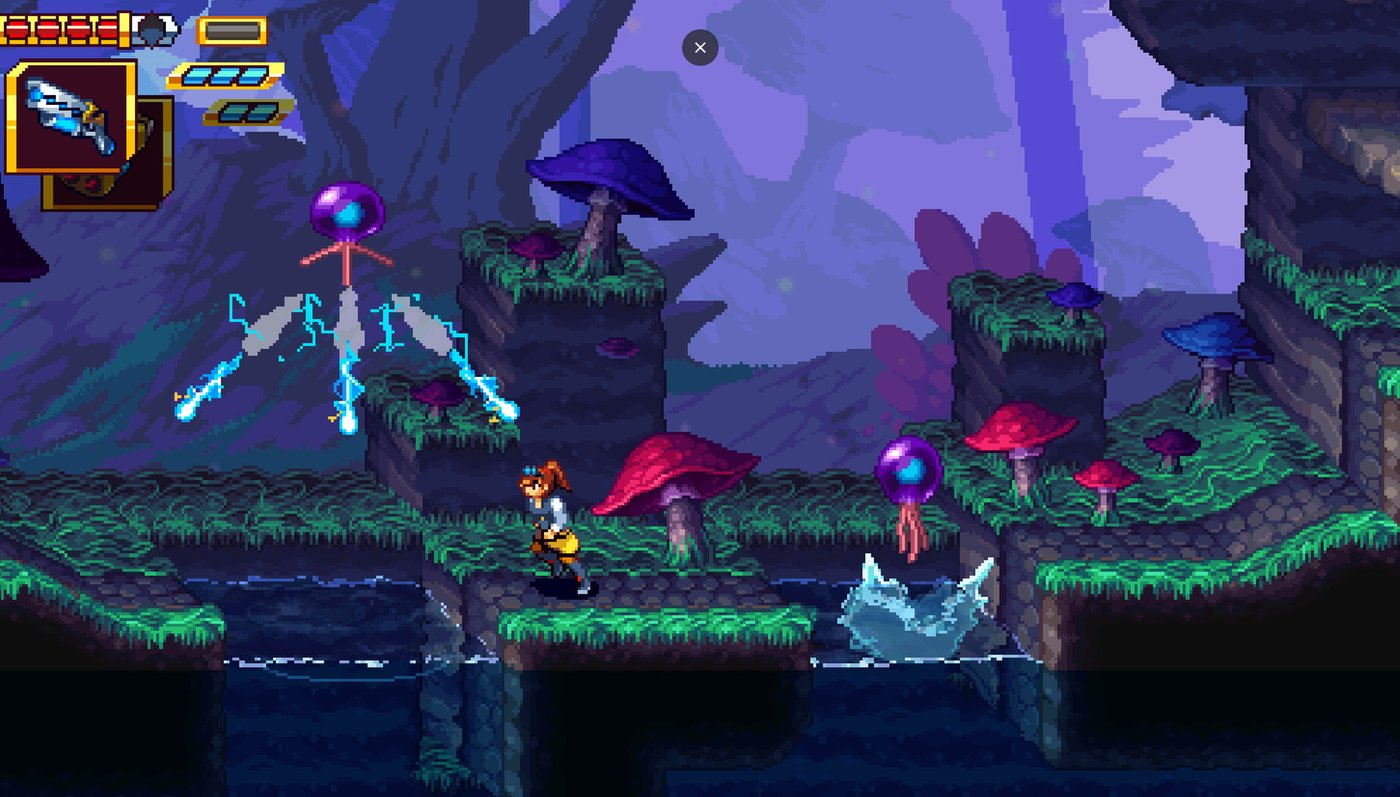
The pixel art is gorgeous. Bright, detailed environments that range from overgrown mushroom forests to sky cities above the clouds to sunken underwater ruins. The soundtrack is equally strong. Catchy, varied, and perfectly matched to each biome. For a game that's been in development since 2011, the visual and audio polish suggests a team that spent those years refining rather than rushing.
What It Gets Right and What It Doesn't
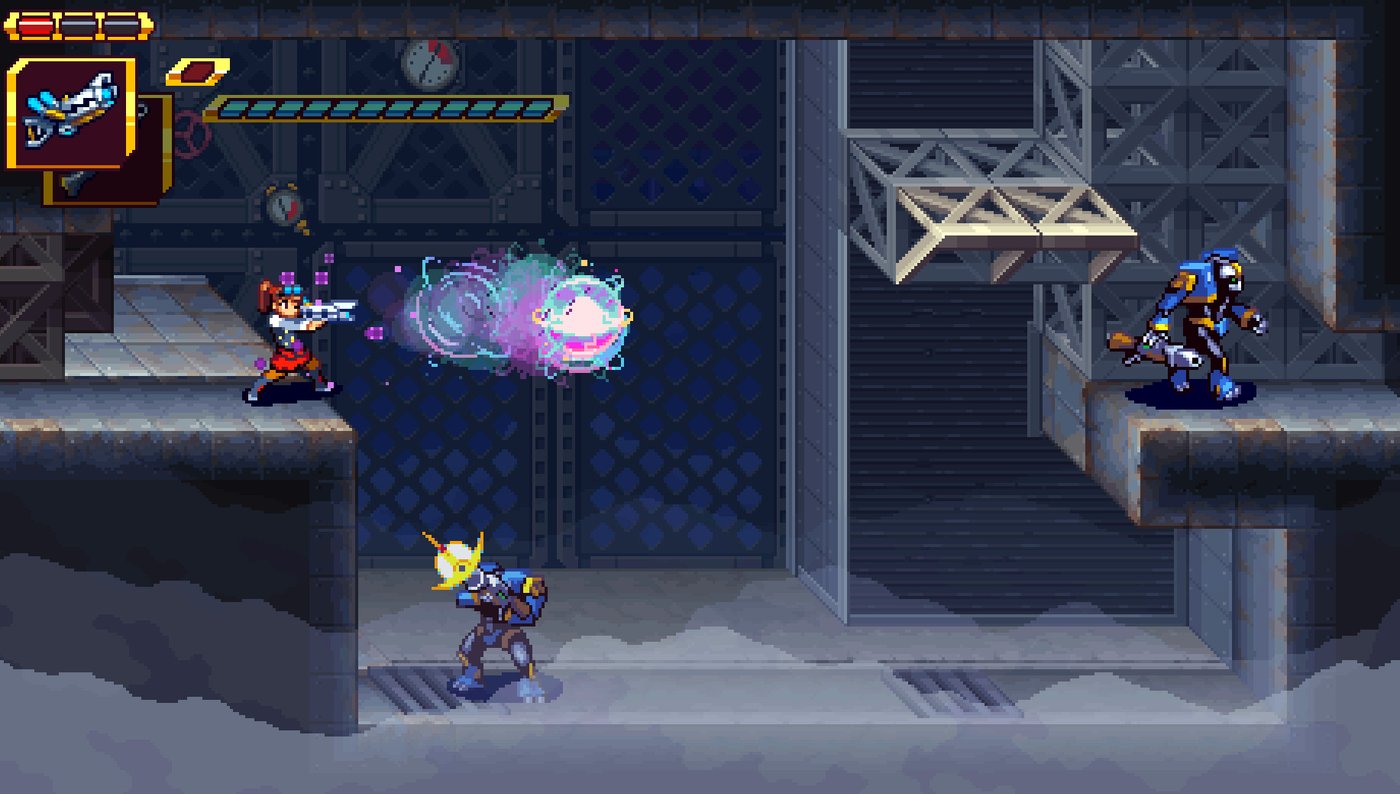
The weapon modding is the clear highlight. When the system opens up and you start combining mods that interact in unexpected ways, the combat becomes something genuinely unique in the Metroidvania space. Nobody else is doing weapon customization at this depth in a 2D platformer.
The exploration is satisfying. The art is beautiful. The progression loop of finding new mods and immediately wanting to test them keeps you pushing into new areas.
But weapon switching is clunky. Two shoulder buttons that swap weapons in different ways (one temporarily when held, one permanently) create confusion in the middle of combat. The controls take adjustment. And the death penalty stings. Lose all your retries and you're back at the last save point, losing anything you collected since then. For a game built around exploration and discovery, losing a hard-earned mod because you died one room before a save point is genuinely frustrating.
These aren't dealbreakers. But they're worth knowing before you buy.
Fourteen Years of Selfishly Made
Nathan Hiemenz started Realmsoft in 2011 because he wanted to make a Metroidvania where creativity was the core of the experience. Not because a market analysis told him the genre was profitable. Not because a publisher asked for a pitch. Because he wanted to play a game that didn't exist yet.
He brought on pixel artist Maciej Kuczynski. Ex-DigiPen classmate Michael Betts. Game designer Ian Clark joined full-time in 2016. A small team. One game. Fourteen years.
That's "Selfishly Made" on a timeline that would make most people quit. Most studios don't survive fourteen months, let alone fourteen years on a single project. The fact that Clockwork Ambrosia launched at all is an achievement. The fact that it launched with a weapon system this creative, art this polished, and a world this detailed makes it something worth celebrating.
Clockwork Ambrosia is out now on Steam. If you like Metroidvanias at all, the demo is still live. Go try it. Let the weapons do the convincing.
Share this article
Comments

James Brooke
Founder & Editor
Gaming industry analyst and video editor covering gaming trends, indie games, and industry analysis.
About the author →Related Articles
The Mound: Brilliant Co-Op Mechanic, Rough Execution
The insanity system is unlike anything in co-op horror right now. You can't trust your own screen. But the game around that mechanic needs work. If ACE Team keeps building, something special is underneath.
Dinoblade: A Viral Animation Clip Became Steam's #1 Game
A 30 second animation clip went viral in 2022. Four years later it's a real game sitting at #1 on Steam with 89% positive reviews. One developer. $20. A dinosaur with a greatsword. And the boss fights are genuinely incredible.
Shift at Midnight Just Launched to 12,000 Concurrent Players. One Dev. Ten Bucks. Another Friend Slop Hit.
The friend slop genre has another hit. One developer made a co-op horror game about spotting imposters at a gas station for $10. 12,000 concurrent players on day one. 90% positive on Steam.
You May Also Like

Best Games August 2026: 5 Headliners and 5 Under the Radar
Game Freak outside of Pokemon. MGS4 finally on modern hardware. Hell Let Loose Vietnam. A Marvel fighting game from Arc System Works. August is the warm up lap before September destroys everything.
Latest Patch Notes in Gaming — Week of July 20–26, 2026
Battlefield 6 put boats in the game. Heroes of the Storm reworked Ragnaros. 2XKO overhauled its Fuse systems. Phasmophobia rebuilt 13 Willow Street. Ten games patched this week — here's every update.

Best Games of 2026 So Far: Where Your Money Is Actually Worth Spending
NPR published their half year list and it read like a Metacritic scroll. This is a real one. 12 games from $6 to $70 that actually earned your money in the first half of 2026.